1961 Maserati 3500 GT Vignale Spyder
Giovanni Michelotti’s design for Carrozzeria Vignale offered a distinctively angular alternative to the Touring-bodied coupes, with crisper lines and a lower, more aggressive stance.
The open coachwork rode on a shortened wheelbase of about 100 inches to improve torsional rigidity and agility, and it used steel bodywork with aluminum doors, hood, trunk lid, and optional hardtop, while power windows were indeed commonly fitted, though not absolutely universal in period.
Only about 242 Vignale Spyders were produced between late 1959 and early 1964, making them significantly rarer than the roughly 2,000 Touring-bodied coupes built.
Power came from Maserati’s race-bred 3.5-liter (about 213 cu in) DOHC inline-six derived from the 350S, featuring twin-plug ignition and triple Weber carburetors in GT form, producing about 220 hp. The five-speed ZF transmission had been available as an option by 1960 and became standard fit on later cars in the early 1960s, while front disc brakes and a limited-slip differential were standardized around 1960 and rear discs followed for the 1962 model year.
Optional Borrani wire wheels and removable hardtops were frequently specified by buyers, and period/modern data indicate that on the order of 50-60 Spyders left the factory with the alloy hardtop, which gave the car an elegant, almost coupe-like profile without undermining the design’s appeal.
The hardtop and wires, combined with subtle trim differences, mean that individual cars can have noticeably different visual characters while retaining the core Vignale look.
Introduced in production guise at the 1959 Turin Salon, the Vignale Spyder played a key role in Maserati’s transition from limited-production racing specialists to a viable grand touring manufacturer, sitting alongside the Touring coupe as a true catalog model.
Period figures and later testing put top speed in the 135-140 mph bracket for the more powerful and better-geared cars, with refinement, ride, and cabin finish fully competitive with contemporary Italian and British GT rivals.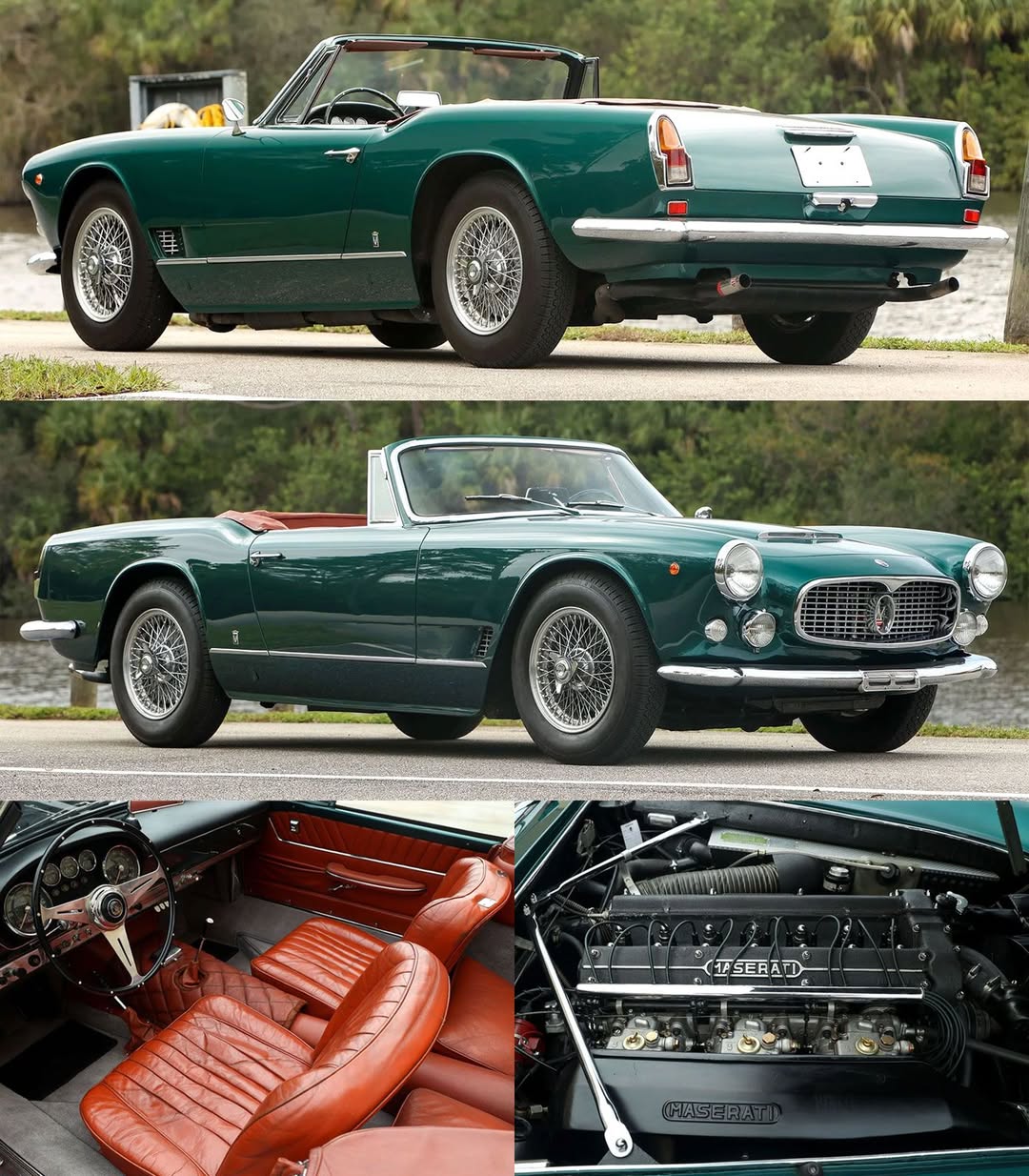
Source