1957 Gaylord Gladiator
Enormous Lucas P-100 headlights dominated the 1955 prototype’s face (top pic), resembling air-raid searchlights in their sheer size and presence. These massive single lamps flanked a tall, old‑world wire‑mesh grille, framed by cut‑away front wheel arches that exaggerated the car’s already dramatic proportions.
When the car appeared at the 1955 Paris Motor Show, the extreme “owl‑eyed” front and open arches drew mixed to negative reactions, and the planned production‑spec cars built in Germany subsequently adopted more conventional quad headlamps and fuller fenders.
Designer Brooks Stevens combined American V‑8 power with European grand‑tourer refinement for brothers James and Edward Gaylord, heirs to the bobby‑pin fortune who set out to build “the best car in the world.” A black‑and‑white two‑tone exterior with whitewall tires emphasized the long‑tail GT stance, wrapped around a chrome‑moly tubular frame engineered by Jim Gaylord with attention to noise and vibration isolation and a curb weight quoted around 1,800 kg (about 3,970 pounds).
The electrically retractable hardtop, operated by a single motor and controlled by a single switch, predated Ford’s far more complex 7-motor Skyliner system by roughly two years and became the Gladiator’s technical showpiece.
Inside, tropical‑wood dash panels, fine leather, and sword‑shaped instrument needles and key underscored an ultra‑luxury intent that blended American flash with European craftsmanship.
Power for the prototype came initially from a Chrysler‑sourced 331 CI V‑8, but later cars and the intended production specification used a Cadillac 365 CI V‑8 rated at about 305 horsepower, taking advantage of the Gaylord’s relatively low mass to achieve a claimed 0-60 mph time of roughly eight seconds, around two seconds quicker than a contemporary Cadillac Eldorado.
Independent front suspension, carefully isolated suspension bushings, power steering with adjustable assist, and powerful brakes gave the Gladiator handling and ride quality that aimed to surpass both American and European luxury benchmarks. The spare wheel was ingeniously mounted in a tray that slid out from beneath the trunk so owners could change a tire without getting their formal attire dirty.
After an initial body was rejected, the Gaylords turned to a facility in Friedrichshafen that later became part of Luftschiffbau Zeppelin’s successor organization, tasking the German firm with building the refined Gladiator bodies on three chassis.
Escalating production costs drove the projected price from an already ambitious $10,000 up to $15,000 and eventually $17,500 (around $200,000 in modern money), making the car more expensive than a Rolls‑Royce Silver Cloud and far beyond mass viability.
Only three chassis were produced in total: one Chrysler‑powered prototype and two quad‑headlamp cars, with only a single finished example and one additional chassis surviving today, both now associated with the Zeppelin Museum and an American collector.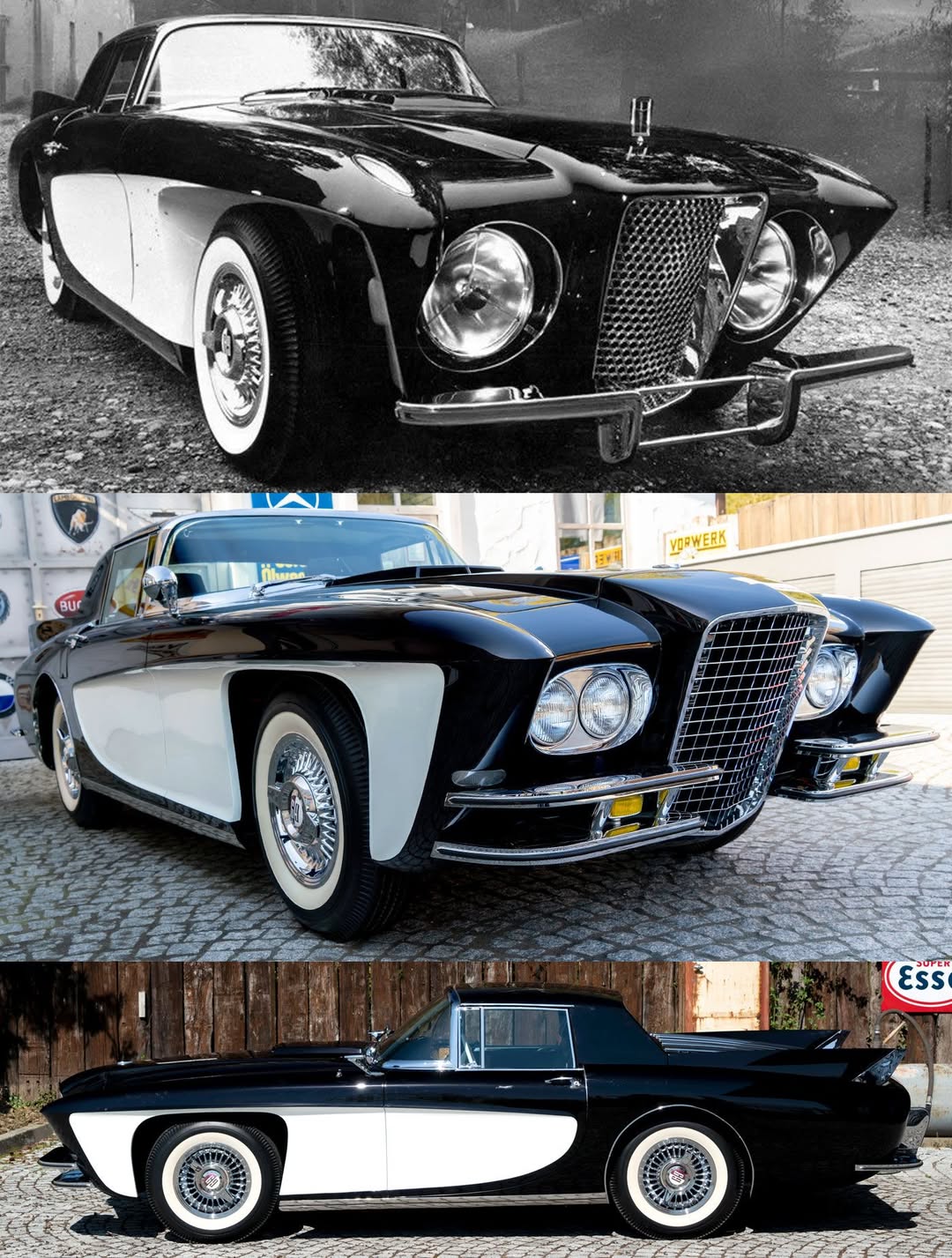
Source