1985 Citroën BX 4TC
Group B homologation requirements demanded 200 street-legal examples, but Citroën’s belated rally contender proved so unsuccessful that only 86 road cars found buyers, with the balance of the run destroyed by the factory.
Facing embarrassment, the manufacturer bought back and destroyed many of the survivors, and current estimates suggest roughly 30 to 40 roadgoing examples are left.
Built by Heuliez with bodies stretched to accommodate a longitudinally mounted engine, the car featured dramatically flared wheel arches and a prominent hood bulge.
Competition pressures forced reliance on production components rather than purpose-built hardware.
The BX retained its standard steel monocoque while many rivals employed lightweight spaceframes and composites, resulting in a weight of about 2,535 pounds (1,150 kg), roughly 420 pounds above the 2,116‑pound (960 kg) Group B minimum.
Power came from a turbocharged 2.1‑liter inline‑four (the N9TE unit related to the Peugeot 505 Turbo engine) producing about 200 horsepower in road trim and around 380 horsepower in Evolution rally form, noticeably down on the 500‑plus horsepower of the quickest Group B cars.
Citroën’s signature hydropneumatic suspension and a five-speed manual gearbox completed the drivetrain.
The car contested just three 1986 World Rally Championship events before withdrawal, managing only a single sixth-place finish at Rally Sweden with Jean-Claude Andruet.
At Rallye Monte-Carlo both entries retired, and at the Acropolis Rally the car’s lack of development was exposed when all three works BX 4TCs failed to finish, with multiple mechanical issues (including suspension-related problems) in the brutal Greek stages.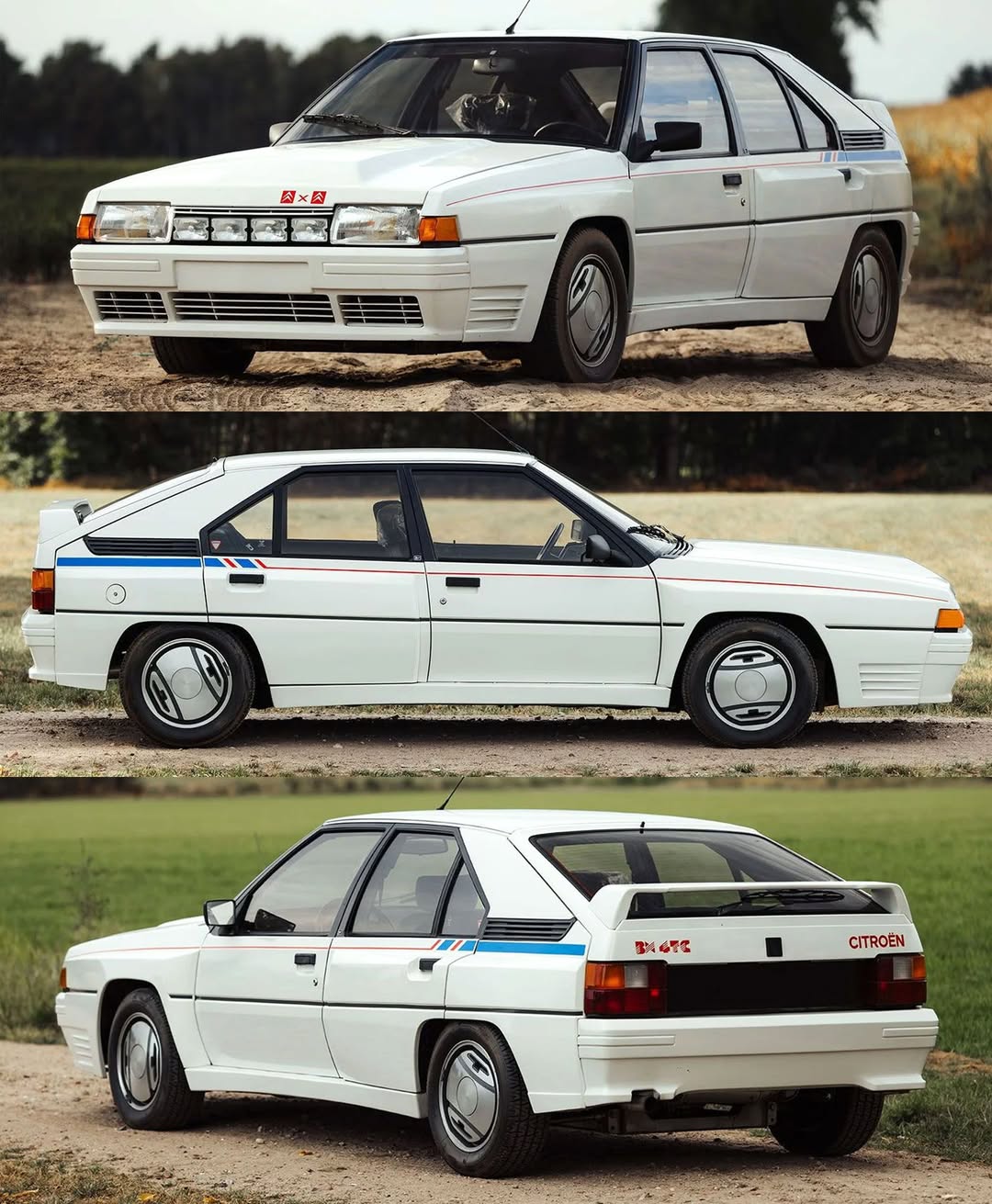
Source