1955 Chevrolet Corvette
Only 700 examples rolled off the St. Louis assembly line for 1955, making it the second-lowest production year in Corvette history.
Despite its limited output, the model year represented a turning point for the Corvette, transforming it from a stylish roadster into a legitimate performance car with the introduction of Chevrolet’s new small-block V-8.
Engineer Zora Arkus-Duntov was a key advocate for adding V-8 power, recognizing that the original Blue Flame inline six-cylinder engine lacked the performance needed to compete as a true sports car. The new 265 cubic inch small-block V-8 produced 195 horsepower when equipped with a four-barrel Carter carburetor.
Corvettes fitted with the V-8 were visually distinguished by a gold “V” incorporated into the Chevrolet script emblem on the front fenders, signaling the car’s upgraded performance credentials.
The V-8 carried a $135 premium over the six-cylinder engine. Early in the model year, buyers were required to pair the V-8 with the Powerglide automatic transmission, which added $178.35 and cost more than the engine upgrade itself. A three-speed manual transmission became available later in the production run, further enhancing the Corvette’s sporting appeal.
Although the six-cylinder engine technically remained available, the vast majority of 1955 Corvettes were built with V-8 power, underscoring the importance of this model year in establishing the Corvette’s performance-focused identity.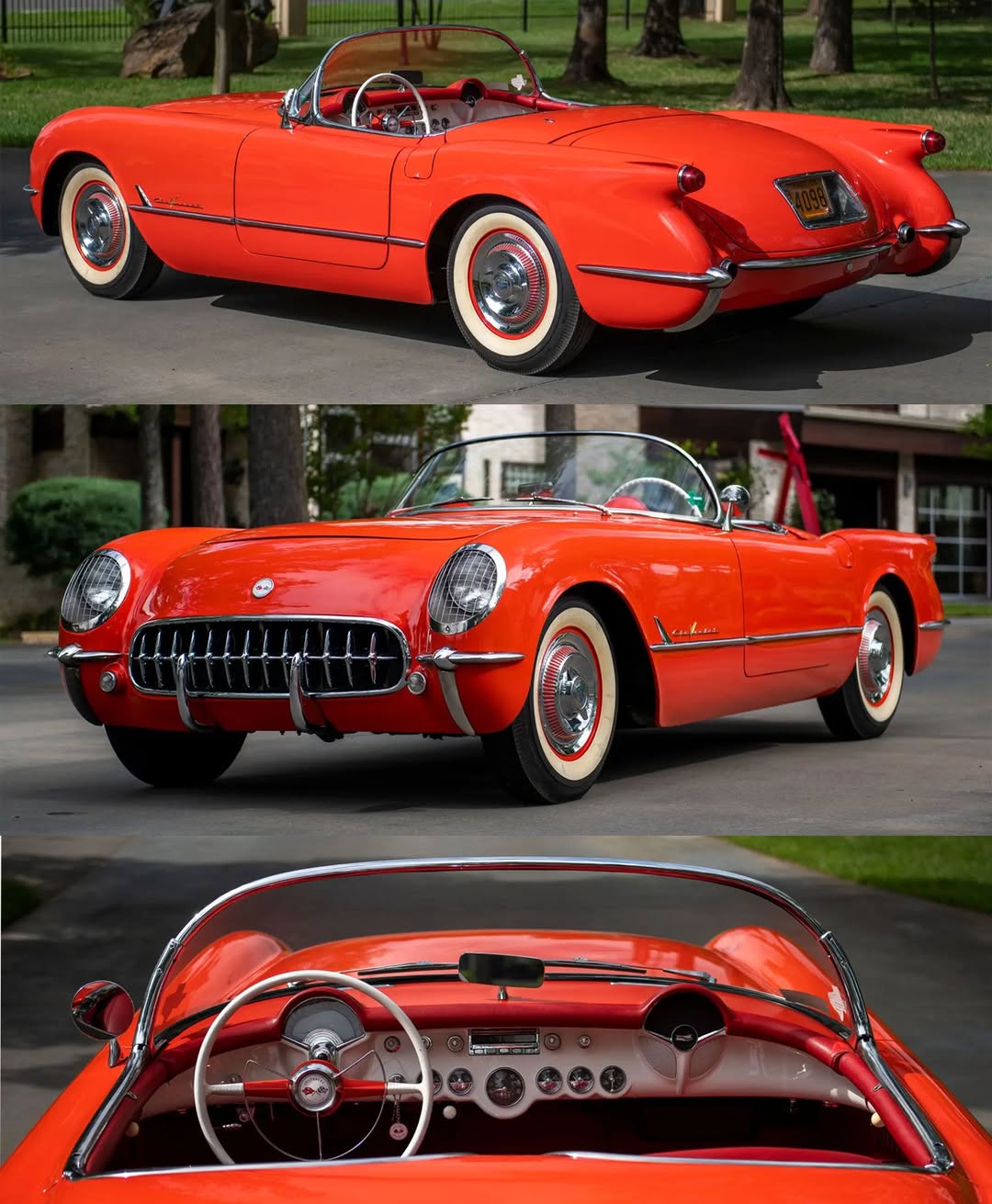
Source