In the 1930s, a ship captain named Stanley Dexter noticed how much Ernest Hemingway admired his own six-toed cat, Snowball. So he gave Hemingway one of Snowball’s kittens.
She was small. She was white. And she had six toes on her front paws.
Hemingway’s sons, Gregory and Patrick, named her Snow White. They didn’t know they were naming the matriarch of a dynasty.
Snow White wasn’t just a pet. She was the beginning of something that would outlive the famous writer himself. She had kittens. Those kittens had kittens. The six-toed gene passed down through generations like a family heirloom.
Sailors believed polydactyl cats brought good luck at sea. They were prized for their climbing skills and hunting abilities. Captain Dexter had sailed down from Massachusetts, where six-toed cats were common on the docks.
When Hemingway died in 1961, his Key West home became a museum. Snow White’s descendants stayed. They still live there now, lounging in the gardens where Hemingway once walked, napping in the sunlight that filters through tropical trees.
Today, roughly 50 cats roam the property. About half of them have the extra toes. All of them carry the gene. The museum staff continues Hemingway’s tradition of naming each cat after a famous person. Humphrey Bogart. Amelia Earhart. Tennessee Williams. Joe DiMaggio.
They sleep on antique furniture. They wander through rooms where some of America’s greatest literature was written. They own the place in a way only cats can.
Polydactyl cats became so associated with Hemingway that they’re now called Hemingway cats. The mutation is rare, mostly found along the East Coast and in southwest England. But in Key West, it’s everywhere. It’s living history with fur and whiskers.
Snow White never knew she would become legend. She was just a kitten, a gift between two men who loved the sea and its traditions. But her legacy walks on padded paws through the same rooms where Hemingway wrote about courage, loss, and survival.
Maybe that’s the most Hemingway thing of all. A small white cat with extra toes, leaving behind something that endures.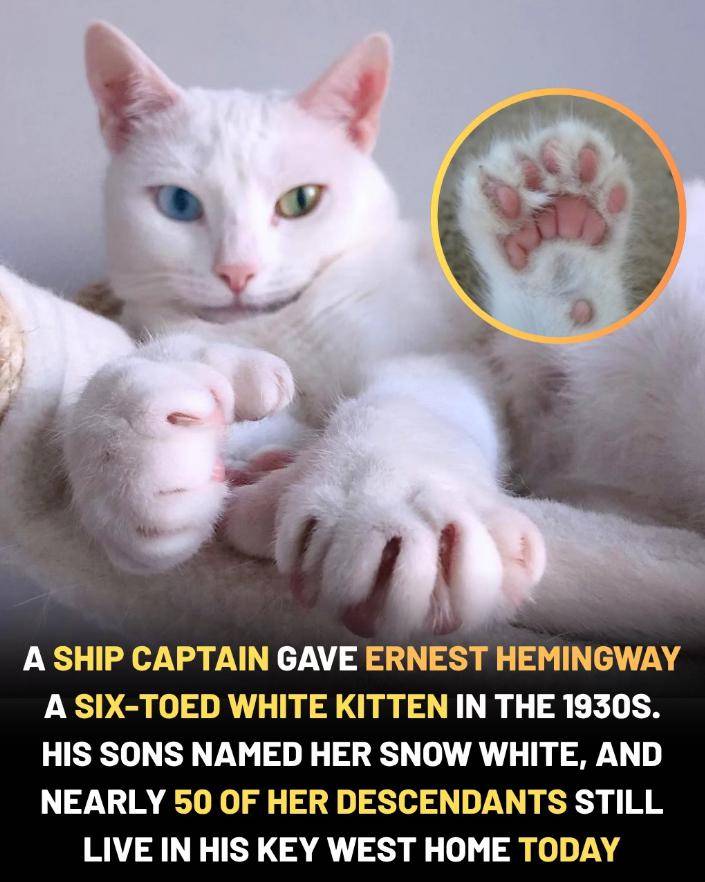

Related Posts
RIP babies… “Kitten season” is not cute. There is so much suffering and death. All 3 of these siblings died. Fading kitten syndrome. They were not healthy…
People Were Told Not To Touch This Ugly Cat, But One Man Chose Not To Listen.. This makes me want to cry Source
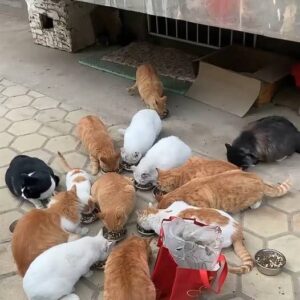
Feeding Stray Cats for Three Years My husband and I have been feeding stray cats for three years now.Together, we receive a little over 6,000 dollar in…
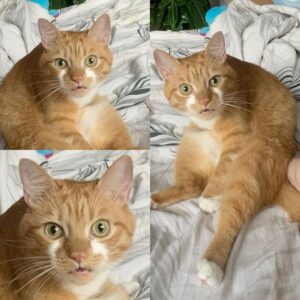
Owning an orange cat is like living with a drunk college roommate who never graduates. Mine is named Beans, and honestly, I should’ve just named him Regret….
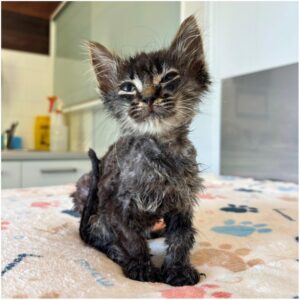
This tiny tabby boy was found yesterday in an industrial area, trapped inside a container of strong adhesive. He was completely stuck, the glue had covered every…