1920 Renault Type EU Coupé de Ville (more pics below 👇)
Renault’s return to automobile production following World War I brought a distinctive blend of pre-war design elements and modern conveniences. The iconic “coal scuttle” hood with its firewall-mounted radiator reappeared, alongside wooden artillery wheels that recalled earlier automotive traditions.
Yet these cars featured full electric starting and lighting, plus monobloc four-cylinder engines representing significant engineering advancement over earlier Renault designs.
Debuting at the 1919 Paris Motor Show, the Type EU rode on a substantial 132-inch wheelbase. Its 172-cubic-inch inline-four produced 12 CV (French taxable horsepower) and was paired with a three-speed manual transmission.
Semi-elliptic springs provided suspension at all four corners, while braking was limited to the rear wheels, as front-wheel brakes would not be adopted by Renault until later in the decade.
Production continued through 1923, with most Type EU chassis receiving custom coachwork from France’s leading artisans. Parisian firm Henry Binder et Cie, representing a coachbuilding dynasty dating to 1820, regularly executed bodies for Renault alongside their work for Panhard and Rolls-Royce.
These craftsmen created diverse body styles including tourers, landaulets, limousines, and formal Coupé de Ville configurations, each displaying the refined elegance expected from France’s premier automobile manufacturers during the early 1920s.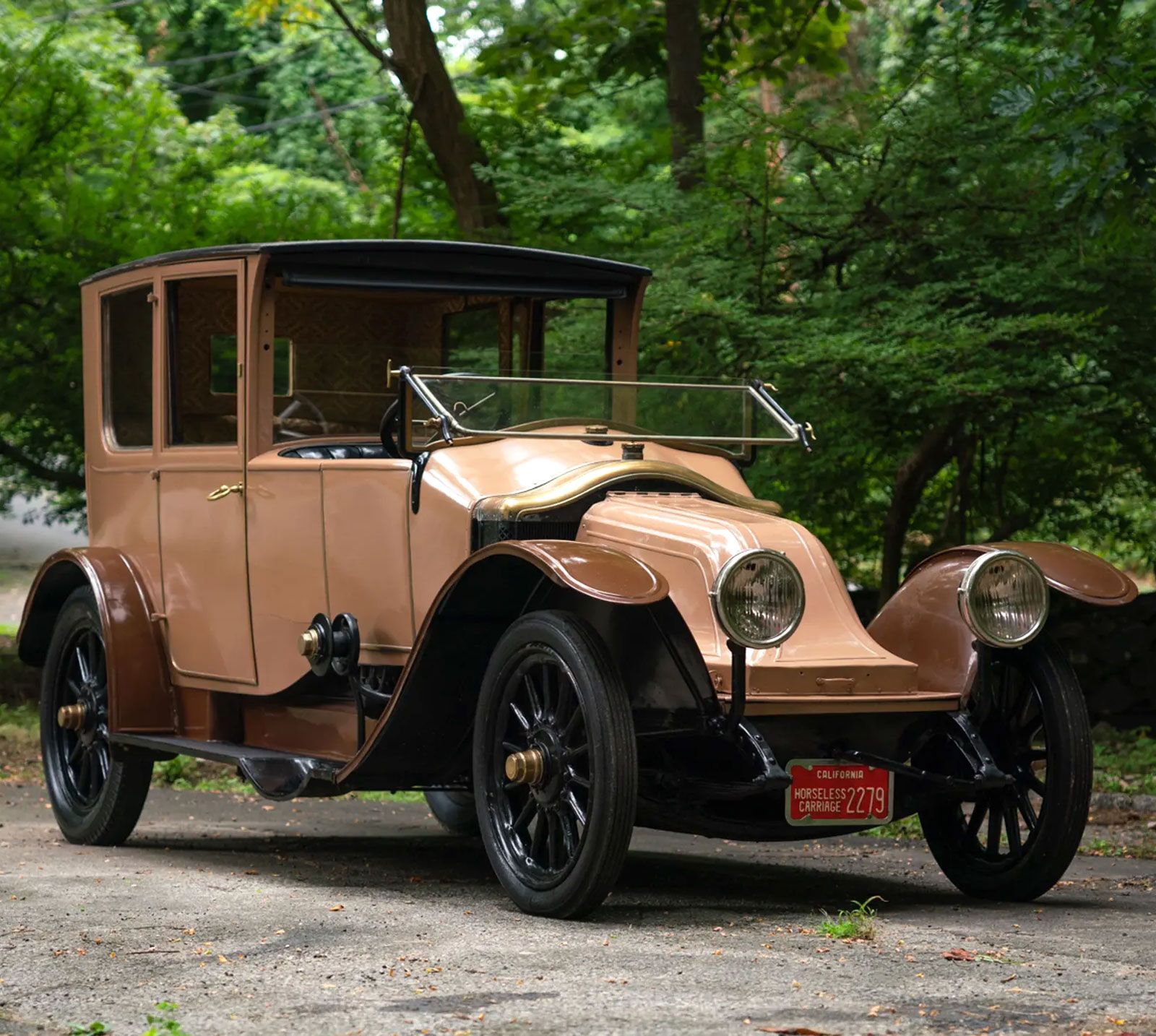
Source