1927 Hispano-Suiza H6B 32CV Coupé Chauffeur
Aviation technology found its way into luxury motoring through Marc Birkigt’s revolutionary design.
The H6B engine was essentially half of Birkigt’s aviation V12, featuring all-aluminum construction and an overhead camshaft, directly inspired by his successful wartime aircraft engines. This engineering heritage gave Hispano-Suiza extraordinary credibility among discerning buyers.
The famous stork mascot celebrated Georges Guynemer’s fighter squadron, whose aircraft used Hispano-Suiza V8 engines. European coachbuilders competed to create formal bodywork for the prestigious chassis, while the company’s reputation attracted royalty, maharajas, and Hollywood stars as customers.
Power came from a 6,597cc straight-six producing 135 horsepower at 2,400 rpm, paired with a three-speed manual transmission. The innovative braking system featured light-alloy drums on all four wheels with power assistance (the industry’s first) technology so advanced that Rolls-Royce later acquired licensing rights.
The seven-bearing crankshaft was milled from a 600-pound steel billet to become a precision 35-pound unit, demonstrating the exceptional engineering standards that made these cars formidable competitors to Rolls-Royce and Bentley.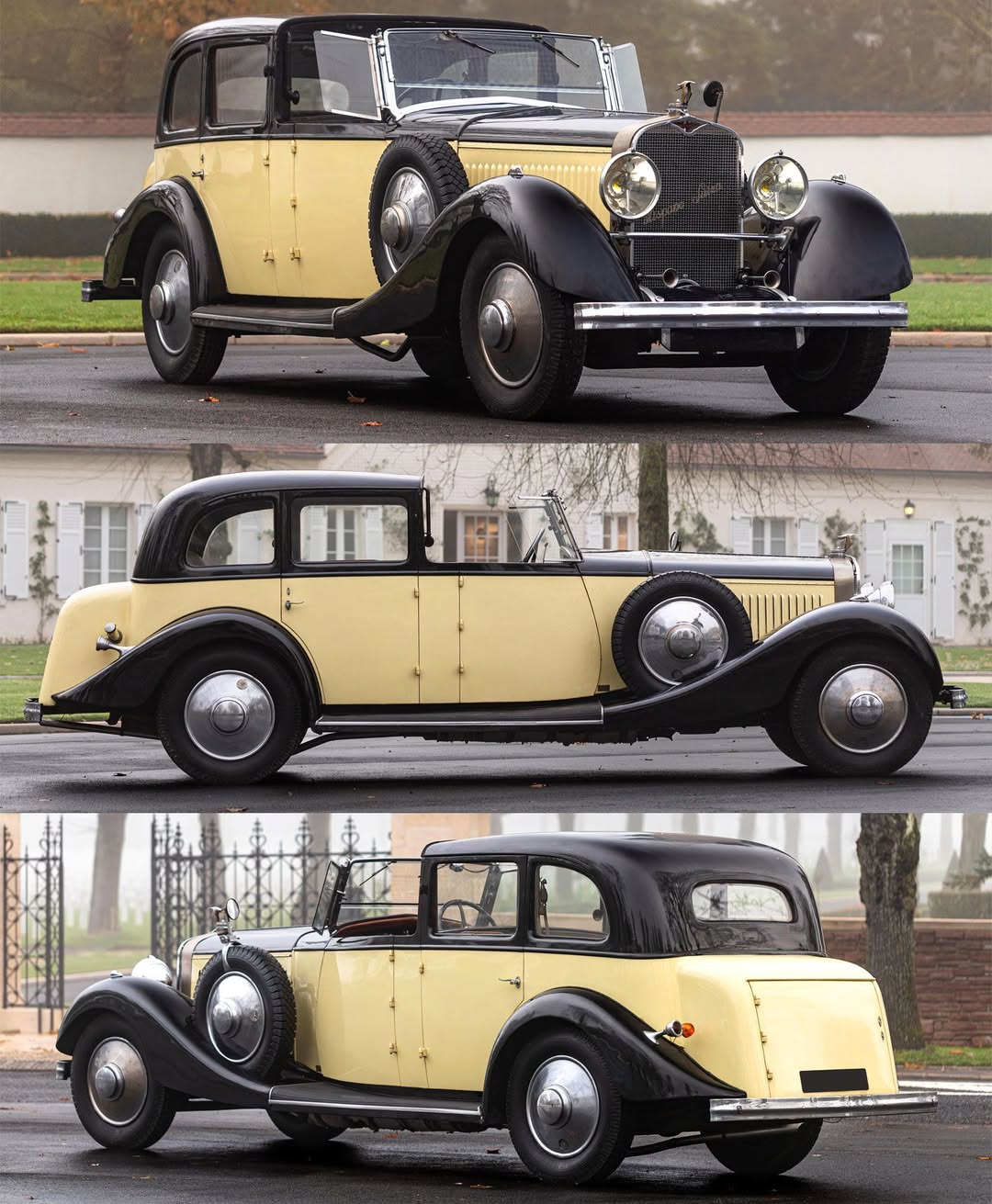
Source