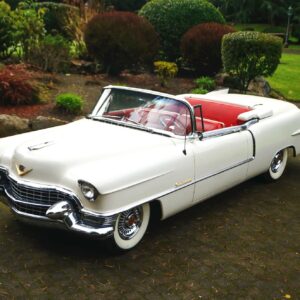
1938 Talbot-Lago T23 Cabriolet
Walter Becchia’s four‑liter (3,996 cc) inline six used hemispherical combustion chambers and an advanced valve layout with crossed pushrods operating inclined overhead valves from a single camshaft high in the block.
In its more sporting forms with multiple carburetors it was quoted at up to around 140 horsepower, while the T23’s touring tune typically produced on the order of 115 horsepower at higher engine speed than earlier three‑liter units.
The seven main‑bearing block proved durable in competition, with closely related four‑liter Talbot entries scoring major prewar successes, including the famous 1937 French racing victories that established the design’s reputation.
Major A.F. “Tony” Lago’s 1935 acquisition of Automobiles Talbot at Suresnes revitalized the marque and provided the platform for these engines and chassis.
The T23 utilized a boxed chassis with independent front suspension and a live rear axle, paired with the Wilson pre‑selector transmission that Lago championed.
Multiple coachbuilders created bodies for the T23 chassis. Figoni et Falaschi produced their characteristic aerodynamic designs with flowing fenders and intricate brightwork, while factory and independent cabriolet coachwork provided more traditional sporting styling.
Curb weight varied by body but typically fell in the 3,200 to 3,500 pound range (about 1,450 to 1,590 kg) for a well‑equipped cabriolet.
The combination of advanced mechanical design and diverse coachwork options attracted considerable interest from European and American clients, and today it underpins the high regard in which Talbot-Lago’s prewar grand touring cars are held.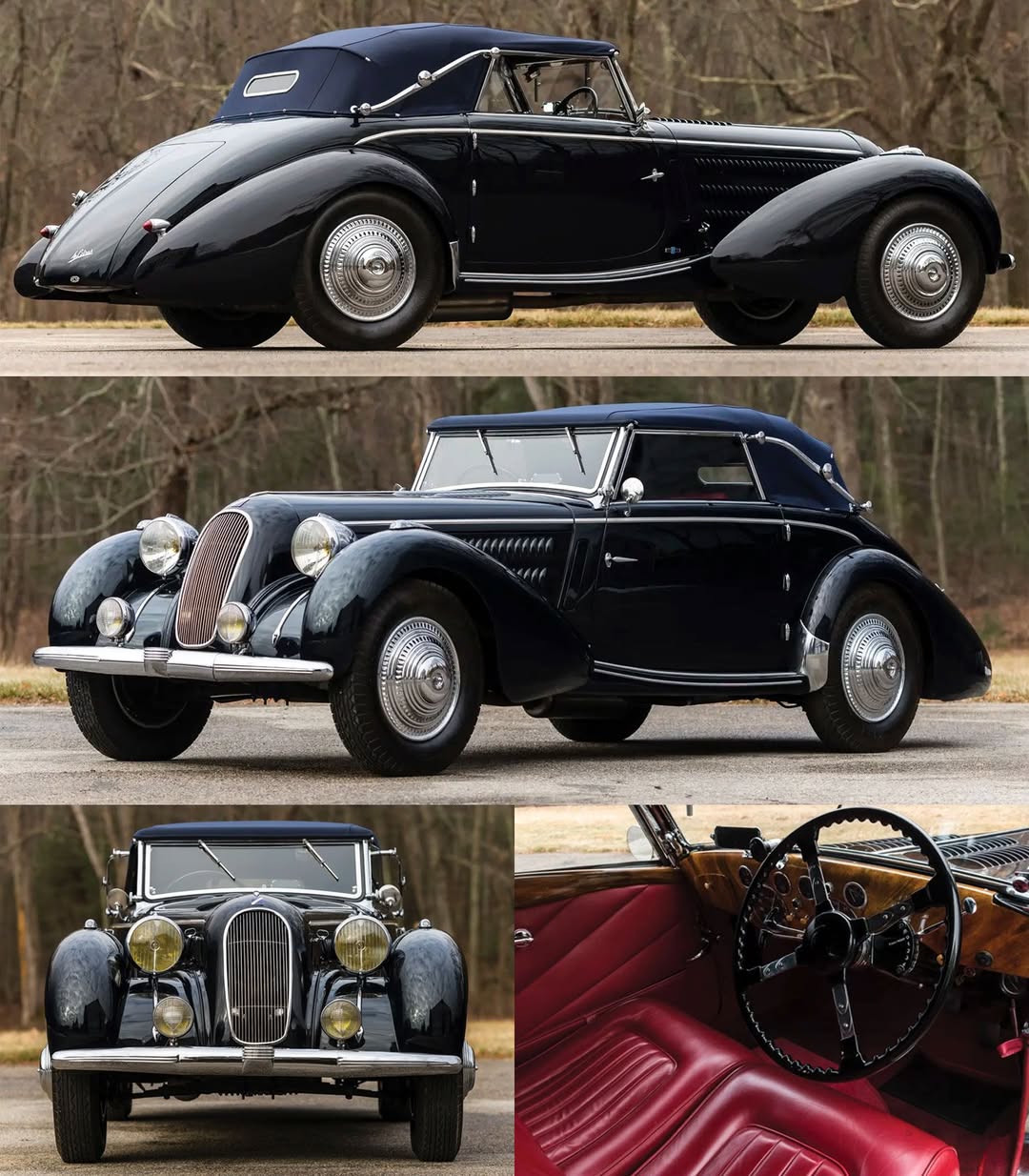
Source