1953 Chevrolet Ambulance
Chevrolet’s Advance-Design commercial chassis served volunteer fire departments and ambulance services throughout North America during the early 1950s.
The Sarnia, Ontario department converted this example from a Suburban Carryall body, outfitting it with emergency lights, dual sirens, and dual exterior mirrors necessary for emergency response duties.
Conversion work typically involved removing rear seating, installing a stretcher mount and medical storage compartments, and repainting in ambulance livery. Interior equipment often included a two-way radio for communication, oxygen equipment for respiratory support, and a first aid kit for initial patient care.
Power came from Chevrolet’s 217-cubic-inch Thriftmaster inline-six, an overhead-valve engine that remained standard in 1953, while the larger 235-cubic-inch six was available in heavier-duty applications.
The column-shift three-speed manual transmission directed power to the rear axle. Curb weight in ambulance configuration was typically around 3,800 pounds (1,724 kg), depending on equipment.
These truck-based emergency vehicles provided communities with practical medical transport before purpose-designed ambulances became common. Their rugged construction offered durability for demanding service conditions, while the enclosed body protected patients during transport.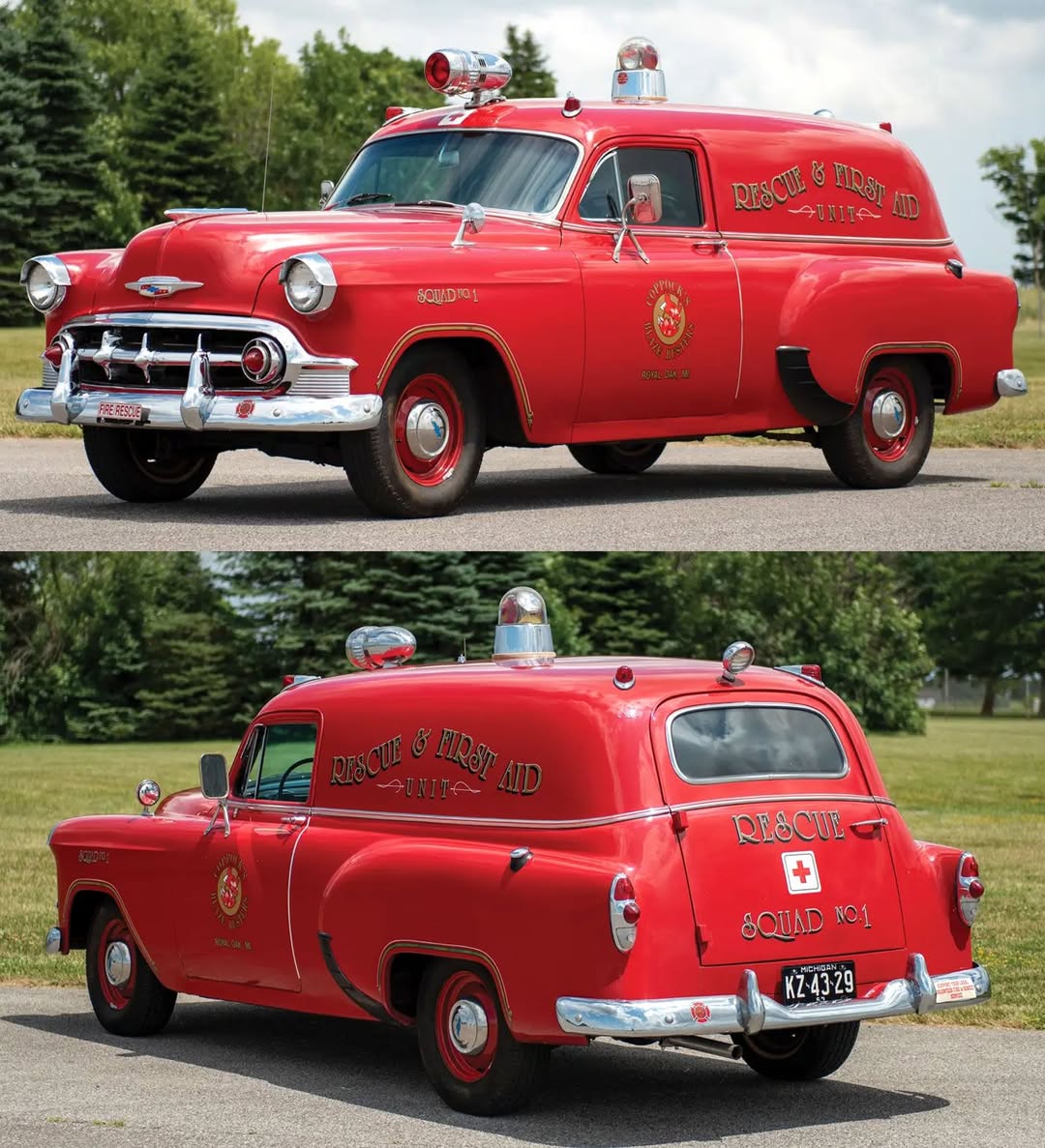
Source