1936 Pontiac Six Motorhome
During the pioneering days of recreational vehicles, when motorhomes represented cutting-edge innovation and the first commercial RV had only debuted at Madison Square Garden in 1910, this extraordinary custom creation stands as one of the most remarkable survivors from the 1930s RV boom.
The Great Depression paradoxically sparked an RV renaissance, as these vehicles offered affordable vacation alternatives for families seeking escape, though few could afford bespoke motorhomes like Captain Francis Scrivens Dunn’s commission.
The former naval captain’s story transforms this vehicle from mere transportation into a testament to love and determination.
After contracting polio on his honeymoon, which left him paralyzed and wheelchair-bound, Dunn designed Britain’s first motorhome specifically to continue traveling with his wife. The ingenious inclusion of a ramp allowed him to board easily and sit beside his wife as she took the wheel, enabling three years of touring Southern England until the war forced his evacuation to Wales in 1940.
Russell’s masterful coachbuilding transformed an imported American chassis into what was essentially a luxury apartment on wheels (complete with water softener and original jam tins). The precision welding work that survives today demonstrates the extraordinary craftsmanship standards of 1930s custom bodybuilders.
This vehicle emerged during the era of “Tin Can Tourists” clubs, when adventurous families were pioneering American road tourism, making Dunn’s accessibility-focused design remarkable.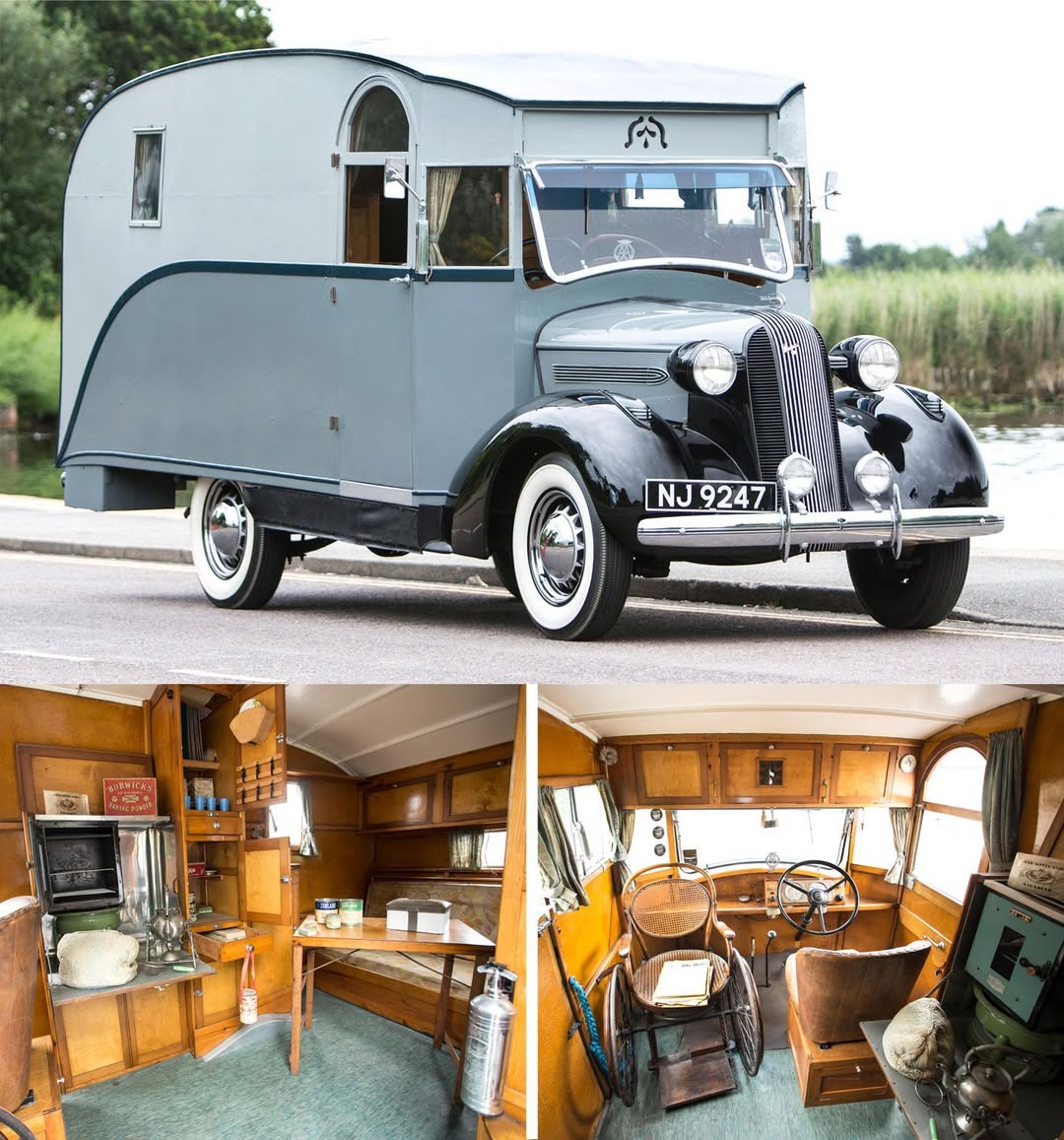
Source