1928 Bentley 4½-Liter Tourer
The Bentley 4½-Liter arrived in late 1927 as a practical solution to a problem W.O. Bentley had observed in the market: too many buyers were loading the excellent but relatively light 3-Liter chassis with heavy coachwork it was never designed to carry, while resisting the cost and complexity of the larger 6½-Liter “Silent Six.”
The 4½-Liter split the difference with an engine that was, in engineering terms, two-thirds of the six-cylinder unit (sharing the same 3.9 x 5.5 inch bore and stroke and the four-valves-per-cylinder, fixed-head architecture), while the chassis, transmission, and brakes carried over largely from the 3-Liter.
The result was a car of considerable character: flexible enough to accept a wide variety of coachwork, from open tourers to enclosed saloons, yet lively enough to satisfy the sporting instincts that defined W.O.-era Bentleys.
The standard wheelbase of 10 feet 10 inches was used on most of the 665 examples built across the model’s four-year production run, with a small number constructed on a shorter 9 feet 9½ inch chassis.
Curb weight typically ranged from about 3,600 to 4,000 pounds (1,633 to 1,814 kg), depending on coachwork.
The open Tourer body style, often with Vanden Plas four-seat coachwork, represents the 4½-Liter at its most purposeful (leather bonnet straps, a classical upright radiator, and cycle-wing fenders giving it the unmistakable look of a serious vintage machine built when sporting motoring was still an adventure).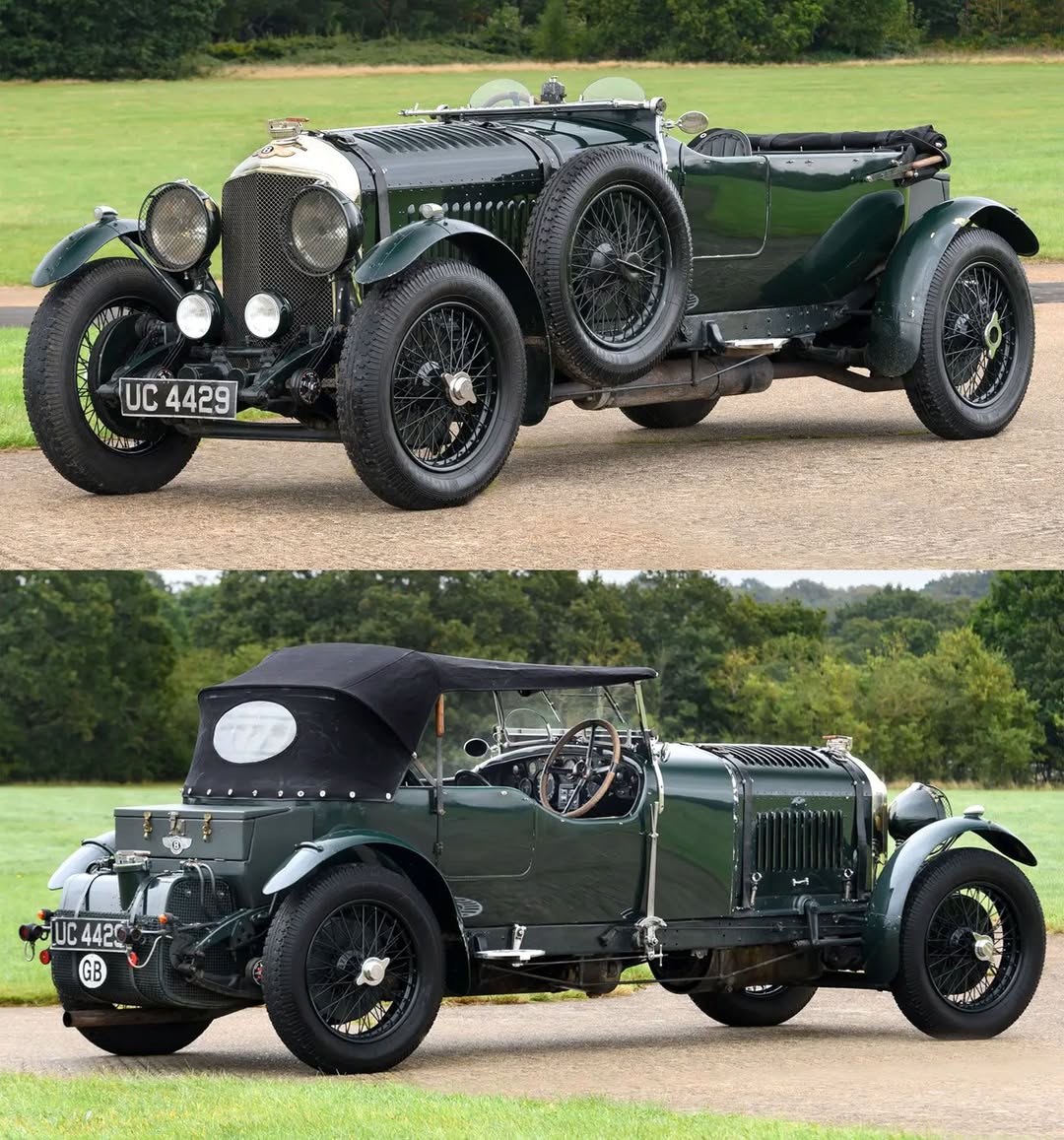
Source