1973 Iso Fidia Saloon (more pics below 👇)
Produced in a total run of 192 examples between 1967 and 1975, the Iso Fidia was a hand-built four-door Italian saloon that carried a price tag exceeding that of a contemporary Rolls-Royce in several markets.
The long-wheelbase body was styled by Giorgetto Giugiaro during his tenure at Ghia, early work from the designer who would go on to shape some of the most significant cars of the following decade.
The four-door configuration rode on a 112.2-inch wheelbase, longer than the Iso Rivolta coupe on which the Fidia was based, giving it genuine rear passenger accommodation without sacrificing sporting proportions.
Underneath, Giotto Bizzarrini’s chassis carried independent front suspension with a live rear axle located by trailing arms and a Watt linkage, along with four-wheel disc brakes.
Early cars used Chevrolet V8s of 5.4 liters (327ci) or 5.7 liters (350ci); later production examples, including many 1973 cars, received the 5.8-liter Ford 351 Cleveland V8. A minority of the 192 Fidias built left the factory with the Cleveland engine, making them among the rarest configurations within an already scarce model.
Celebrity ownership added to the Fidia’s mystique, John Lennon purchased an early example that was among the first right-hand-drive cars built. Production of Iso models effectively ended in 1974 as the company succumbed to financial pressures brought on by the oil crisis and the challenges of low-volume exotic car manufacturing.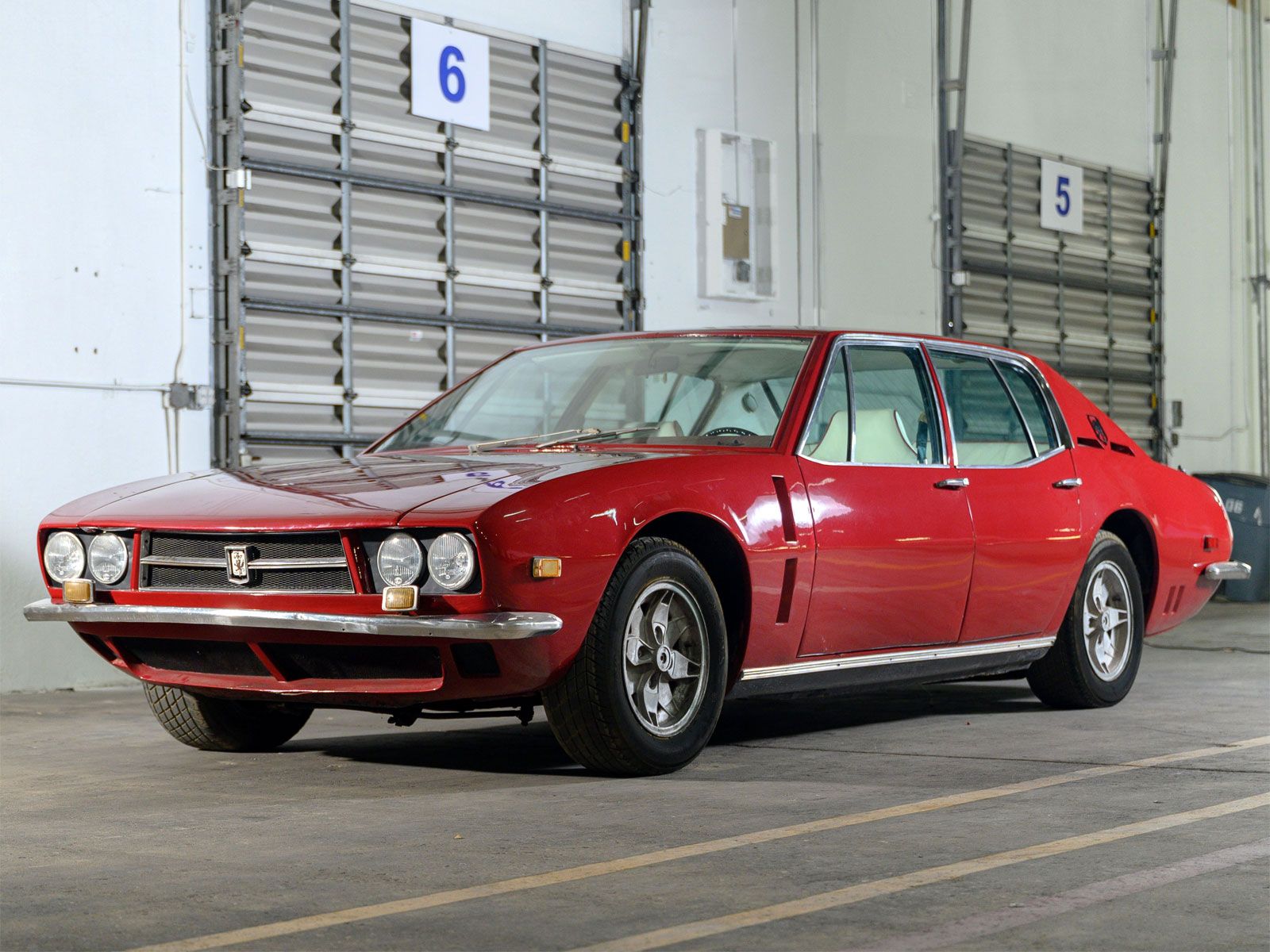
Source