1919 Pierce-Arrow Model 38 Five-Passenger Touring
The “Dual Valve” designation points to something genuinely unusual in early engine design. Beginning in 1918, Pierce-Arrow adopted a four-valve-per-cylinder T-head inline-six configuration with dual ignition (two spark plugs per cylinder), one of the very few multi-valve flathead designs ever produced.
The result was a notably more responsive engine, and the 38 horsepower Series 31 benefited from the new design. The lighter car and responsive motor, paired with a four-speed transmission, made it one of the more enjoyable touring cars of its day.
The Model 38 carried Pierce-Arrow’s proprietary aluminum bodywork, cast in thin flanged panels using technology developed in partnership with the Aluminum Company of America, a fellow Buffalo concern. The panels were fitted and riveted together, producing a lightweight yet durable structure with an unusually rigid feel.
The Series 31 rode a 134-inch wheelbase, with the 414 CI six producing its rated 38 horsepower by manufacturer rating (not the later AMA formula). Dual ignition was part of the specification.
Pricing placed Pierce-Arrow firmly at the top of the American market, with touring models running well above the industry average, a reflection of the handwork involved in building each car.
By 1919, the Model 38 was in its final iteration. Pierce-Arrow would retire the dual-valve design after 1920, moving toward a thoroughly modernized range as the decade progressed.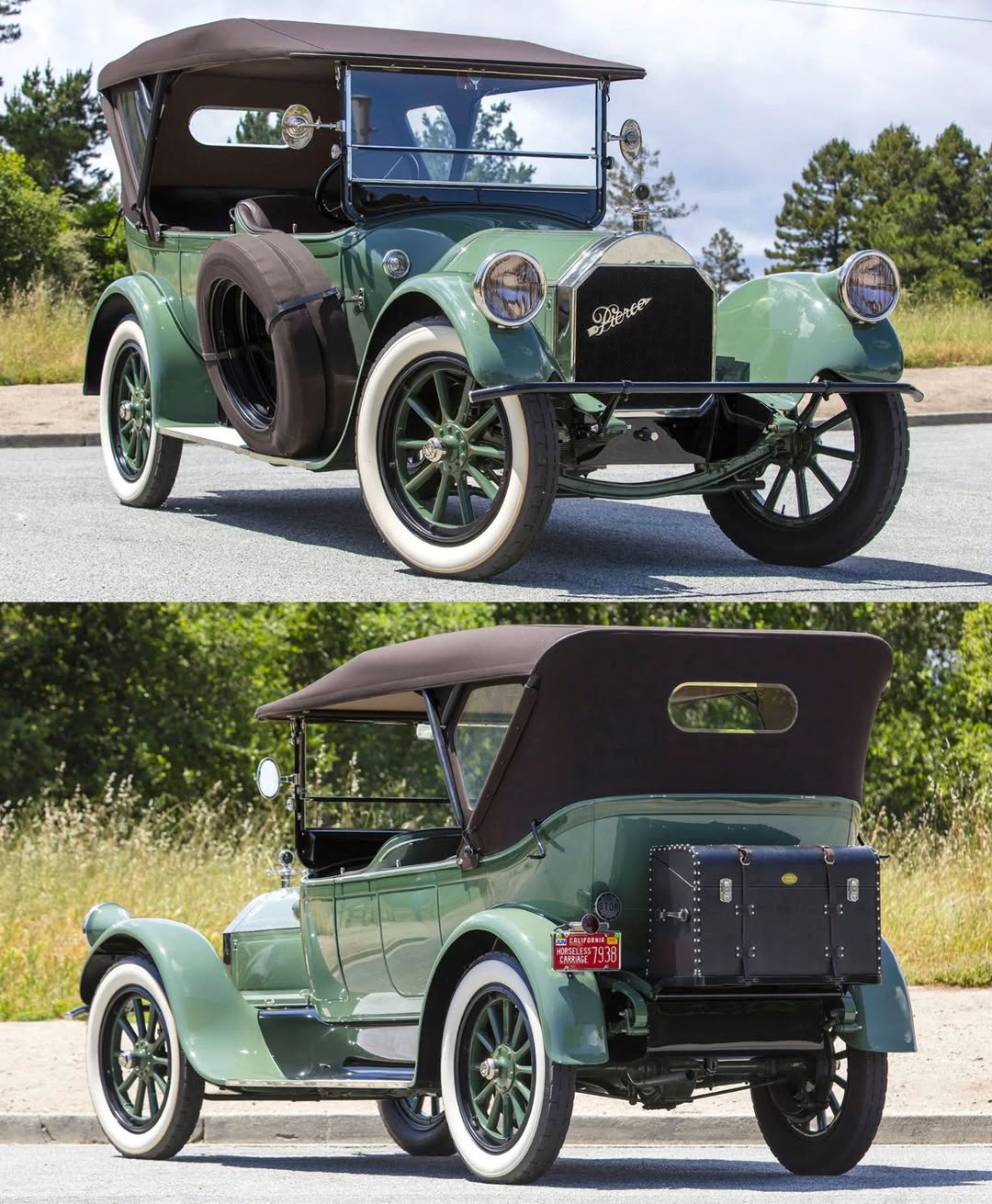
Source