1951 Hudson Hornet Convertible Brougham
The Convertible Brougham was the rarest regular-production body style in the 1951 Hornet lineup, with 551 produced (a figure that puts it near the top of any Hudson collector’s want list).
The step-down unibody architecture, in which the floor pan drops below the door sills within the perimeter frame, gave the Hornet an unusually low center of gravity for a full-size American car.
That structural fact, more than anything else, explained what happened on the NASCAR Grand National circuit: Hudsons won 12 of the 41 NASCAR Grand National races held in 1951, with drivers including Herb Thomas, Marshall Teague, and Tim Flock turning the car into a racing force that persisted into the mid-decade.
The engine at the heart of it was a 308 cubic inch L-head inline six (a flathead configuration that seemed retrograde at a time when competitors were moving toward overhead-valve V-8s, yet proved devastatingly effective in competition).
The Twin H-Power option fitted dual one-barrel Carter carburetors and first became available as a dealer-installed option in mid-1951, later offered as a factory option.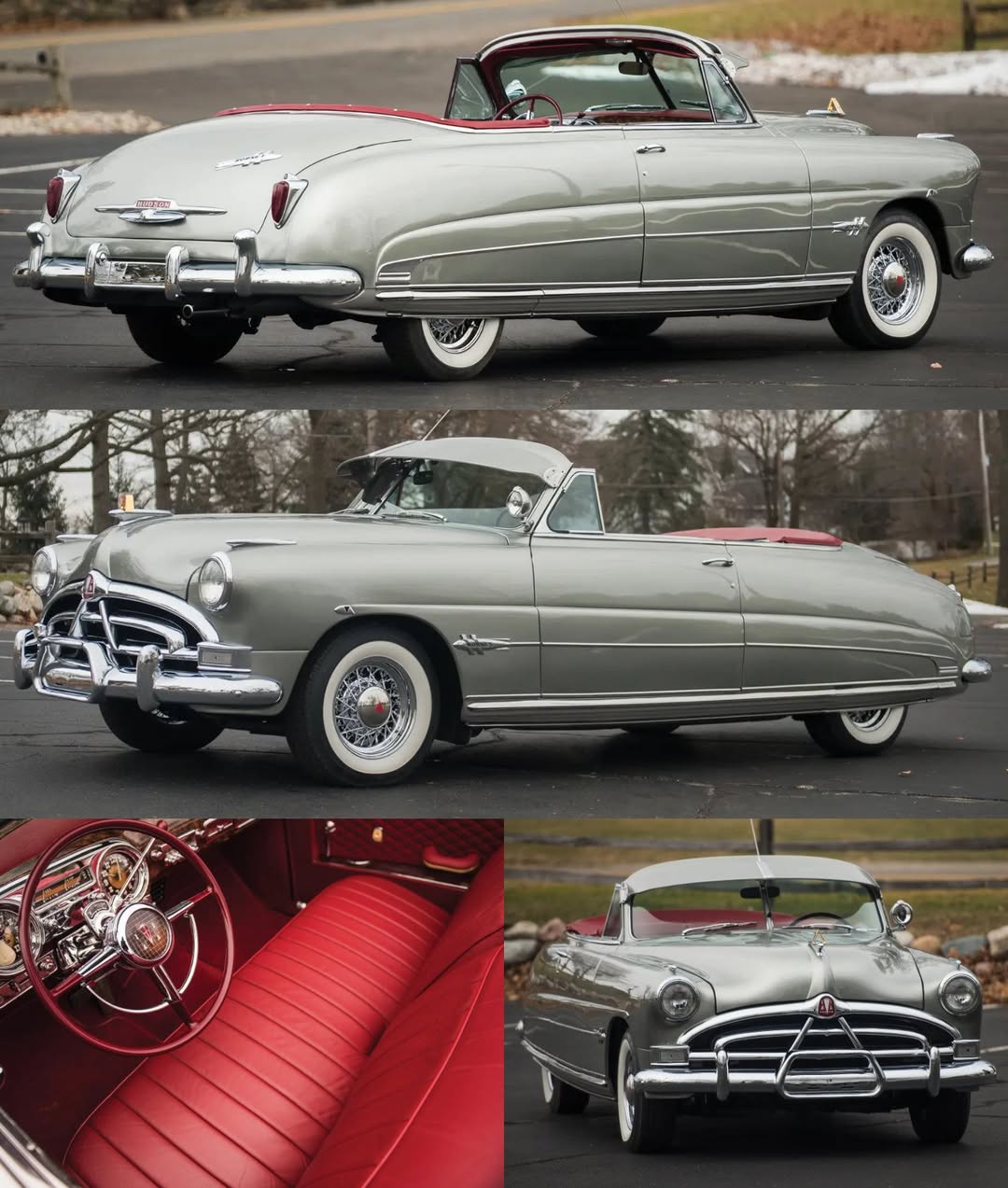
Source