1929 Chrysler Series 75 Tonneau Phaeton
Chrysler’s rapid ascent from the remains of Maxwell and Chalmers had propelled it to America’s third-largest automaker by 1929, with the new Series 75 representing the company’s engineering ambitions.
The rare Tonneau Phaeton body style showcased distinctive two-tone blue paint complemented by eye-catching orange wire wheels and pinstriping details that made this luxury touring car unmistakable on period roads.
Advanced engineering features separated the Series 75 from competitors. Lockheed hydraulic drum brakes provided superior stopping power, while the narrow-profile radiator incorporated built-in shutters for temperature control. Full-crown fenders, bowl-shaped headlamps, and dual-cowl ventilators contributed to the sophisticated appearance.
The 248.9 cubic inch L-head inline six-cylinder engine produced 75 horsepower, matching the model’s numerical designation and delivering a top speed of about 75 mph through a three-speed manual transmission. Chrysler also introduced down-draft carburetor technology and expanded the use of rust-proofing treatments in 1929, underscoring its focus on durability and innovation.
Interior appointments included full blue leather upholstery beneath a tan Haartz cloth convertible top, with the dashboard finished in elegant black and gold. Popular factory options like dual side-mounted spare tires, Pilot-Ray road lamps, and cowl lights enhanced both functionality and visual appeal.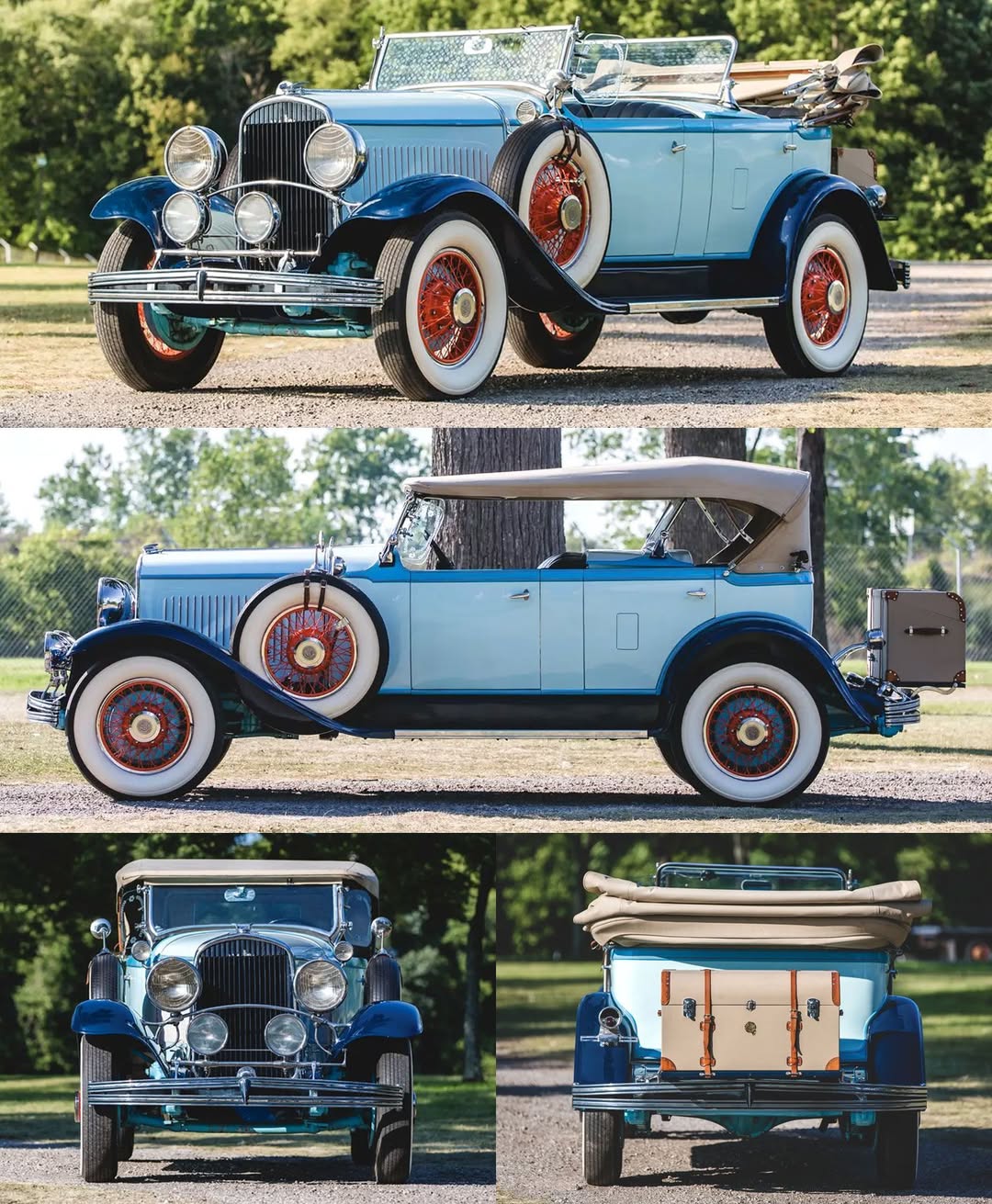
Source