1959 Borgward Isabella Combi
Introduced in 1955 alongside the Isabella cabriolet, the Combi brought three-door wagon practicality to a range better known for its sedan and coupe.
Notably, it was an in-house production at a time when wagon versions of comparable cars from Ford and Vauxhall were often conversions carried out by independent coachbuilders.
The American-influenced body used the same unitary construction as its siblings, with a roofline that extended cleanly over a useful load area without significantly compromising the sedan’s proportions. Overall length was approximately 173 inches.
Early examples featured a side-hinged rear door, which proved impractical; this was revised during production to a top-hinged tailgate. By 1958, the more powerful 75 bhp TS engine (previously reserved for the coupe and cabriolet) became available in the wagon as well.
Power in all configurations came from a 1.5-liter overhead-valve four-cylinder, driving the rear wheels through a four-speed manual gearbox (with synchromesh on the upper gears) and typically a column-mounted shifter. Curb weight was approximately 2,270 pounds (1,030 kg).
Across its production run, Borgward built 202,862 Isabellas in all body styles between 1954 and 1962. The Combi accounted for roughly 22,000 units, making it one of the rarer factory variants today, and the company’s controversial 1961 insolvency (with some cars completed and titled into 1962) made sure that no direct successor ever followed.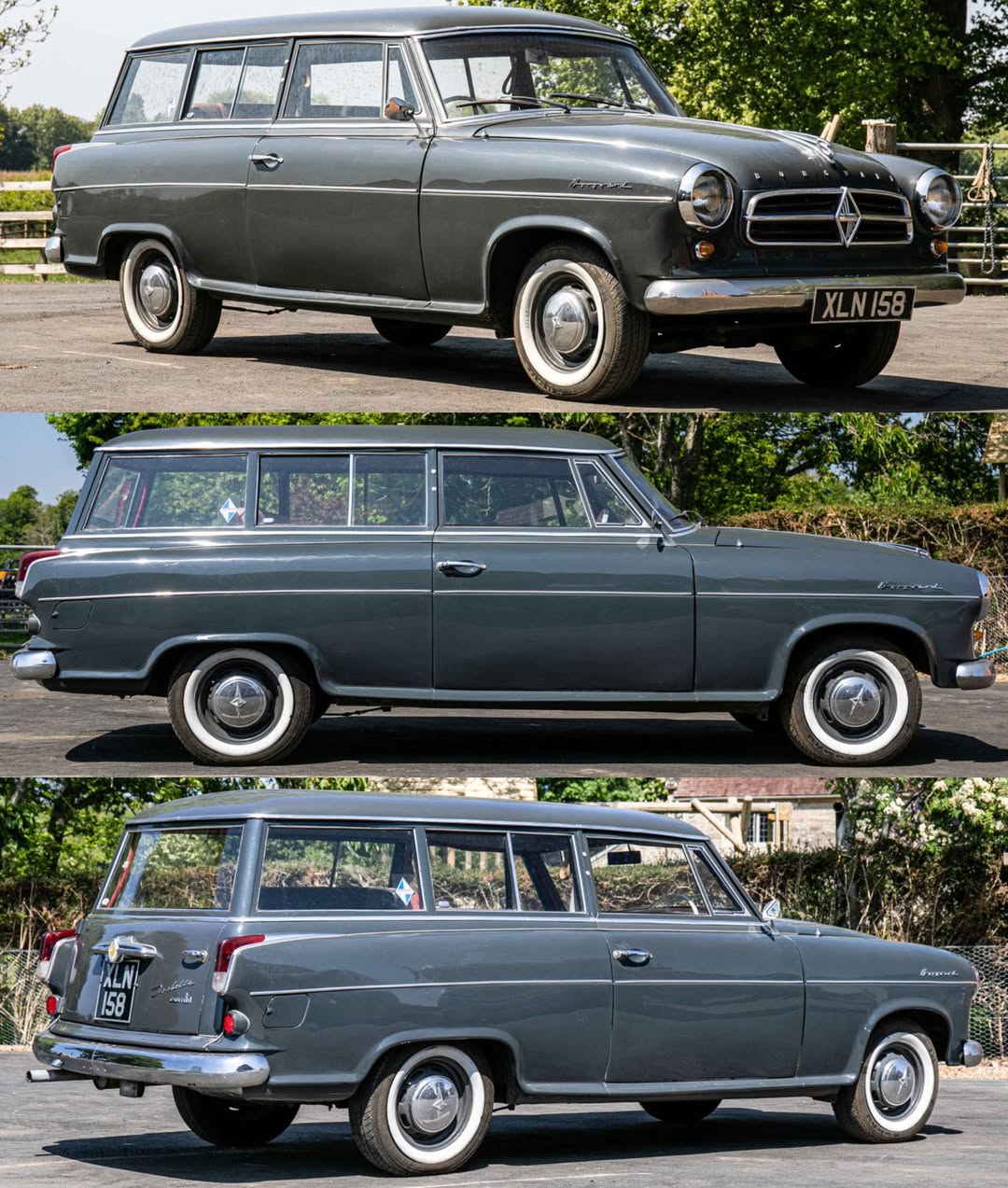
Source