1937 Lancia Aprilia Cabriolet
Vincenzo Lancia’s final design entered production in February 1937, the same month its creator died. Rather than a stylistic exercise, the Aprilia’s aerodynamic body was shaped through wind tunnel testing conducted with Battista “Pinin” Farina and the Polytechnic University of Turin, yielding a drag coefficient often cited at around 0.47 (among the lowest of any production car of the period).
Pillarless construction and mirror-image front and rear doors gave the sedan an openness of access that was genuinely unusual for its time.
The engineering underneath matched the body’s ambition: monocoque construction, all-independent suspension, hydraulic brakes, and an overhead-camshaft narrow-angle V4.
The first-series engine displaced 1,352 cc (82 cubic inches) and produced 47 hp; a 1,486 cc (91 cubic inch) unit with 48 hp arrived for the second series in 1939. Despite modest output, the car’s light construction and aerodynamics put top speed at close to 80 mph.
Beyond the standard berlina, Lancia supplied approximately 7,000 bare chassis for coachbuilt bodies, with carrozzerie including Pinin Farina, Stabilimenti Farina, Touring, and Zagato producing cabriolets and coupés on the platform.
Total berlina production reached 20,082 units across the model’s run through 1949.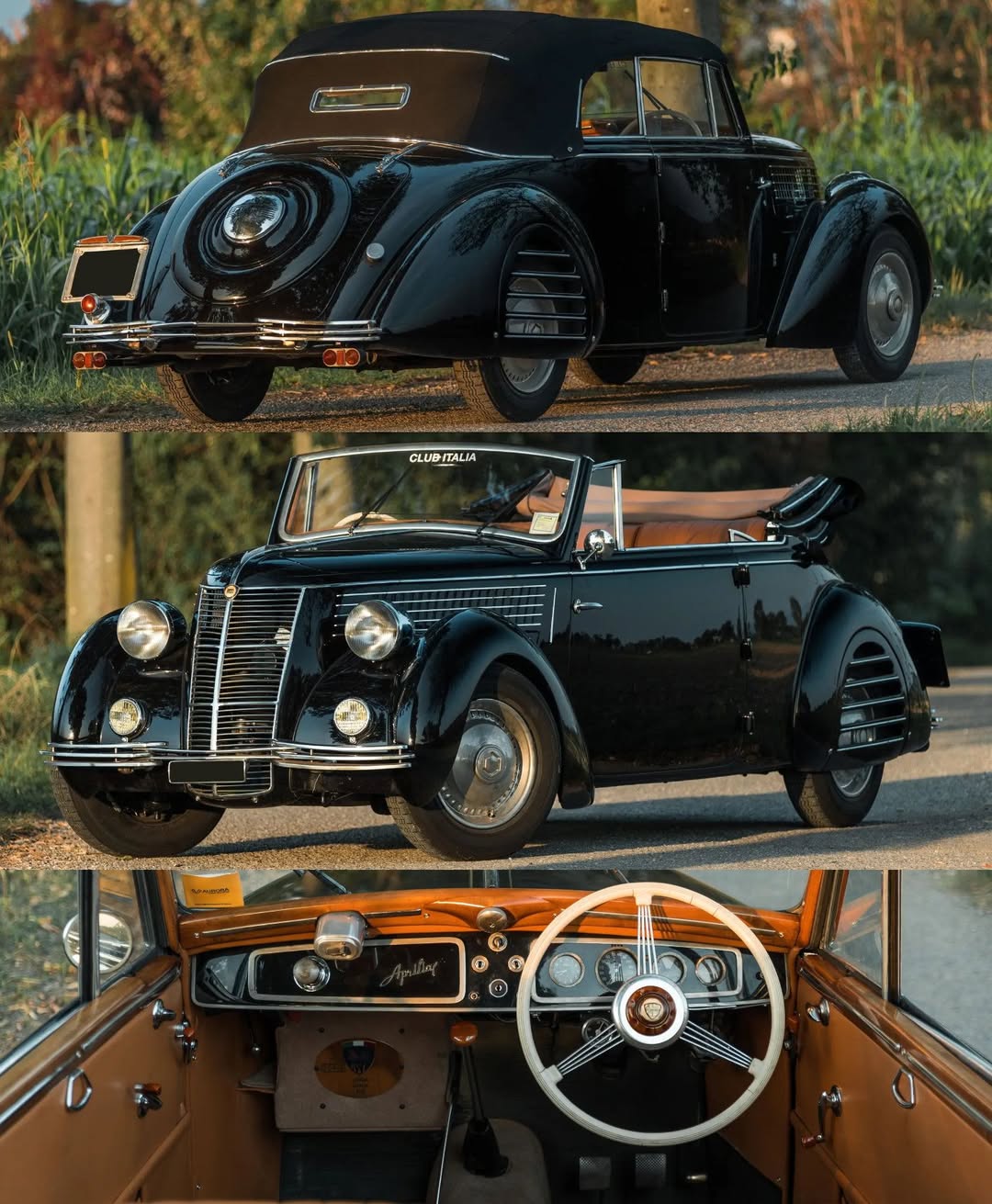
Source