1965 Alvis TE21 DHC
Vertically-stacked twin headlights distinguished this Series III evolution of Alvis’s 3-liter line, marking a visible break from the earlier horizontal-lamp TD21 while still reflecting Hermann Graber’s underlying design themes.
Mulliner Park Ward executed the coachwork in London, maintaining clean, largely unadorned bodylines with minimal brightwork, which gave the TE21 a quietly elegant Continental character; the curved one-piece windscreen and pillarless drophead configuration allowed four-passenger accommodation with better headroom than earlier cars.
Beneath the bonnet, the 2,993cc overhead-valve inline-six produced about 130 horsepower at 5,000 rpm in TE21 form, using revised cylinder heads and manifolding that represented the most powerful development of the basic engine family first seen in the 1950 TA21.
A ZF five-speed manual gearbox was available as an option, with a Borg-Warner automatic offered as the alternative, while four-wheel disc brakes, independent front suspension with coil springs, and a live rear axle on semi-elliptic leaf springs provided refined ride and adequate stopping power for a quoted top speed of roughly 107 mph.
Production amounted to only a few hundred TE21s between 1963 and 1966, generally cited at 352 chassis in total.
Approximately one-third of these carried drophead coupe bodywork, placing the TE21 DHC among the last low-volume, traditionally coachbuilt British grand tourers built before Alvis ceased passenger car production in 1967.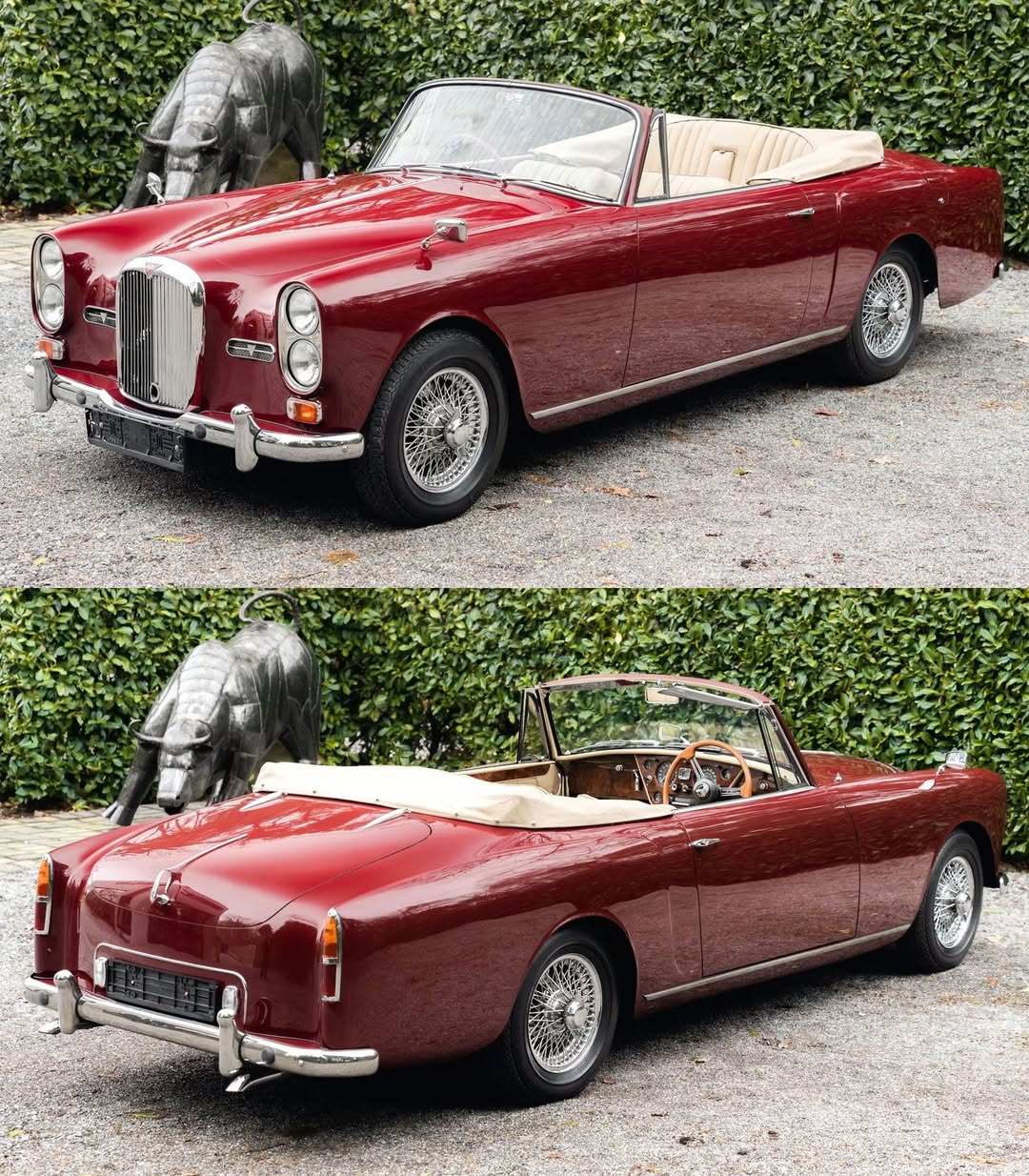
Source