1941 SS 100 Jaguar 2½-Litre Roadster
William Heynes and Harry Weslake transformed a side-valve Standard engine into an approximately 102-horsepower overhead-valve six-cylinder powerplant that helped define British sports car performance in the late 1930s.
The SS 100’s rakish two-seat bodywork, constructed from aluminum panels over an ash frame, weighed just over 2,600 pounds on a shortened 104-inch wheelbase derived from the 2½-litre saloon chassis.
Independent front suspension and a live rear axle were both carried on semi-elliptic leaf springs, while four-wheel Girling mechanical drum brakes provided stopping power.
The 2,663 cc inline-six breathed through twin SU carburettors and drove a four-speed manual gearbox with synchromesh on the top three ratios. Although the “100” designation suggested triple-digit speeds, the 2½-litre version achieved roughly 95 mph in period testing with the windscreen folded.
Competition enthusiasts campaigned these roadsters at venues such as Donington Park, Shelsley Walsh, and the RAC Rally throughout the pre-war years.
Production commenced in 1936 and effectively concluded by 1939, with total SS 100 output generally quoted as 198 2½-litre cars and 116 3½-litre cars. A few examples were first registered later, but 1941 is not typically recognized as a distinct production year, so references to “1941” SS 100s usually reflect late deliveries rather than a separate run.
Just 198 2½-litre models were built, making survivors highly prized among collectors of pre-war British sports cars.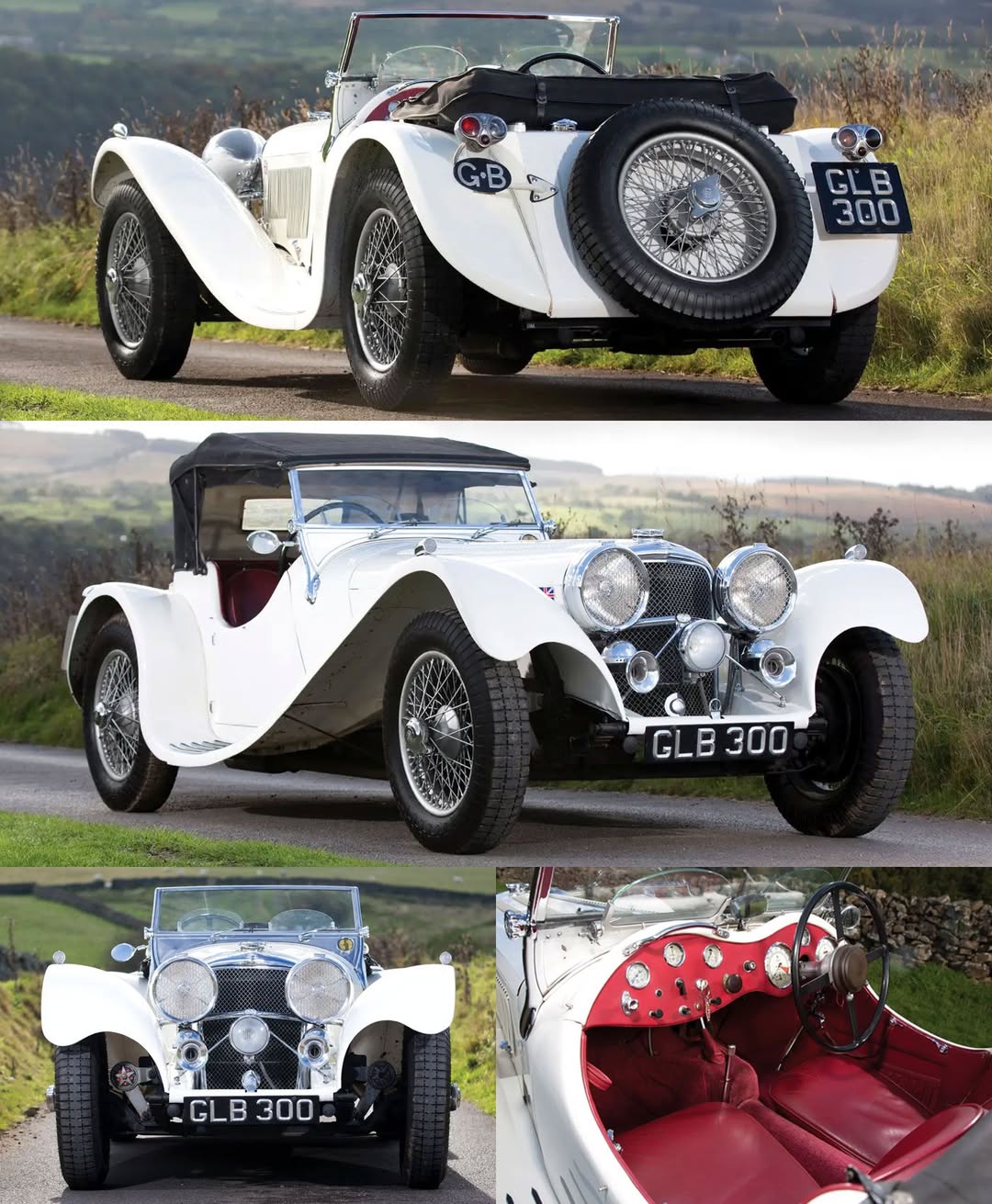
Source