1968 Mercedes-Benz 280SL
Paul Bracq’s concave hardtop design became one of the most recognizable automotive silhouettes of the 1960s. The “Pagoda” nickname appeared almost immediately after the W113 debuted in 1963, a reference to the roofline’s resemblance to Asian temple architecture.
Weight-saving aluminum construction was used for the hood, door skins, trunk lid, and tonneau cover, while the modified W111-based chassis featured independent front suspension, a rear swing axle, and four-wheel disc brakes.
Mercedes-Benz introduced the 280SL in 1967 as the final evolution of the W113 platform, upgrading to a 2.8-liter inline-six with Bosch mechanical fuel injection. US-market versions were rated at 160 HP due to emissions tuning, while European-spec cars produced 170 HP.
Revised rear axle ratios helped preserve drivability and low-speed response. A four-speed manual transmission was standard, with an optional ZF five-speed manual or four-speed automatic available.
While it didn’t match the outright performance of the earlier 300SL, the 280SL delivered capable handling, strong braking, and impressive refinement.
The combination of Bracq’s timeless styling, Mercedes-Benz build quality, and the durable inline-six has made the 280SL one of the most enduringly admired roadsters of its era.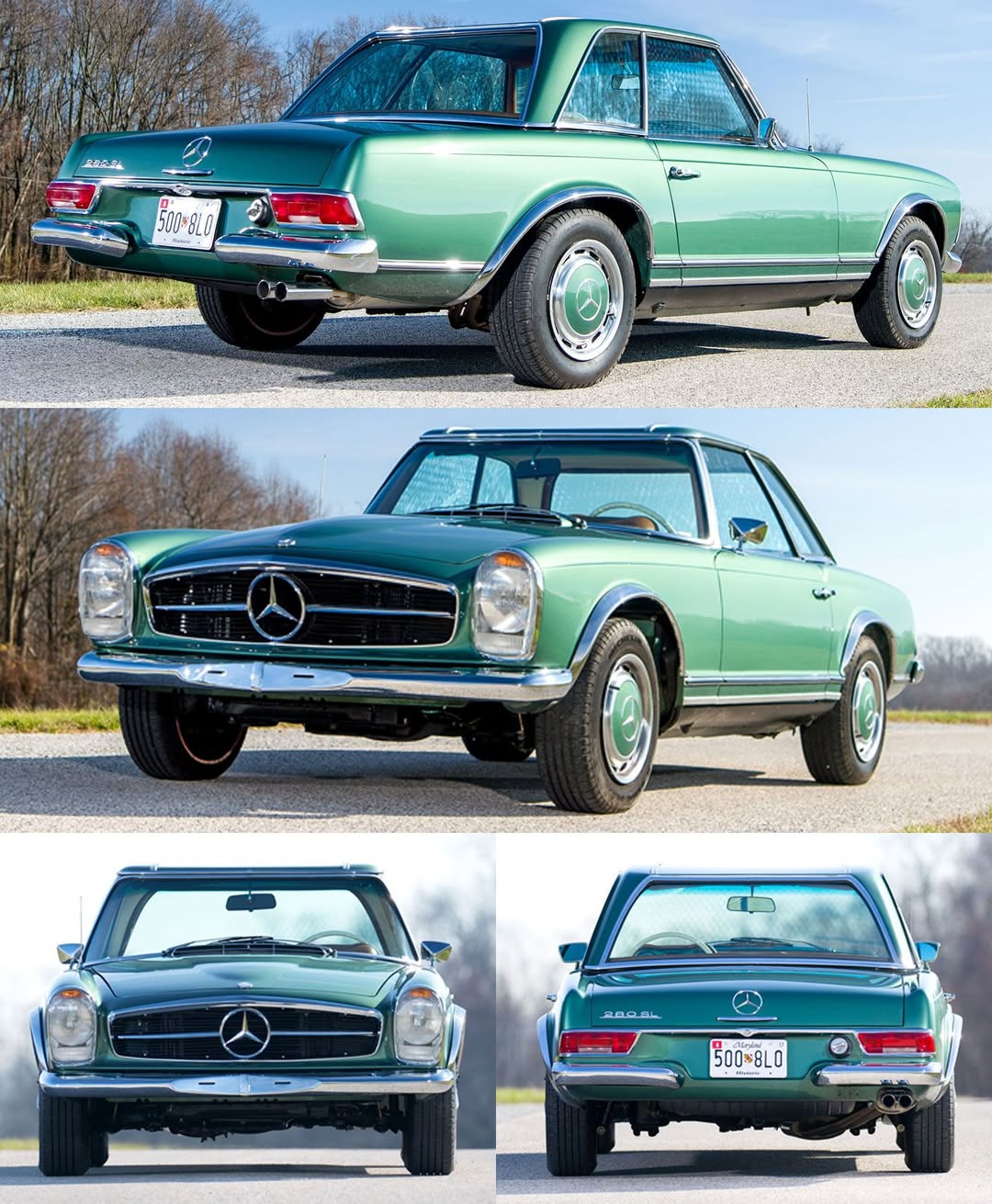
Source