1953 International Travelall
International Harvester launched its factory-built station wagon competitor to the Chevrolet Suburban in early 1953 with the R-110 Travelall, which was part of the new-for-1953 R-series light-truck line.
Built on a 115-inch wheelbase half-ton truck chassis with solid axles and leaf springs, the all-steel body replaced the wood-bodied wagons and upfitted panel trucks that International had previously relied on from outside coachbuilders.
Three rows of individually removable seats were offered, accommodating up to eight passengers. Power came from International’s 220-cubic-inch “Silver Diamond” overhead-valve inline-six rated at approximately 100 horsepower, paired in typical specification with a three-speed column-shift manual transmission.
The R-110 designation indicated 1/2-ton capacity, and while heavier-duty R-111 and R-112 pickups existed in the R-series range, the early Travelall wagon itself was cataloged primarily on the R-110 1/2-ton chassis rather than across all three codes.
The Travelall’s truck-based construction delivered exceptional durability and a decidedly utilitarian, commercial-grade character, more akin to a windowed panel truck than a car-derived station wagon.
Standard equipment included double-opening rear “barn doors,” with a one-piece liftgate over a drop-down tailgate available as an option on early examples.
By the late 1950s the Travelall had gained a following as a favored tow vehicle for travel trailers, particularly among owners of heavier units like Airstreams, helping cement its reputation as a serious long-haul workhorse.
First-year 1953 Travelalls are legitimately scarce today, a result of modest early production spread across all R-110 body styles and the hard commercial use most of these trucks saw in service.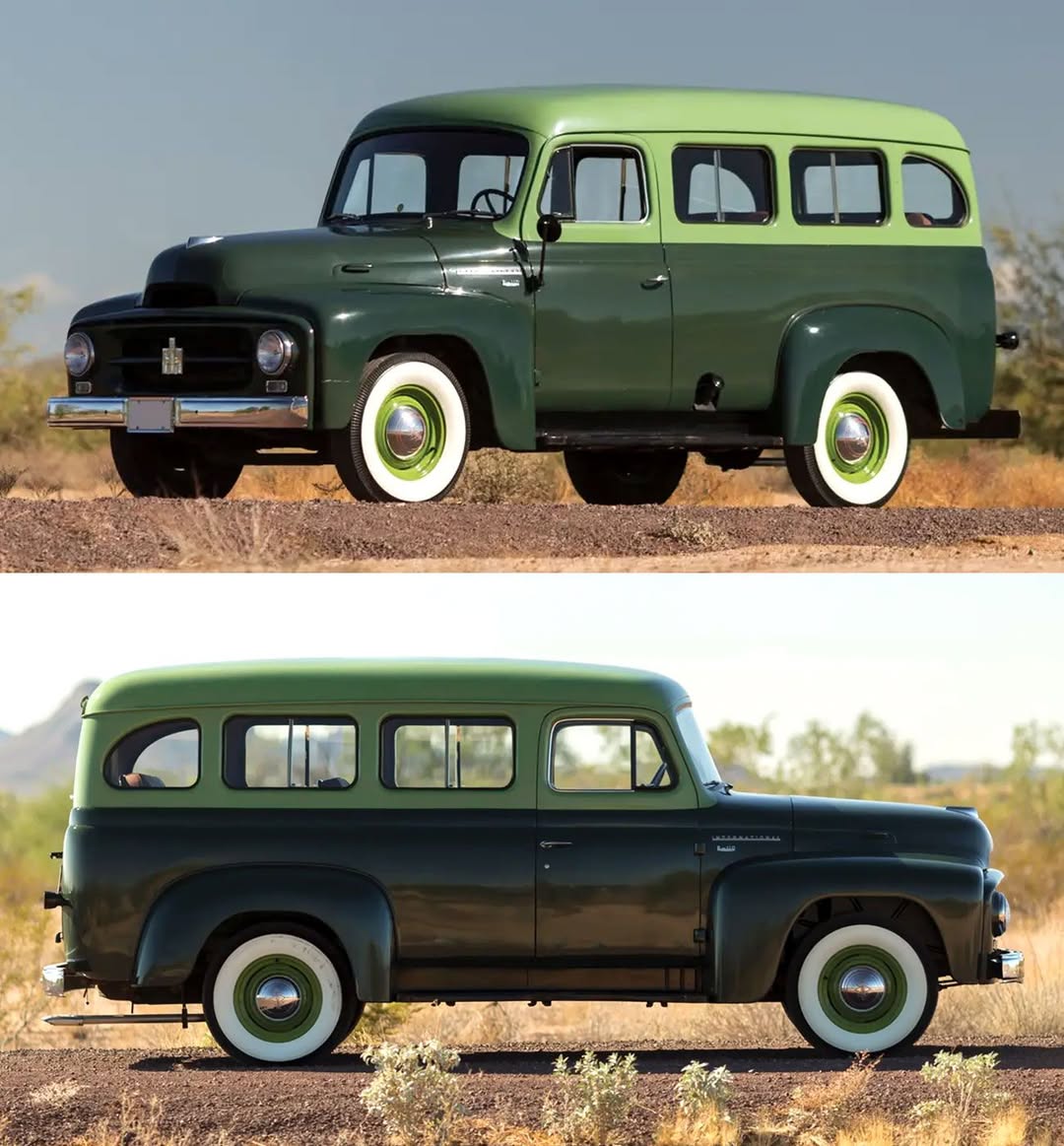
Source