1953 Buick Skylark Convertible
California customizers inspired Buick’s 1953 Skylark with techniques translated to production form: a windshield chopped about two inches lower than the standard Buick convertible, a beltline cut down and notched at the rear fender line, and rounded, raised rear-wheel cutouts matching those at the front.
These changes went into production on a special version of the Roadmaster convertible, and the design eliminated Buick’s trademark ventiports while riding on Kelsey-Hayes 40-spoke chrome wire wheels.
Created as a limited-production offering celebrating Buick’s 50th anniversary, the Skylark was marketed as the “Anniversary Convertible” and debuted the division’s first modern high-compression overhead-valve V-8, the 322 cubic inch “nailhead,” rated at 188 horsepower.
It used Buick’s Twin-Turbine Dynaflow automatic transmission and came with most power accessories standard, including power steering, brakes, windows, front seat, radio antenna, and convertible top, helping push the price to just over $5,000 and limiting production to 1,690 units.
Along with the Cadillac Eldorado and Oldsmobile Fiesta, the 1953 Skylark represented Harley Earl’s “dream car” Motorama-inspired design brought to the showroom and was essentially a hand-built, factory custom based on the Roadmaster chassis.
While the Skylark name continued on a different, less exotic body in 1954 and later reappeared on more mainstream Buicks, collectors generally regard the 1953 Skylark as the most special and desirable of the series, thanks to its limited production, custom bodywork, and role as Buick’s 50th anniversary flagship.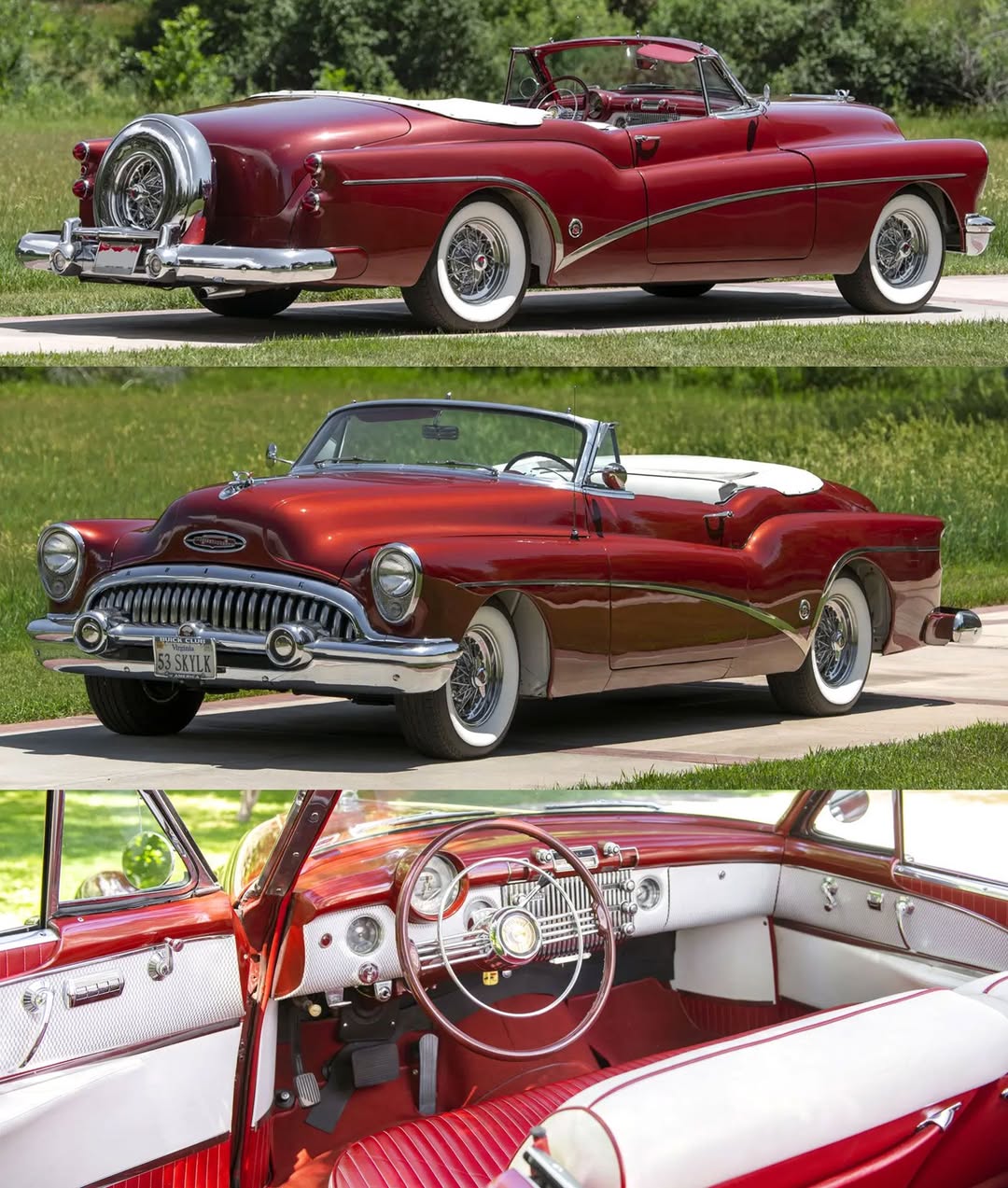
Source