1917 Packard Twin-Six 2-25 Seven Passenger Touring
Packard’s V12 engineering so impressed Enzo Ferrari that he later cited the Twin-Six’s refinement as inspiration for his own twelve-cylinder designs.
The American manufacturer introduced this 424 cubic inch engine in 1915 as the first production V12 offered by a U.S. automaker, creating a luxury automobile capable of pulling smoothly from walking pace to as much as 70 mph in top gear without shifting under favorable conditions.
For the 1917 Second Series 2-25 (denoting its 125-inch wheelbase), Packard implemented thoughtful refinements to an already successful design.
The body line sat about two inches lower, fenders followed the wheel contours more closely, and smaller 35 x 5 inch wheels brought the chassis closer to the road. Warner speedometers and Warner-Lenz headlamps became standard equipment, while even the upholstery springs were softened for improved passenger comfort.
Engineering updates included detachable cylinder heads and a thermostat relocated to the radiator for improved cooling control. The L-head V12 used a 60-degree bank angle with two blocks of six cylinders, each measuring 3.00 x 5.00 inches bore and stroke, producing approximately 88 horsepower at 2,600 rpm and driving through a three-speed manual transmission.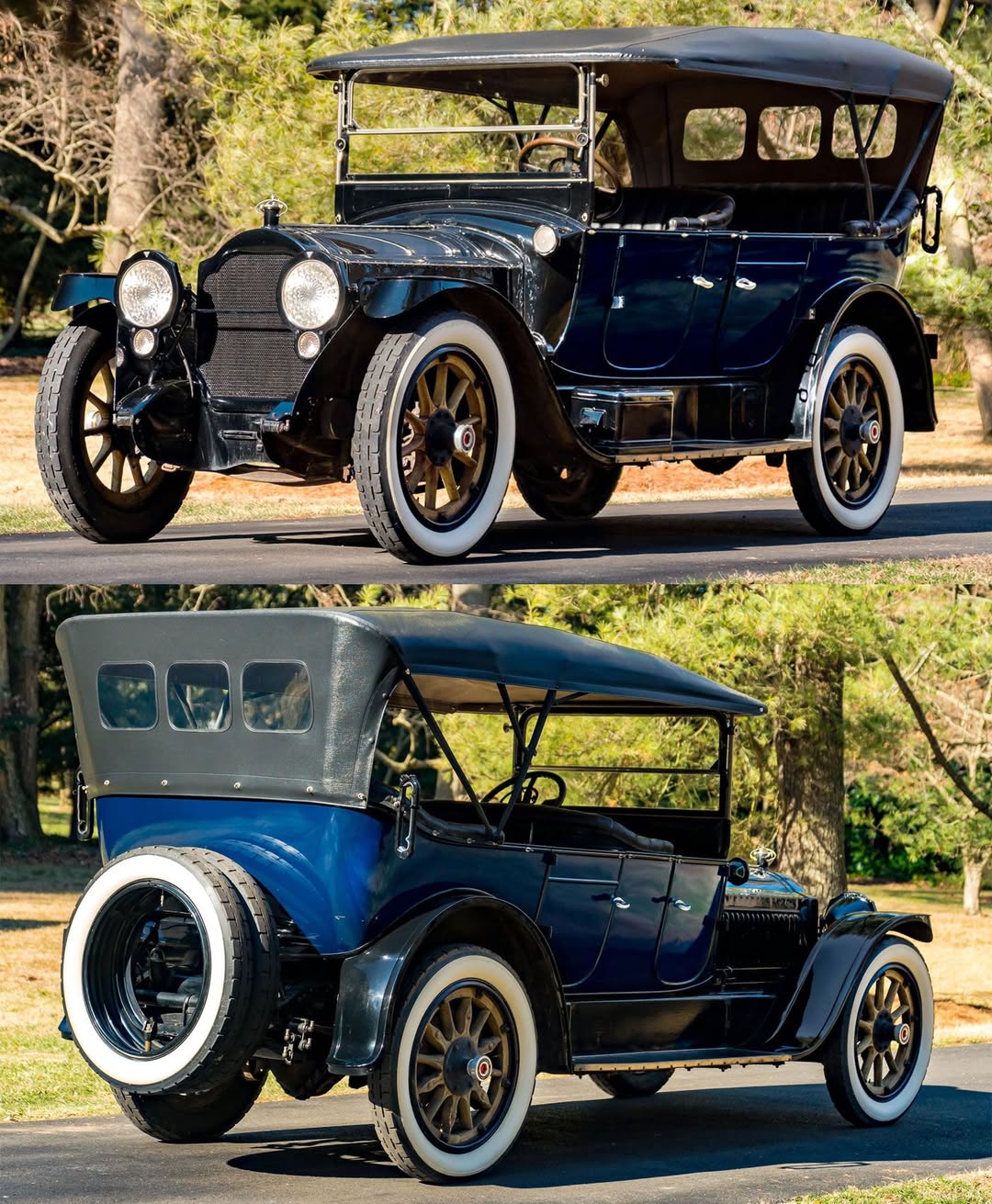
Source