1965 Aston Martin DB5 (more photos 👇)
James Bond’s Silver Birch DB5 in Goldfinger transformed a sophisticated British grand tourer into cinema’s most famous automobile.
The film car, featuring machine guns, a smoke screen, and an ejector seat, captured global attention in 1964, though Aston Martin’s flagship model needed no gadgetry to justify its status as one of the finest sports cars of the 1960s.
Introduced in 1963, the DB5 incorporated nearly 170 improvements over the outgoing DB4. The most significant change came under the hood, where Aston Martin enlarged its all-aluminum dual overhead cam inline-six to 244 cubic inches.
Breathing through three SU carburetors, the engine produced 282 horsepower and substantially more torque than its predecessor, improving responsiveness throughout the rev range.
Covered headlights, standard on the DB5, gave the Touring-designed coachwork a cleaner and more modern profile.
Customers seeking additional performance could specify the Vantage configuration, which substituted three Weber carburetors and revised camshaft profiles to generate 325 horsepower.
Vantage models were capable of sixty mph from a standstill in about six seconds. Both versions utilized a ZF five-speed manual transmission, while servo-assisted Girling disc brakes were fitted at all four corners.
Production remained limited between 1963 and 1965, with approximately 1,021 DB5 coupes built. Just 180 were configured for left-hand-drive markets, while fewer than 70 received Vantage specification across both drive configurations.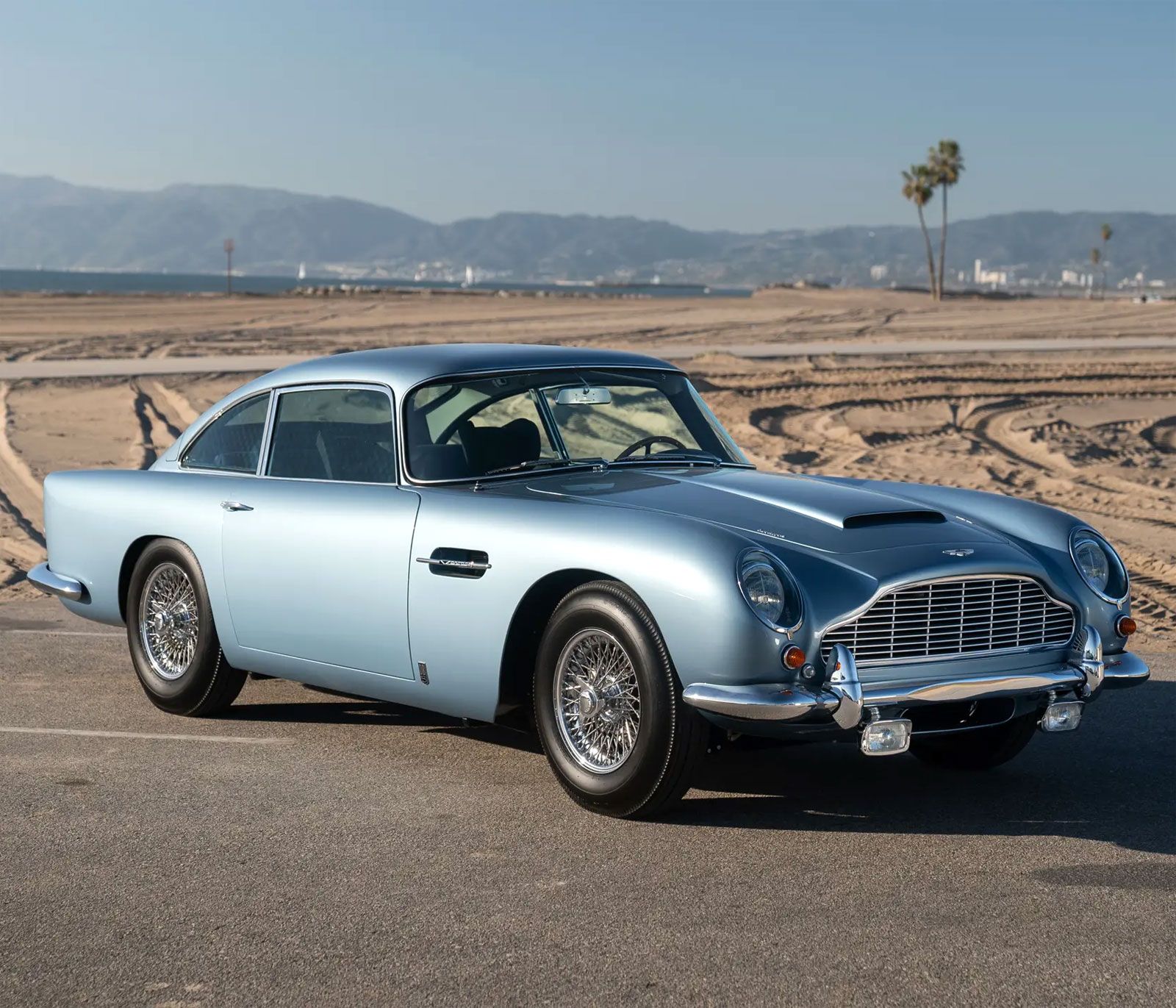
Source