1914 Locomobile Model 48
Seven-Passenger Touring (more pics below 👇)
Renowned as the “American Mercedes,” the Model 48 represented Locomobile’s commitment to building automobiles with uncompromising quality regardless of cost.
Production methods reflected this philosophy, with only four cars assembled daily at the Bridgeport, Connecticut factory. The result was pricing that positioned the marque well above its competition at Pierce-Arrow, Packard, and Peerless.
Andrew Riker designed the Model 48 around a T-head six-cylinder engine initially displacing 429 cubic inches from a square 4.5-inch bore and stroke. Later versions increased the stroke to 5.5 inches for 525 cubic inches of displacement, while the model designation remained unchanged.
Originally rated at 48 horsepower under the industry rating system of the era, actual output eventually exceeded 100 horsepower in later form. The engine featured cylinders cast in pairs, a balanced crankshaft running in seven main bearings, and a bronze crankcase.
Introduced in 1911 and manufactured through 1929, the Model 48 enjoyed an exceptionally long production run with minimal changes. Seven-passenger touring bodies were among the most popular configurations.
Custom coachwork attracted prominent buyers including the Vanderbilt family, William Wrigley, and William Carnegie. Only 167 examples are currently registered with The Locomobile Society of America.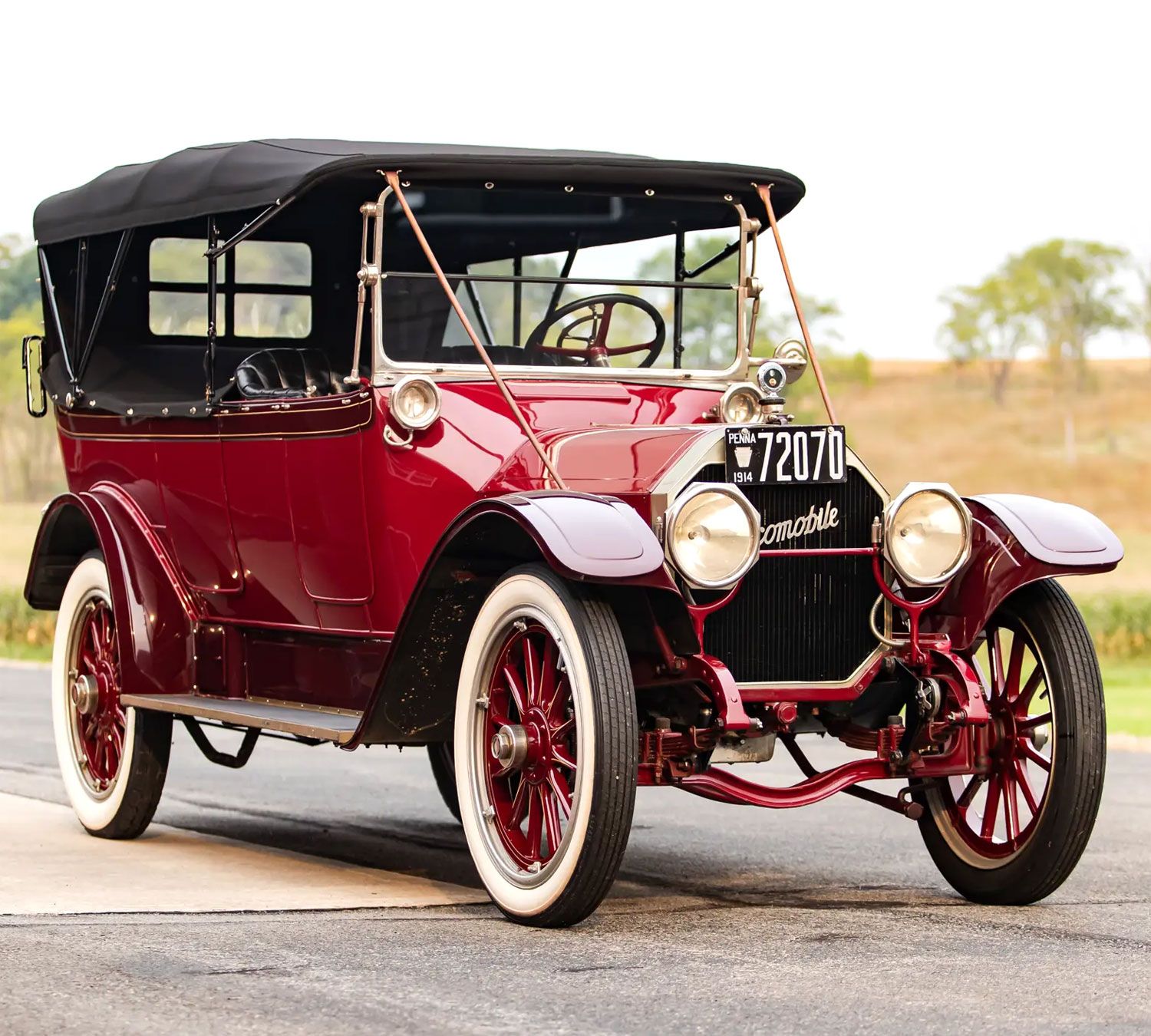
Source