1962 Lotus Elite Series II SE
Colin Chapman’s pioneering fiberglass monocoque construction created what is widely regarded as the world’s first stressed-skin composite unibody automobile, eliminating the traditional separation of chassis and body.
The Elite’s Peter Kirwan-Taylor and Frank Costin-designed bodywork achieved an exceptionally low claimed drag coefficient of 0.29 while housing fully independent suspension, rack-and-pinion steering, and four-wheel disc brakes, with the rear units mounted inboard to reduce unsprung weight.
Series II production shifted from Maximar to the Bristol Aeroplane Company in 1960, bringing improved build quality, revised rear suspension geometry, and more refined interior appointments.
Power came from a 1,216cc Coventry-Climax FWE single-overhead-cam aluminum four-cylinder producing 95 horsepower at 5,800 rpm in Super 95 specification, fed by twin SU carburetors and mated to a close-ratio ZF four-speed manual gearbox.
Competition success validated Chapman’s design philosophy, with the Elite securing five Le Mans class victories and two Index of Thermal Efficiency wins between 1959 and 1963.
Approximately 23 Super 95 examples were produced from total Elite production of about 1,030 cars.
A curb weight of roughly 1,430 pounds (650 kg) enabled a top speed of around 112 mph despite modest displacement, delivering performance that reinforced the model’s racing pedigree while remaining usable on the road.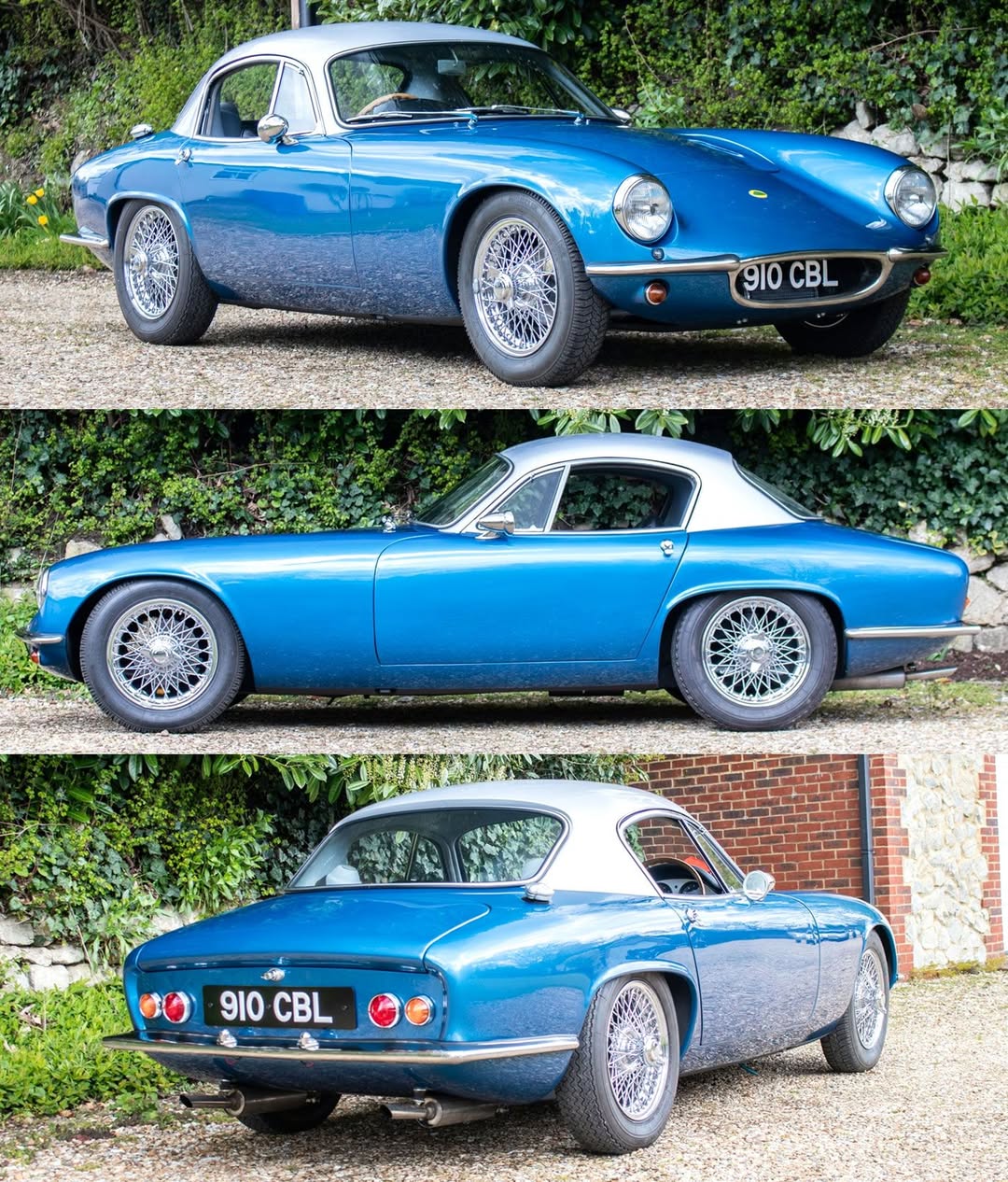
Source