1965 Trabant 601
VEB Sachsenring’s answer to East Germany’s need for personal transportation combined a modern technical layout with pragmatic material choices.
The 601 used Duroplast body panels (a phenolic resin reinforced with recycled cotton waste from textile factories) mounted on a steel unibody structure, resulting in a lightweight composite construction that resisted corrosion.
Power came from a 594 cc two-stroke, two-cylinder air-cooled engine producing 23 horsepower, increased to 26 hp beginning in 1969. The transversely mounted powerplant drove the front wheels through a four-speed manual transmission, pushing the roughly 1,355 lb (615 kg) car to a top speed of about 62 mph.
Independent suspension and rack-and-pinion steering provided acceptable handling, despite an engine design rooted in prewar DKW technology.
Originally intended as a stopgap model until more advanced replacements could be developed, the 601 remained in production with only minor changes for 26 years.
Waiting periods often exceeded ten years in the German Democratic Republic, and with more than 2.8 million built between 1964 and 1990, it became East Germany’s most common automobile.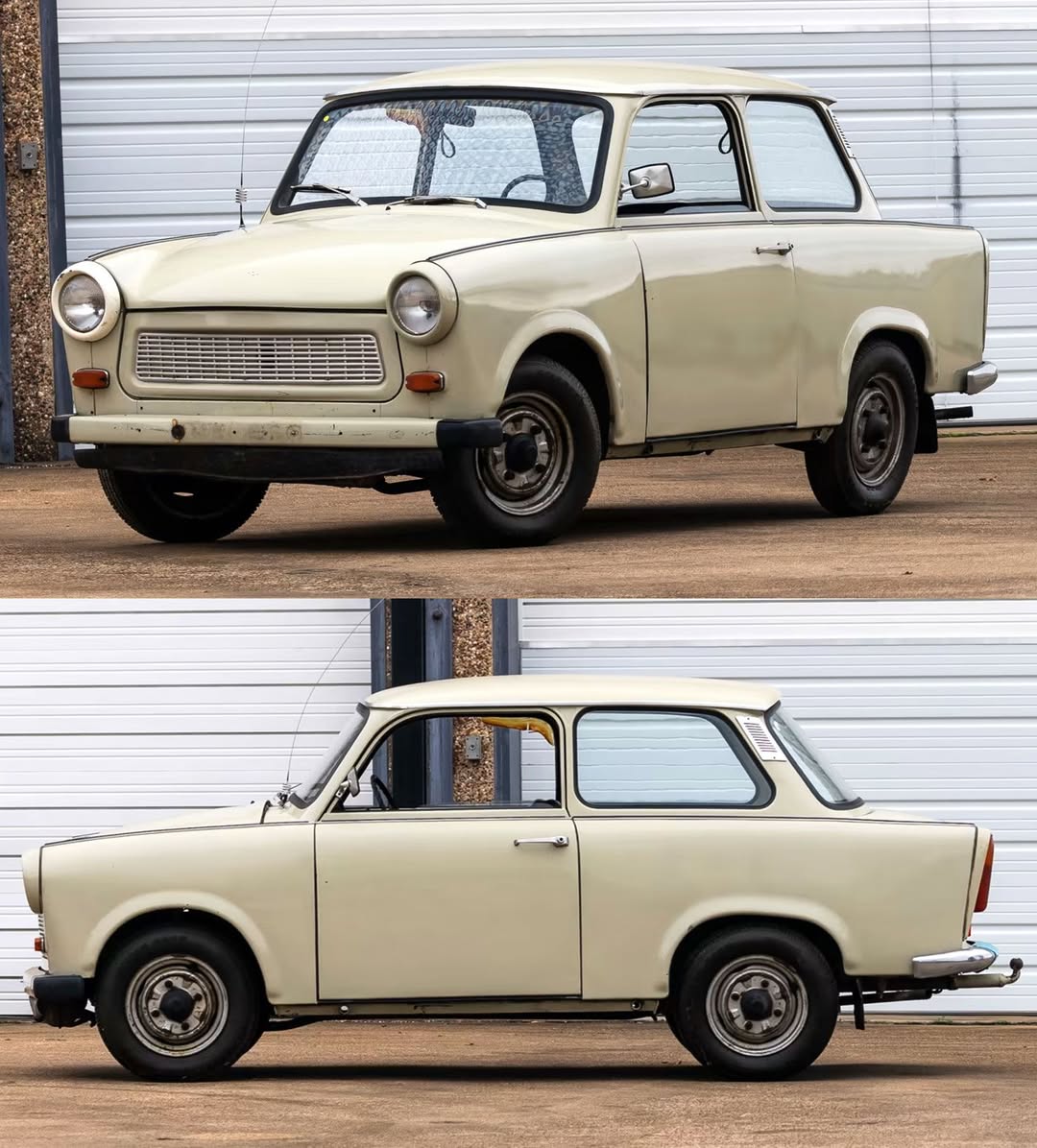
Source