1935 Auburn Eight Custom Speedster (more pics below 👇)
Gordon Buehrig created one of the Depression’s most striking automotive designs for Auburn’s 1935 model year, combining Art Deco styling with advanced engineering.
The Speedster featured flowing bodywork with a straight hood line extending rearward from a backswept radiator to a sharply vee’d windshield, continuing between pontoon fenders and tapering gracefully to the distinctive boattail rear treatment.
External chrome exhaust pipes and carefully applied striping emphasized the car’s sporting character. The low-slung proportions and dramatic details made the Speedster an instant icon of 1930s American automotive design.
Power came from a Lycoming-built 280-cubic-inch straight-eight producing 150 horsepower at 4,000 RPM when equipped with the Schwitzer-Cummins centrifugal supercharger developed by August Duesenberg and Auburn factory manager Pearl Watson. This output made the Speedster one of the fastest production cars in the world at the time.
The Columbia dual-ratio rear axle used epicyclic gearing to provide two ratios for each of the three forward gears, selectable via a steering wheel-mounted control. This effectively created six forward speeds, combining strong acceleration with relaxed high-speed touring and supporting Auburn’s factory-guaranteed 100-mph top speed.
Racing driver Ab Jenkins established numerous American speed records in an 851 Speedster, including the first 12-hour average exceeding 100 mph by an American stock automobile. Each production Speedster received a dashboard plaque signed by Jenkins certifying individual testing at speeds above 100 mph.
The model continued for 1936 as the 852 with only minor changes. Total production of supercharged Speedsters is generally cited at approximately 150 examples before Auburn ceased automobile manufacturing in 1937.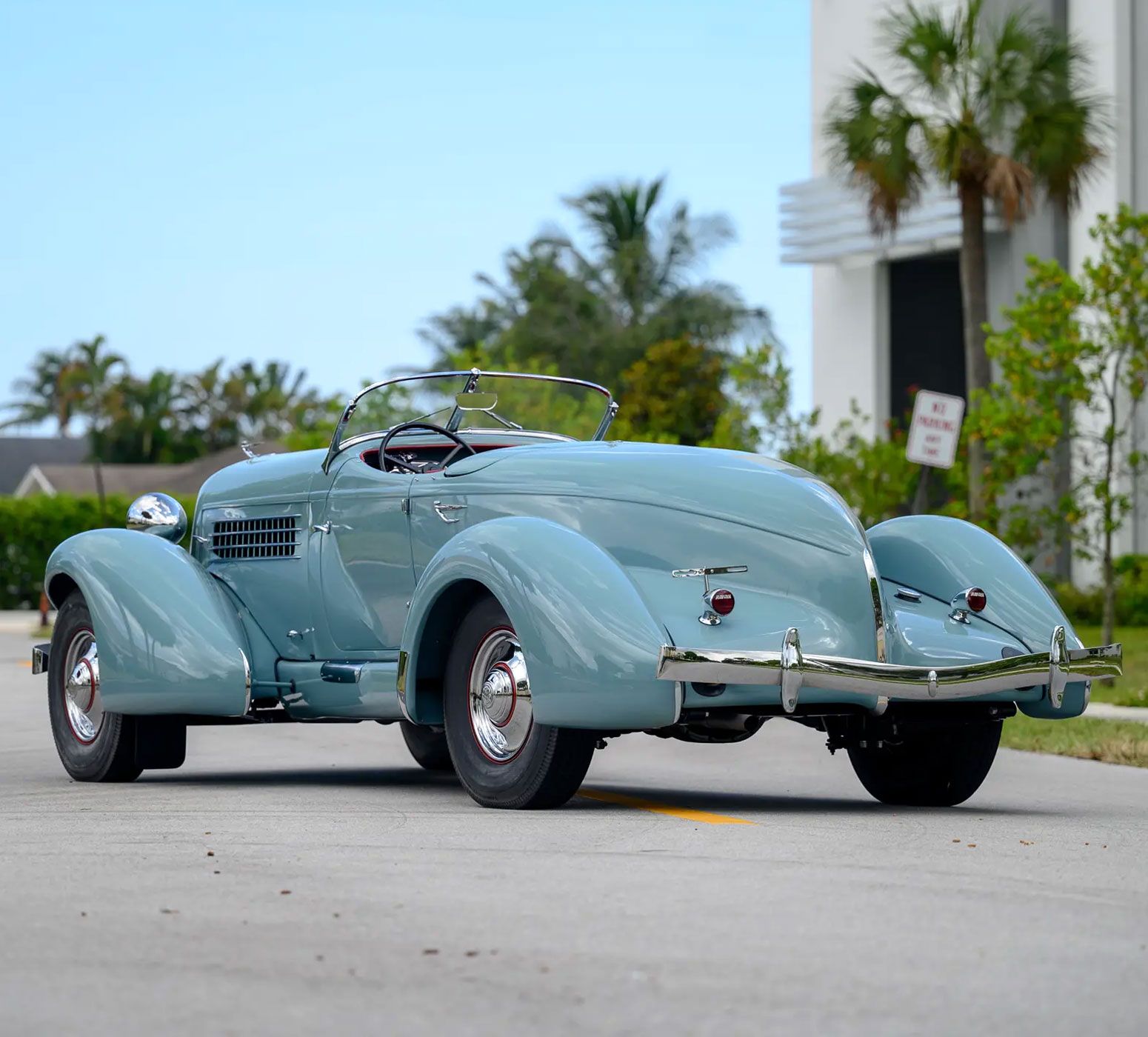
Source