1936 Chrysler Imperial Airflow Sedan
Beam and truss body construction preceded modern unibody methods by decades when Chrysler introduced its aerodynamic sedan at the January 1934 New York Auto Show.
The revolutionary design positioned the engine roughly 20 inches farther forward than conventional layouts, while placing rear passengers ahead of the rear axle within the wheelbase for exceptional ride quality.
Chair-height seats measured 50 inches wide in an interior far more spacious than conventional automobiles of the period. Chrysler emphasized comfort and stability as much as streamlining in the Airflow’s engineering brief.
The waterfall grille, stylized headlamps, and Art Deco styling proved too advanced for Depression-era buyers despite more than 50 engineering innovations and 72 national speed records.
A 323 cubic inch L-head inline-eight producing 130 horsepower at 3,400 rpm powered the Imperial C-10 sedan riding a 128-inch wheelbase.
Power reached the rear wheels through a three-speed manual transmission with optional overdrive. Mechanical sophistication contrasted sharply with conservative buyer expectations of the mid-1930s luxury market.
Production reached 4,259 Imperial C-10 sedans for 1936, representing the only Airflow body style to exceed 1,000 units that year. This marked the final year the Imperial carried the Airflow nameplate, which was dropped after 1936.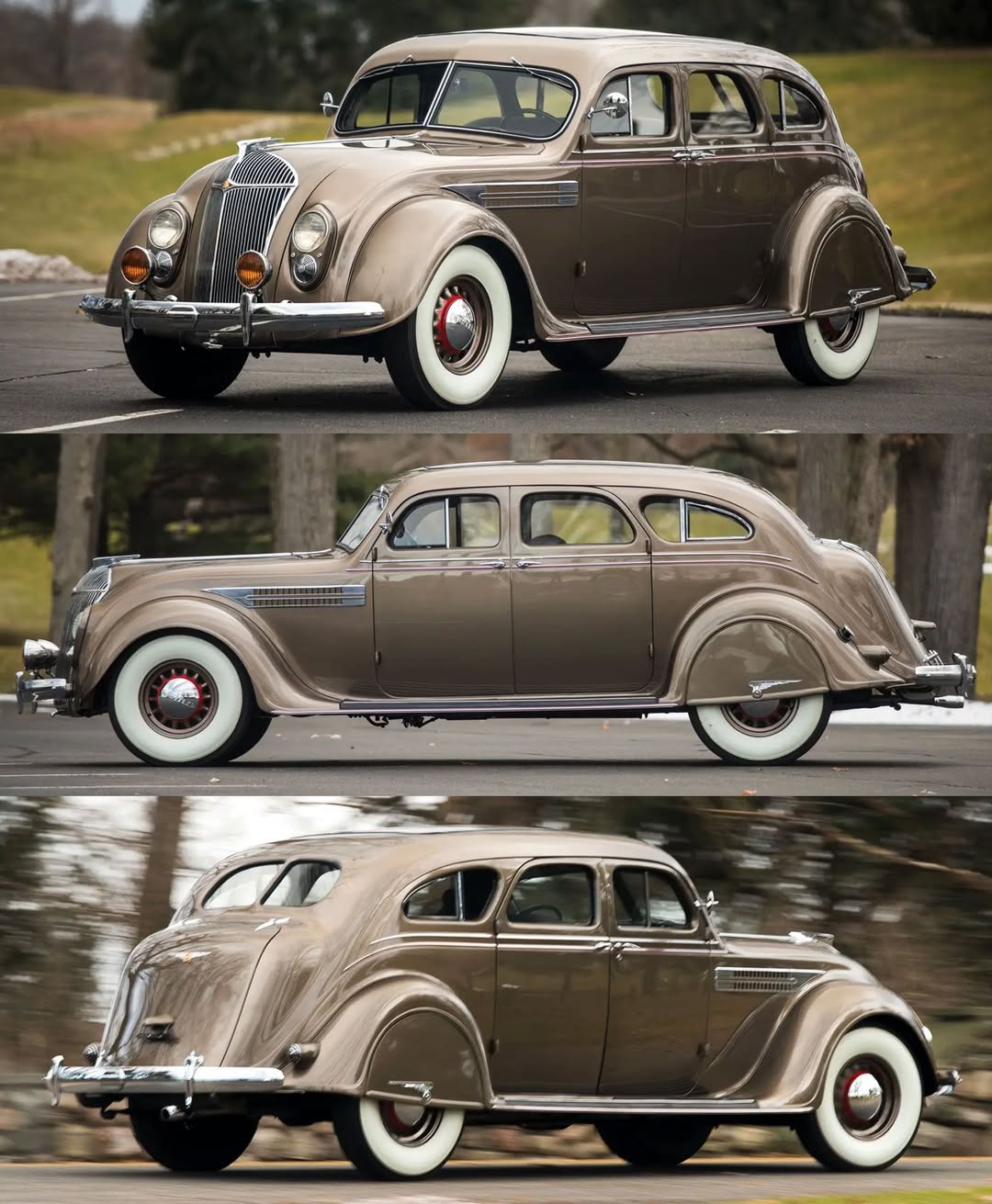
Source