1960 Edsel Ranger Convertible
76 convertibles represented the second-rarest body style (behind the nine-passenger Villager wagon’s 59 units) when Ford terminated Edsel production on November 19, 1959, after a very short 1960 model run that yielded only 2,846 cars in total.
This particular Ranger would have been among the last examples built that month, effectively closing out the marque’s abbreviated three-year existence as a stand-alone nameplate.
Comprehensive factory equipment demonstrated Edsel’s positioning between Ford and Mercury pricing tiers, with the Ranger convertible offered as the halo open model of the line rather than a stripped entry-level car.
The standard engine for 1960 Rangers was the 292-cubic-inch V8 rated at 185 horsepower, but the Ranger convertible uniquely received the 352-cubic-inch “Super Express” V8 as its lone optional engine, developing 300 horsepower and commonly paired with a three-speed automatic (Dual-Power Drive) transmission.
Power steering, power brakes, power windows, and power seat were frequently specified on these cars, and options such as Level-Temp air conditioning, push-button AM radio, tinted glass, day-night mirror, seat belts, fender skirts, windshield washers, and dual rear-mounted antennas suited the car’s near-Mercury market positioning.
Ford’s massive investment in the Edsel program is generally quoted in the $250-$300 million range including development, tooling, marketing, and distribution, and the company relied heavily on customer clinics and research while planning the car, though the end result missed the market badly.
The hourglass grille introduced for 1960 replaced the earlier vertical “horse collar” theme while maintaining visual distinction from Ford Fairlane donors through unique trim, lighting, and rear treatment, yielding a cleaner but still unmistakably Edsel identity.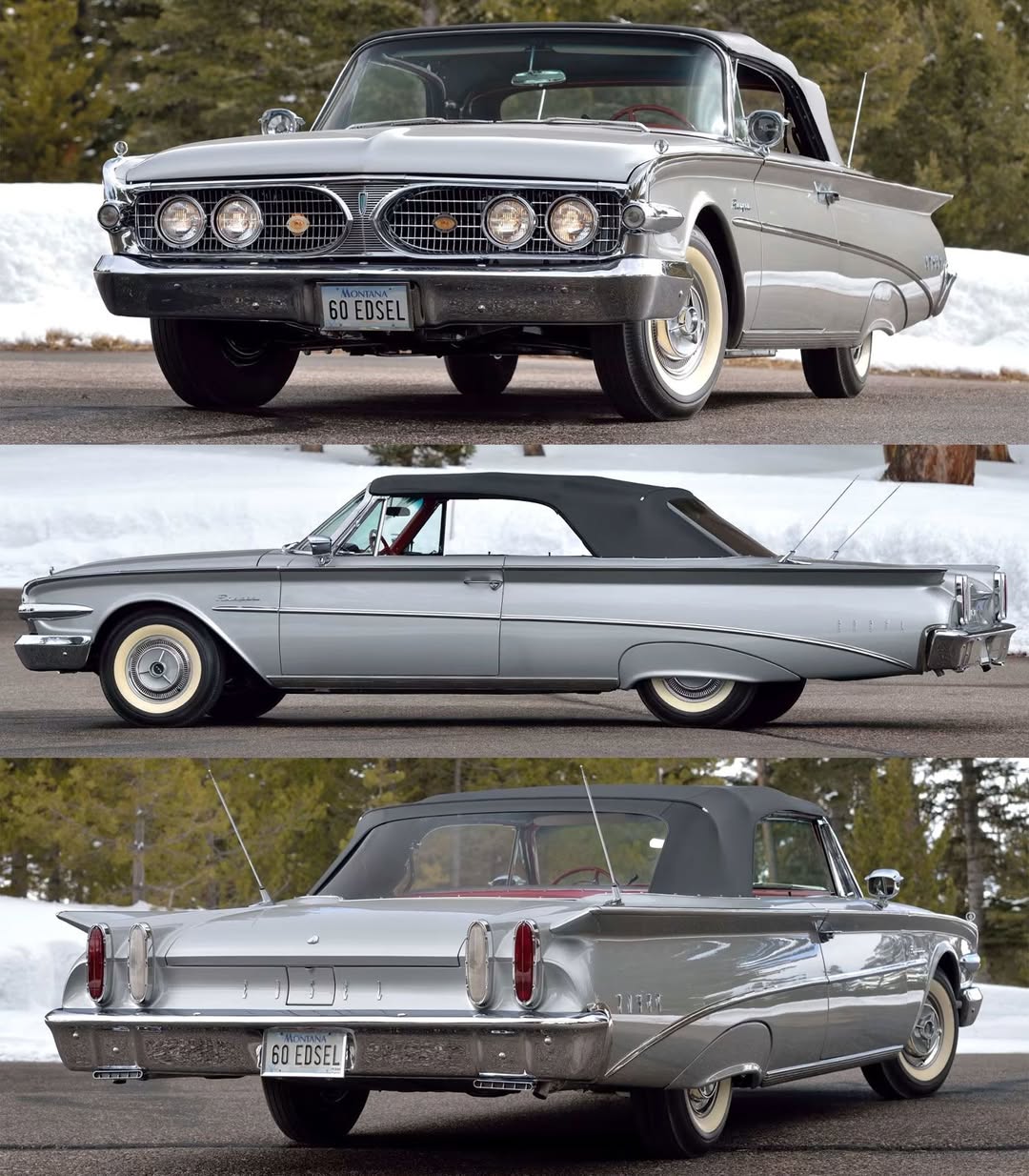
Source