1936 Austin Seven (more photos 👇)
Sir Herbert Austin introduced his small car design to the British public in July 1922, developing it largely in secret at his home after his company’s board rejected the concept. Contemporary press dubbed it “Motoring for the Million” and the “first civilised motor car of really small size,” recognizing its importance in bringing affordable motoring to a much broader market.
The diminutive automobile measured just 6 ft 3 in in wheelbase initially (extended to 6 ft 9 in by the mid-1930s), weighed approximately 800 pounds (about 363 kg), and featured an A‑frame chassis. Its 747 cc side-valve four-cylinder engine was mounted at the narrow front apex, contributing to the car’s compact packaging and light weight.
The 1936 model year reflected significant mechanical evolution, most notably the adoption of a three-bearing crankshaft in place of the earlier two-bearing design. The side-valve engine produced approximately 10.5 horsepower from 45.6 cubic inches, using an aluminum crankcase with a cast-iron cylinder block.
Cooling operated by thermosiphon without a water pump, and the splash-lubricated engine drove through a three-speed gearbox. A four-speed transmission with synchromesh on the upper gears was available on later versions of the Seven.
Austin offered numerous body styles throughout the Seven’s production life, including tourers, saloons, cabriolets, and two-seater sports variants. The model’s lightweight construction and simple mechanical layout made it popular for competition and modification.
Many Sevens were later rebuilt as “specials,” including the first race car constructed by Bruce McLaren, who won his initial race at age 15 driving a Seven. Production continued until 1939, with approximately 290,000 examples built.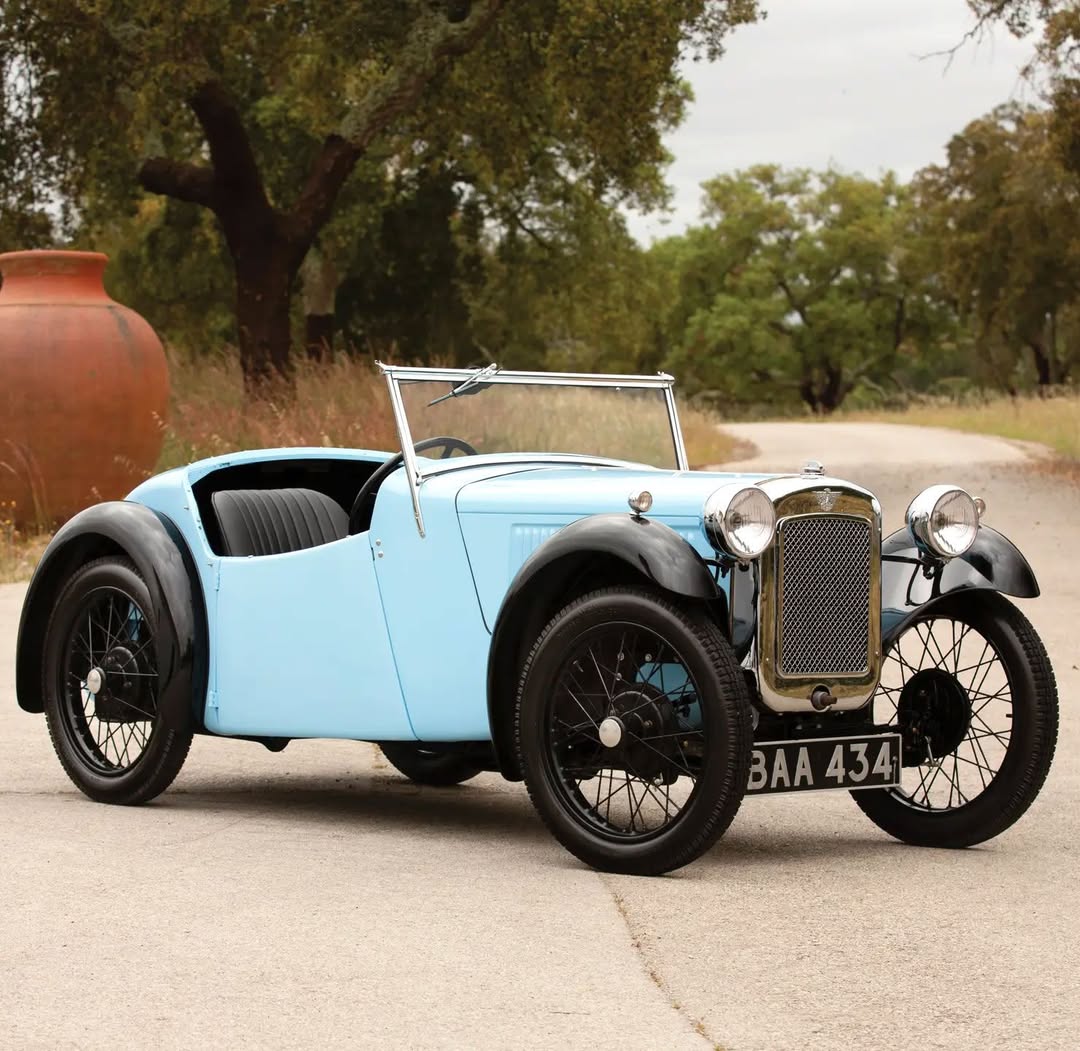
Source