1931 Lagonda 2.0 Litre ‘Low Chassis’ Speed Model
The Low Chassis variant, introduced in 1929 following an 11th overall finish at the 1928 Le Mans 24-hour race, featured cycle-type mudguards and revised front suspension geometry that lowered the center of gravity for sharper handling.
Fabric-covered four-door tourer coachwork was a popular body style, though external coachbuilders also bodied some chassis.
The 119 cubic inch four-cylinder engine used twin camshafts mounted high in the block to operate inclined valves in hemispherical combustion chambers. This configuration produced about 60 bhp in standard form, rising to roughly 70 bhp in Speed Model tune with higher compression and twin carburetors.
A supercharged version appeared in 1930 with either Powerplus or Cozette blowers mounted vertically ahead of the engine and a strengthened crankshaft. Supercharged examples could reach close to 90 mph, significantly improving performance over the naturally aspirated cars, which were capable of around 80 mph under favorable conditions.
Production of all 14/60 and related 2 Litre derivatives totaled approximately 1,400 examples through 1933.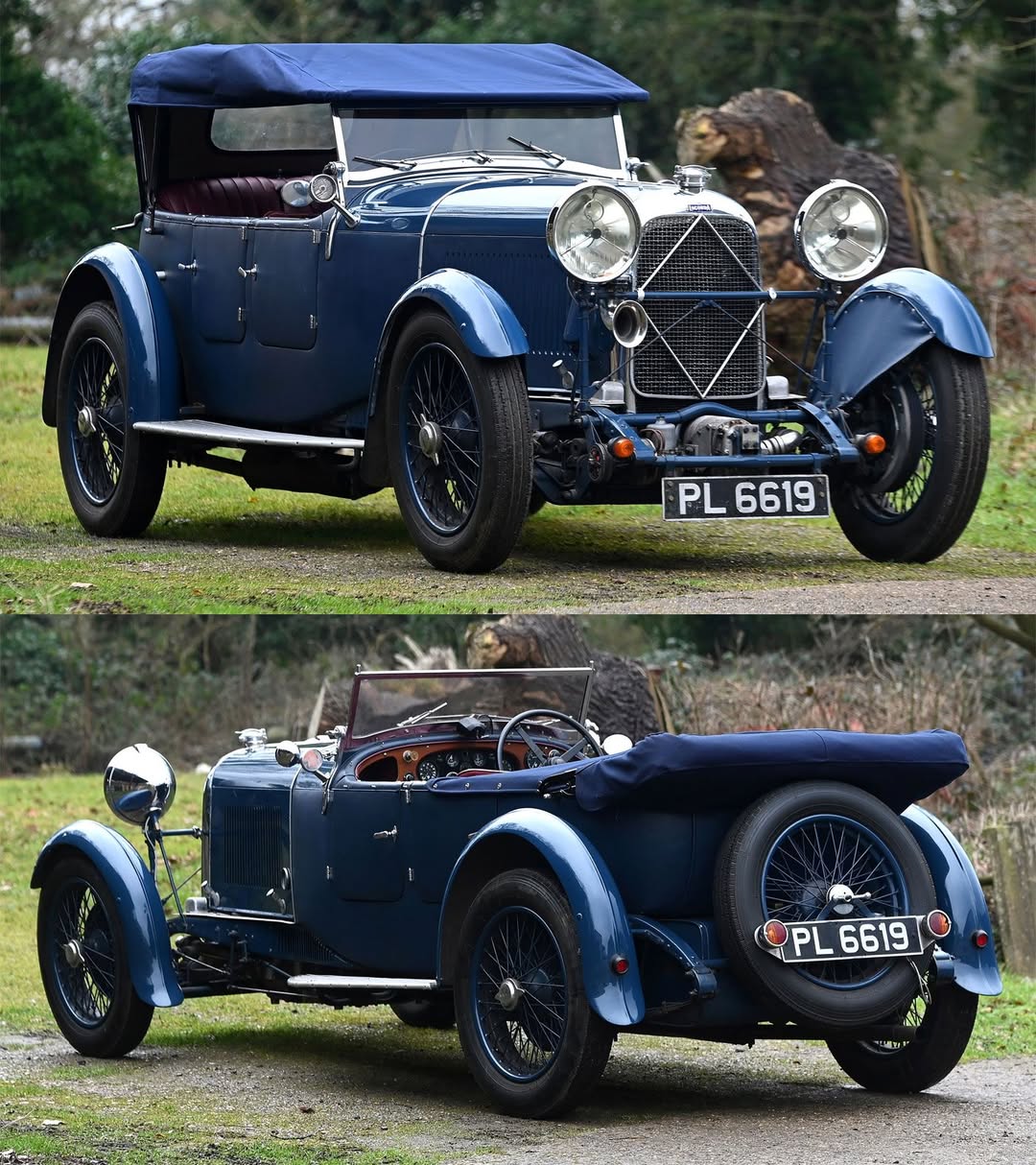
Source