1965 Alfa Romeo Giulia TZ1
During 1964 and 1965, Alfa Romeo’s Tubolare Zagato (TZ) was highly successful in World Sportscar Championship competition within its class, earning class victories and podium finishes at major European circuits including Le Mans, Sebring, Montlhéry, the Nürburgring, Spa, Mugello, Enna, and Bridgehampton.
Overall wins and class successes at events such as the Tour de France Automobile and the Targa Florio further underscored the model’s competitive credentials.
This racing success stemmed from Zagato’s engineering approach, which represented a clear departure from the earlier Giulietta SZ. Built around a lightweight tubular spaceframe chassis, the TZ featured an aluminum alloy body evolved from the SZ Coda Tronca concept, emphasizing reduced drag and high-speed stability.
The design incorporated a low frontal area, carefully shaped nose, and a distinctive Kamm tail. In competition trim, the TZ weighed approximately 1,430 pounds (about 650 kg) and was capable of reaching top speeds around 134 mph, depending on gearing and specification.
Power came from Alfa Romeo’s 1,570cc twin-cam inline-four featuring a twin-plug cylinder head and dual Weber 45 DCOE carburetors. Standard output was rated at approximately 112 horsepower, while well-prepared racing engines could produce as much as 160 horsepower.
Independent suspension at all four corners, four-wheel disc brakes, a five-speed gearbox, and a limited-slip differential completed the package. Production totaled approximately 101 examples built between 1963 and 1965, making the Giulia TZ1 one of the most celebrated and desirable Alfa Romeo competition cars of the era.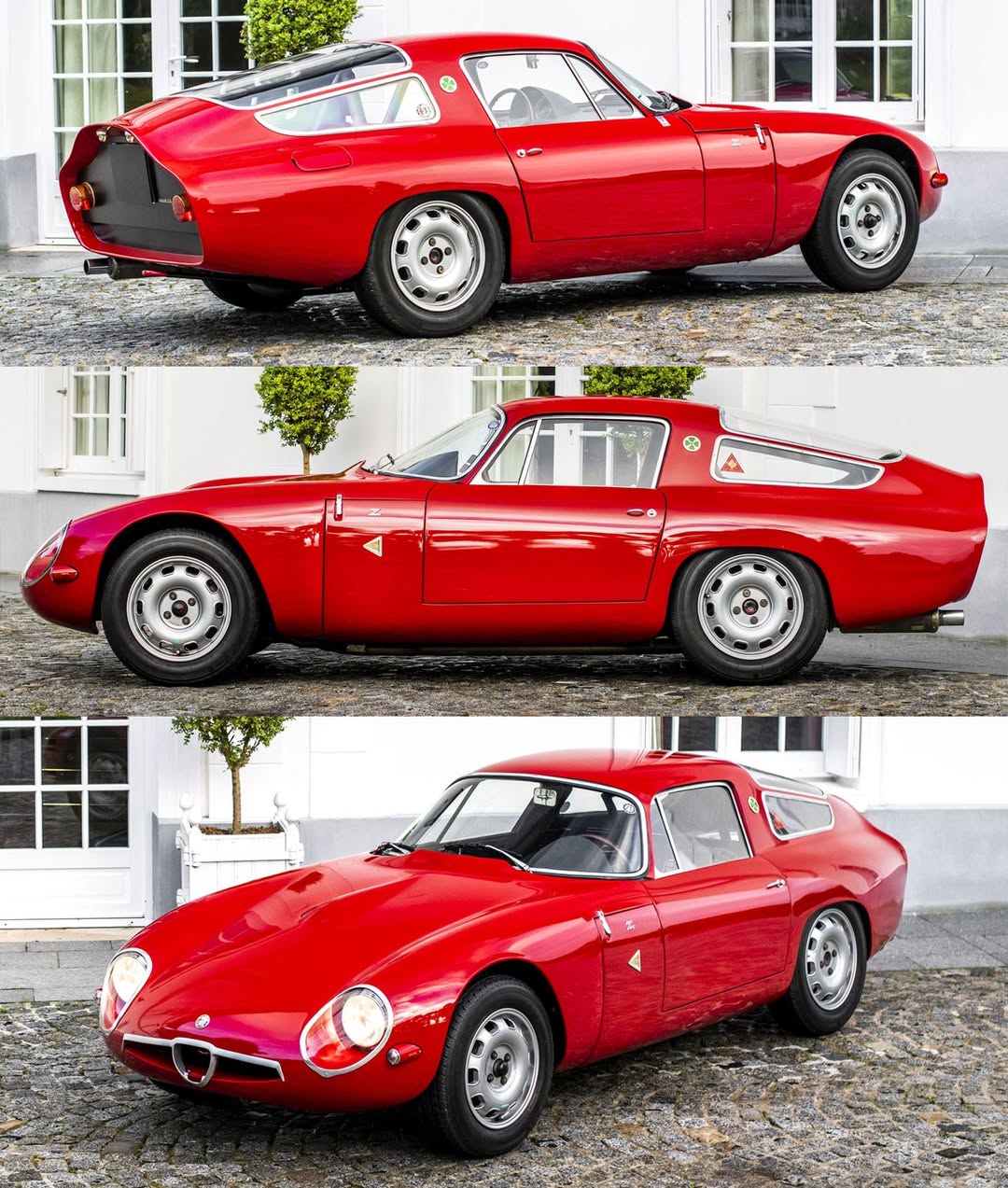
Source