1960 Willys Jeep Station Wagon
America’s first mass-market all-steel station wagon arrived in 1946, with the design continuing largely unchanged through 1960.
Industrial designer Brooks Stevens created the body to be manufactured by sheet metal fabricators who typically made household appliances (Willys had limited finances and couldn’t secure traditional coachbuilders).
The distinctive seven-slot grille and split windshield characterized most production, though late 1960 models received a one-piece windshield.
Four-wheel drive became available in 1949, earning recognition as the first production sport utility vehicle. By 1960, the wagon used Kaiser’s 226-cubic-inch Hurricane six-cylinder producing 115 horsepower, paired with a three-speed manual transmission.
The transfer case offered high and low ranges, appealing primarily to farmers, ranchers, and sportsmen who valued its capability over refinement.
The Planadyne independent front suspension used a transverse seven-leaf spring, a design developed by chief engineer Barney Roos. Over 300,000 examples were built before production ended in 1964, replaced by the more modern Wagoneer.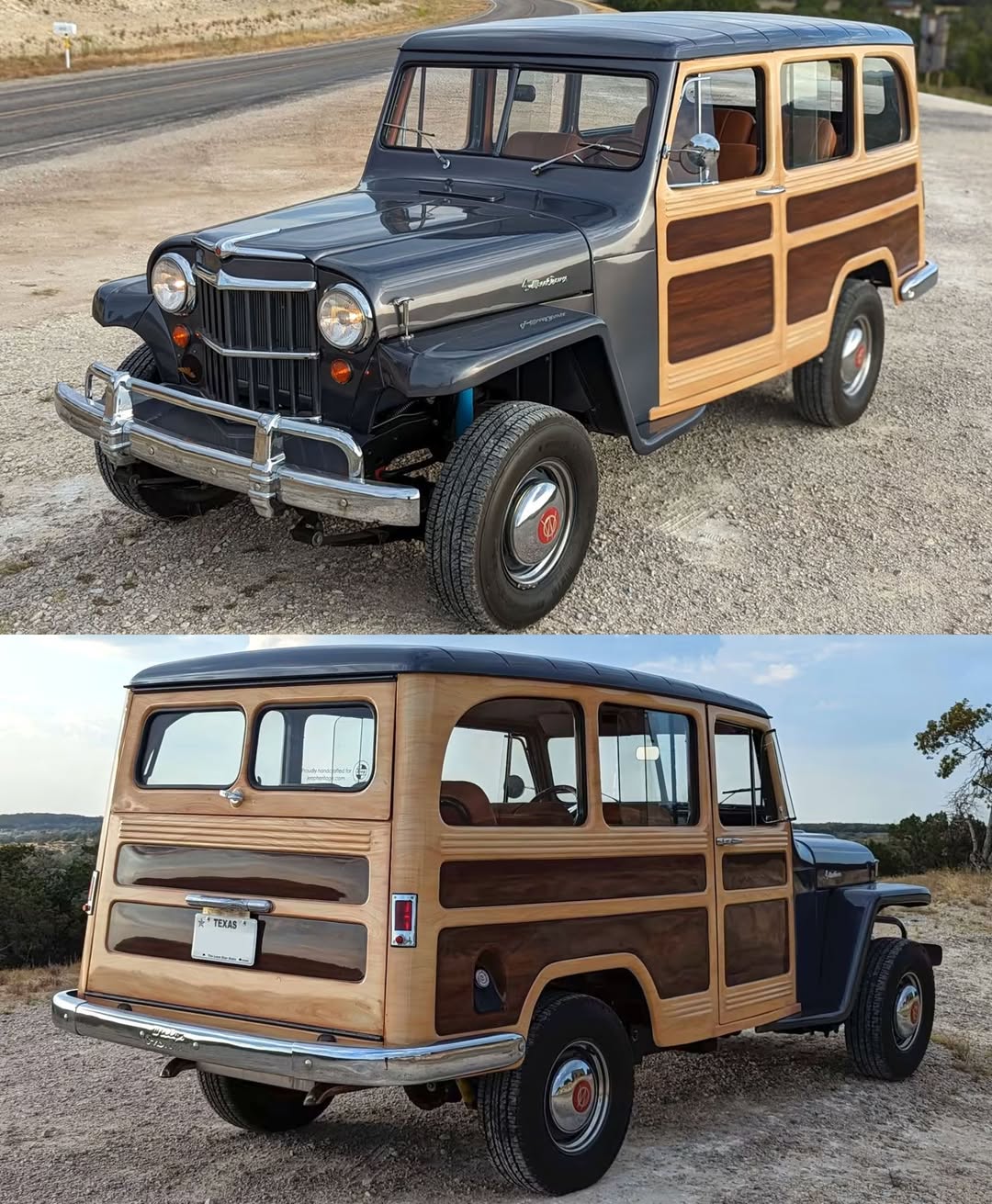
Source