1940 Aston Martin Speed Model Type C
Claude Hill’s aerodynamic design for the final eight Speed Model examples delivered nearly 20 mph more top speed than their open-wheeled counterparts. Among 23 full competition-specification Speed Models produced, only 8 received the Type C body treatment.
Completed between late 1939 and 1940, these cars featured a broad, flowing nose, long tapering tail, and sleek wings that fully enclosed the wheels. The steel-framed construction used light alloy for the main body panels, while the wings were formed from steel.
Headlamps were mounted behind the rounded radiator shell, contributing to the car’s wind-cheating profile and giving the Type C its distinctive appearance.
Competition results validated the design immediately. At the 1939 Donington Park Tourist Trophy, a Type C driven by St. John Horsfall finished 1st in class and 2nd overall.
The mechanical specification matched the advanced coachwork. Claude Hill’s 1,949 cc SOHC inline four produced around 125 bhp through twin SU carburetors and featured dry-sump lubrication.
The close-ratio gearbox was designed to handle up to 200 bhp and used constant-mesh gears with easily changeable ratios. Lockheed hydraulic brakes were fitted, operating through separate front and rear circuits to provide added redundancy.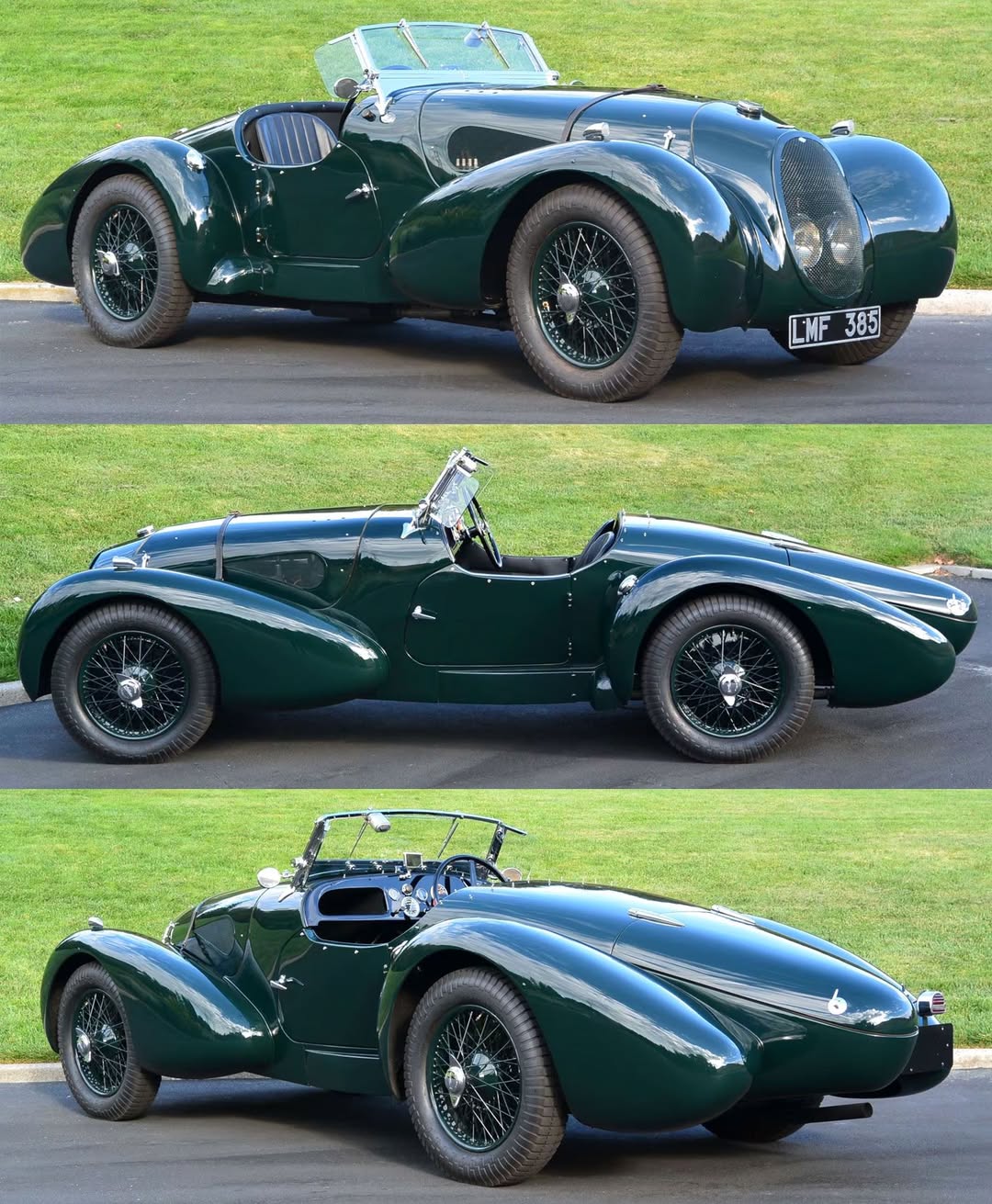
Source