1924 Citroën Type C Torpédo
France’s first true “people’s car” emerged from André Citroën’s vision of mass-produced motoring at affordable prices. By 1924, the Type C accounted for half of Citroën’s sales, with nearly 30,000 vehicles produced annually.
This revolutionary approach made the Type C one of Europe’s first assembly-line manufactured automobiles, with the Levallois plant turning out 250 cars per day.
The distinctive “boat tail” torpedo design featured elegant proportions despite the car’s diminutive size. Originally available only in pale yellow, earning the nickname “Petit Citron” (little lemon), the Type C offered remarkable versatility with multiple body configurations.
The famous “Cloverleaf” (Trèfle) variant featured an innovative three-seat arrangement with the third passenger positioned behind and between the front seats.
Power came from an 856cc four-cylinder side-valve engine producing 11 horsepower, paired with a single Solex carburetor and magneto ignition.
While modest in output, the engine proved incredibly durable, as demonstrated by a 1925 journey covering 17,000 kilometers around Australia in extreme conditions without mechanical problems.
Total production reached approximately 81,000 units between 1922 and 1926, establishing Citroën as a major force in European automotive manufacturing before production ceased in May 1926.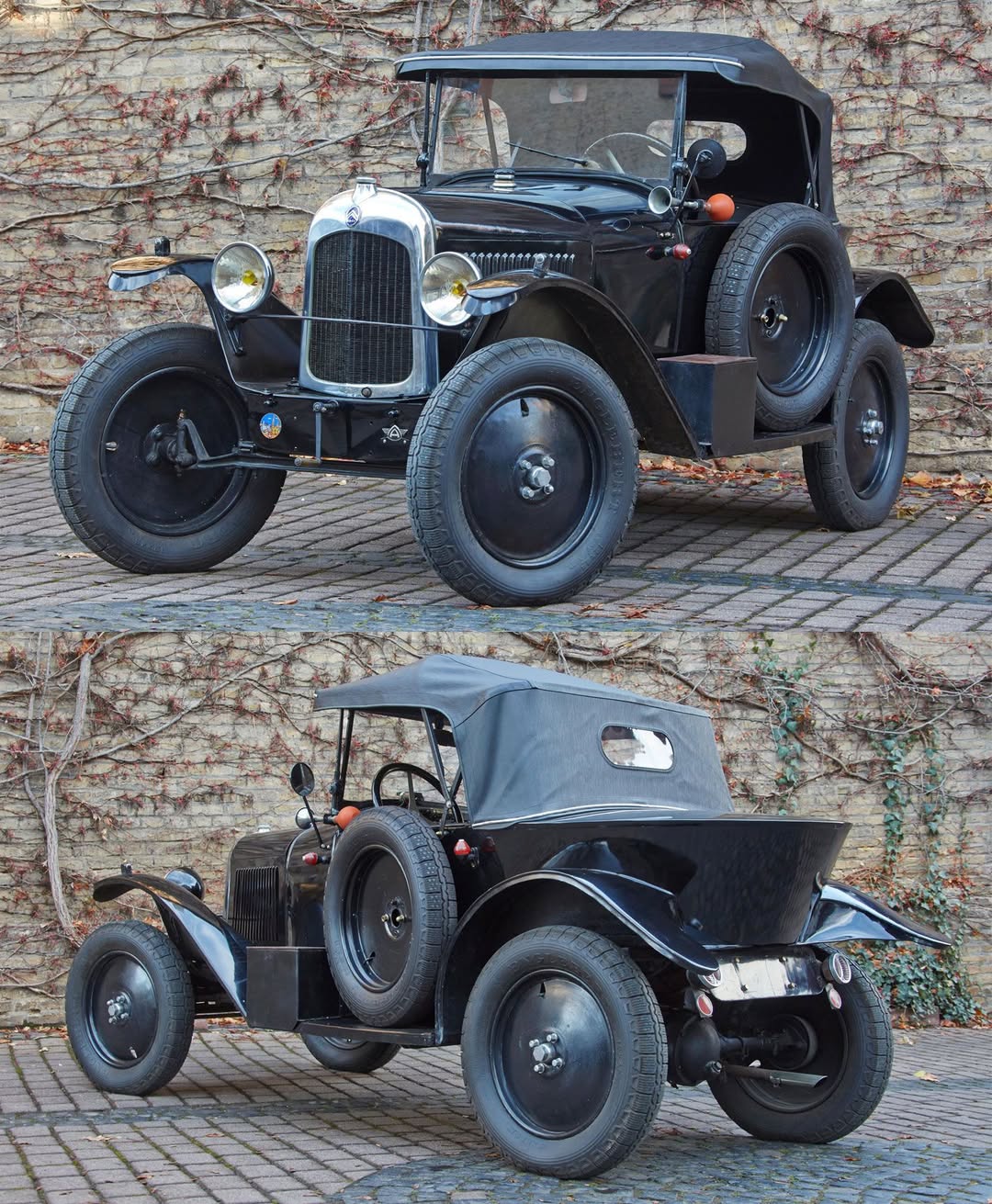
Source