1951 Fiat 500 C ‘Topolino’ Giardiniera Belvedere ‘Legno’
Wood-bodied “Legno” versions of Fiat’s diminutive estate car represented a brief production phase before all-metal bodywork became standard. Built by Carrozzerie Speciali (Fiat’s in-house coachwork division), these examples featured ash frames with faesite panels, plus exposed wood elements on the doors, rear quarters, and tailgate.
The practical three-door layout provided four-seat capability with a fold-down rear bench and rear cargo access that wasn’t available on standard Topolino coupes. This configuration made the Giardiniera one of the most versatile microcars of its era.
The Model C arrived in 1949 with restyled bodywork featuring recessed headlamps rather than the earlier freestanding units. Its water-cooled 35-cubic-inch (569 cc) inline-four produced about 16.5 horsepower through a four-speed manual transmission.
The front-mounted engine was positioned ahead of the front axle, with the radiator mounted behind it. This unusual layout allowed excellent forward visibility and a lower nose profile than many contemporaries.
Between 1936 and 1955, nearly 520,000 Topolinos were built across Models A, B, and C. The Giardiniera estate debuted with the 1948 Model B and continued through Model C production, with the “Belvedere” name applied during the 500 C era.
These wood-bodied variants proved labor-intensive to produce and maintain, explaining their relative scarcity today compared to later all-metal examples.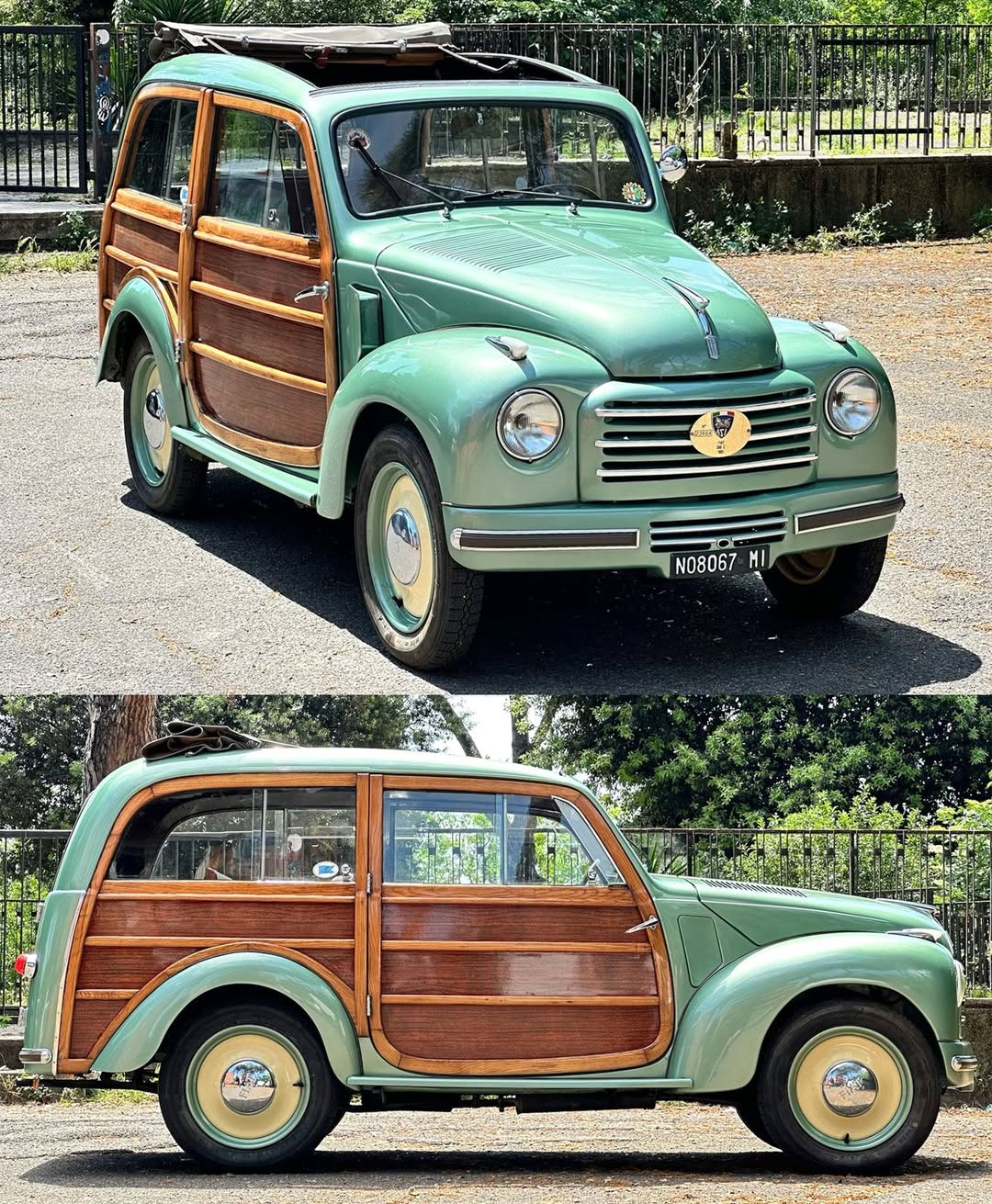
Source