1936 Bugatti Type 57 Atalante Sunroof Coupe
Among the rarest configurations of an already scarce automobile, the Type 57 Atalante with factory sunroof was produced in just ten examples across 1935 and 1936, and only a handful survive in or near their original factory form.
Jean Bugatti, just 23 years old when charged with the project by his father Ettore, designed the Type 57 from the ground up alongside senior engineers Pichetto and Domboy.
The result, debuted in 1934, was Bugatti’s definitive prewar grand routier: a 3,245cc twin-cam inline-eight (sharing its fundamental architecture with the Type 59 Grand Prix car) producing approximately 135 bhp at 5,000 rpm through a single twin-choke Stromberg UUR carburetor, driving through a four-speed manual gearbox.
The chassis retained Bugatti’s proven solid front axle, tuned here for high-speed touring rather than outright competition.
Jean also penned four factory body styles for the Type 57, of which the Atalante (a two-seat coupe named for the fleet-footed Greek heroine Atalanta) was among those built in-house at Molsheim. It should not be confused with the later Atlantic, with its distinctive riveted spine.
The Atalante carried factory design number 1070, dated January 20, 1935, based on the standard 3.3-meter (130-inch) wheelbase chassis. Early examples were sometimes described as “Faux Cabriolet” before the Atalante name was formally adopted during 1935 production.
The sunroof coupe variant was listed officially as the “Coupé Atalante 2/3-seater with sunroof,” priced at approximately 90,000 francs at its October 1935 introduction.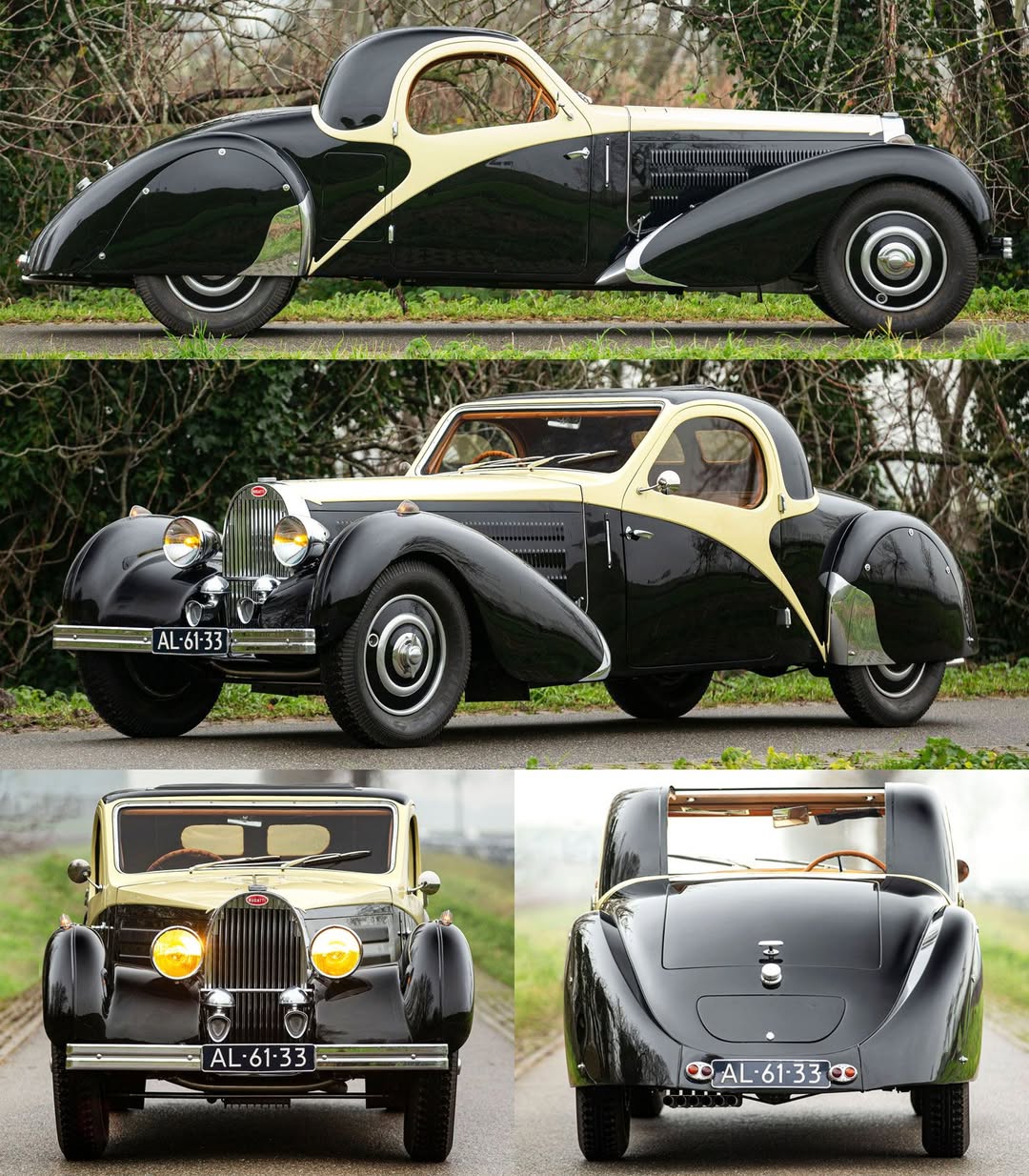
Source