1929 Bugatti Type 37 Grand Prix
Introduced in 1926 to compete under the new 1,500 cc Grand Prix formula, the Type 37 made its race debut that season and quickly proved competitive in voiturette events.
Visually nearly identical to the Type 35, it shared that car’s graceful bodywork and chassis, with wire wheels in place of the Type 35’s cast alloy units being the most visible external distinction.
Where the two cars diverged most significantly was under the hood. The Type 37 used a 1,496 cc inline four-cylinder in place of the Type 35’s straight-eight, with a single bevel-driven overhead camshaft operating three valves per cylinder (two intake, one exhaust).
Output was rated at approximately 60 horsepower, sufficient for a top speed of around 93 mph. A supercharged variant, the Type 37A, was also offered, raising output to roughly 90 horsepower. Combined production of both versions totaled approximately 290 cars.
Though outpaced in major Grands Prix once regulations allowed larger-engined cars greater prominence toward the end of the 1920s, the Type 37 remained a genuine force in the hands of amateur competitors at national-level events around the world throughout the late 1920s and into the 1930s.
The press was unambiguous at the time of its launch: Motor Sport noted in 1926 that a Type 37 delivered as a road car would be “fit to win races and competitions without any need of hotting up.”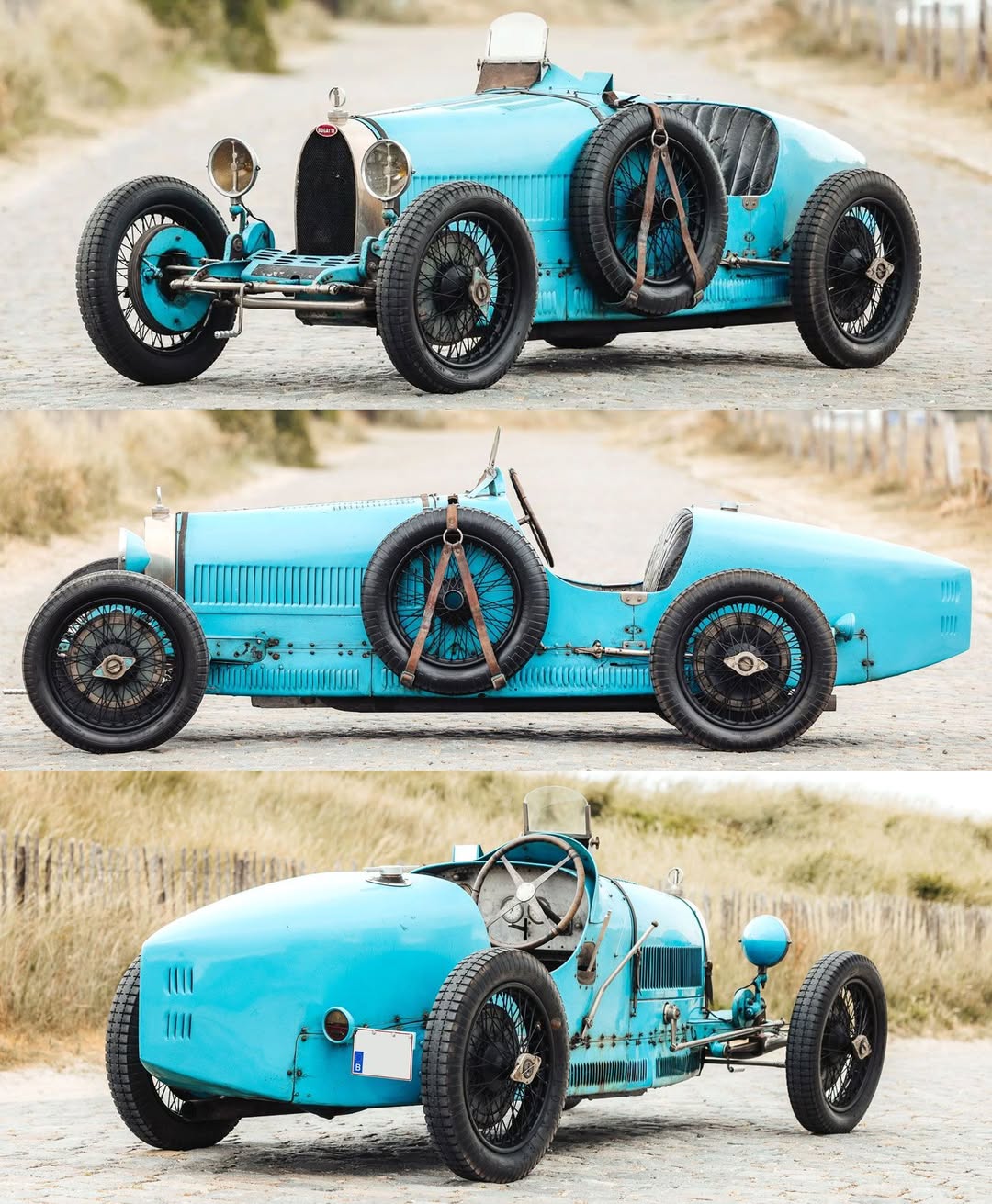
Source