1968 FIAT Dino 2.0 Spider (more pics below 👇)
The Ferrari-built V6 at the heart of the Fiat Dino Spider traces directly to Formula Two homologation requirements. Enzo Ferrari needed sufficient production numbers to qualify his new all-alloy V6 for the racing series, and a partnership with Fiat provided the volume.
The result was a Ferrari-designed engine built by Fiat in a Pininfarina-designed open spider, one of two Dino body styles Fiat offered, the other a coupe styled by Bertone.
Early cars, including 1968 examples, used the 2.0-liter V6 backed by a five-speed manual transmission. In U.S.-spec form the engine produced around 135 horsepower (European versions were rated up to 160 horsepower), delivering 0-60 mph in roughly 8 seconds and a top speed in the 120 mph range.
The 2.4-liter variant arrived for 1969, bringing increased torque along with an independent rear suspension in place of the earlier live axle.
Fiat built the Dino from 1966 through 1973, with 7,803 examples produced across both body styles (approximately 4,246 Spiders and 3,557 Coupes). A limited number were officially imported to the United States, which has kept American-market examples relatively scarce.
The combination of Pininfarina coachwork and a Ferrari-derived V6 in a single car remains a compelling proposition for collectors.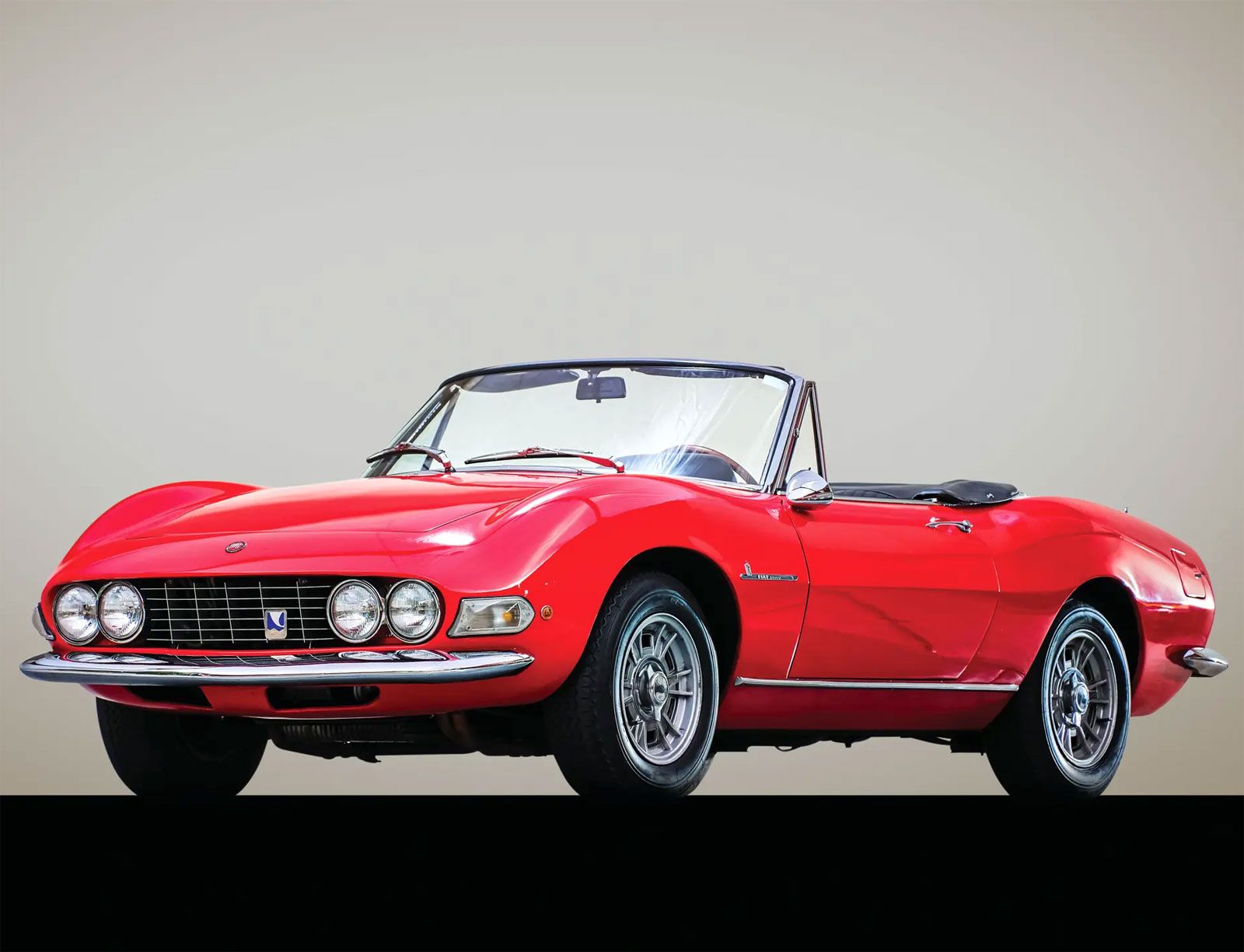
Source