1934 Aston Martin 1½-Litre Mk II Sports
Only 166 Mk IIs are generally accepted to have been built at Feltham between 1934 and the close of 1935, including approximately 21 Ulster competition cars (a production total that underscores just how exclusive the prewar Bertelli Astons were in their own time).
The Mk II arrived with a reinforced ladder-frame chassis, revised suspension geometry, and large-diameter Alfin drum brakes, distinguishing it meaningfully from the Le Mans model it replaced.
Short and long wheelbase versions were offered at 8 ft 7 in and 10 ft respectively, the shorter chassis closely related in mechanical specification to the Ulster competition car.
Approximately 61 short-chassis 2/4-seater Sports examples are believed to have been produced. The car’s curb weight was roughly 1,900 lbs (860 kg), depending on body specification.
The redesigned 1,492 cc overhead-camshaft four-cylinder produced approximately 70 to 73 horsepower, with a counterbalanced crankshaft and revised timing gears contributing to the engine’s refinement. Top speed in standard form was around 80 to 85 mph, genuinely competitive for a British sports car of the period.
Bodies were the work of Enrico Bertelli, whose two/four-passenger Sports configuration combined a compact open cockpit with a modest rear occasional seat.
The numbers-matching engine is a notable attribute on any Bertelli Aston, where originality is central to the cars’ value among collectors and concours judges alike.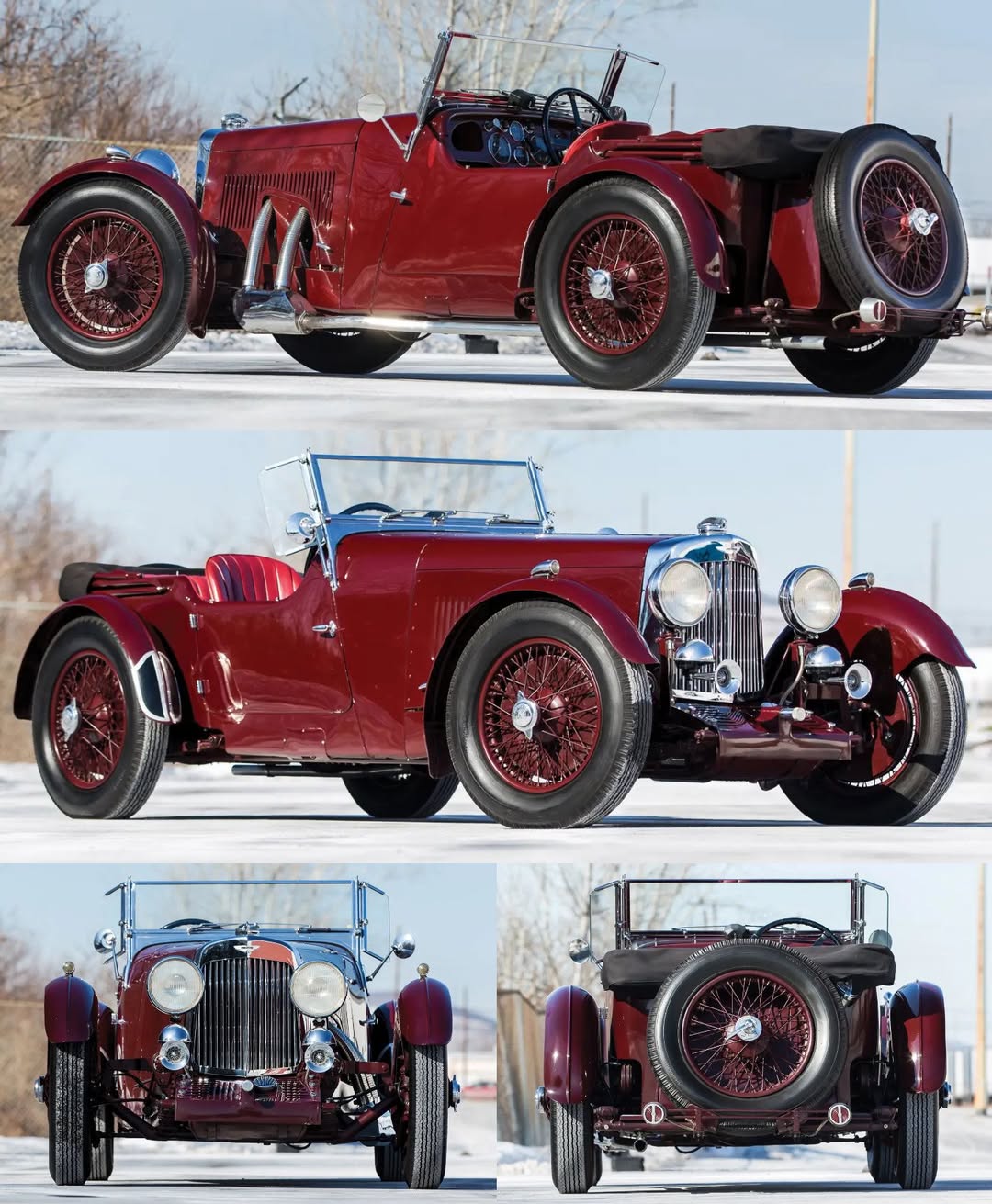
Source