1935 Avions Voisin C25 Cimier Coupé
Gabriel Voisin’s path to automobile manufacturing ran through aviation (more than 10,000 aircraft built during the First World War), followed by a pivot to cars when military contracts dried up. That aeronautical background shaped everything about his vehicles, from the flat aluminum bodywork to the instrument panels modeled on aircraft cockpits.
The C25 Cimier is among the rarest configurations of an already scarce model. Approximately 28 C25 chassis left the factory across several body styles, making each variant exceptionally uncommon (the two-door, four-seat Cimier coupe representing a distinct alternative to the better-known four-door Aérodyne saloon).
Characteristic external struts connecting the front fenders to the radiator shell give the car its immediately recognizable profile (functional in origin, distinctly Voisin in effect). A sliding roof panel was among the more forward-looking details of the period. The car’s curb weight was approximately 3,300 lbs (1,500 kg).
Beneath the underslung chassis sat a 2,994 cc sleeve-valve inline six producing approximately 90 to 95 horsepower, fed by twin carburetors and coupled to a Cotal electromagnetic pre-selector gearbox.
The sleeve-valve configuration (chosen for its mechanical silence and linear torque delivery) was a Voisin signature across the model range. Adjustable shock absorbers completed a specification that prioritized refinement as much as novelty.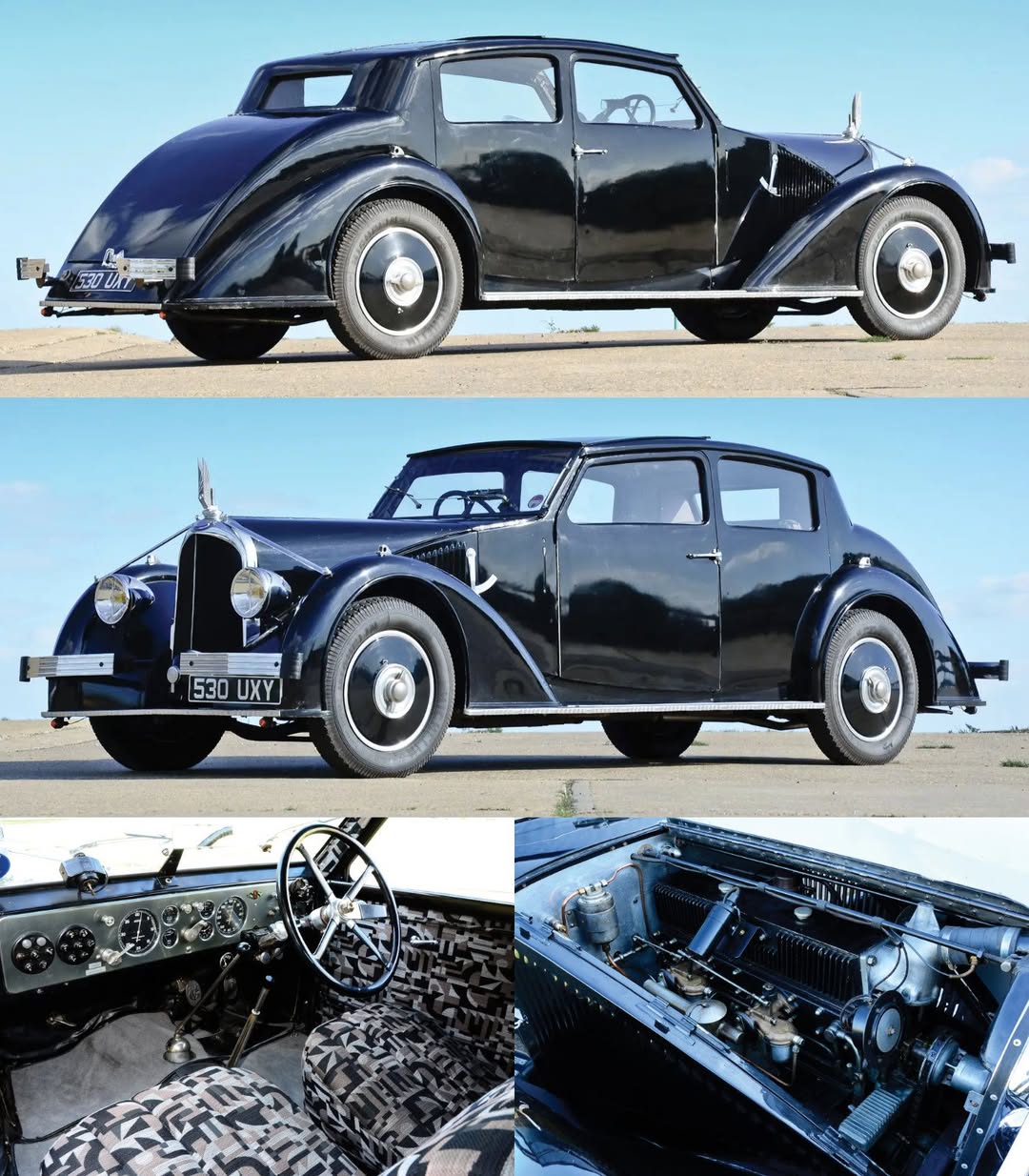
Source