1969 Ford Mustang Boss 429
Ford’s decision to go NASCAR racing with the new 429 cubic inch engine created a production problem: the 1969 Mustang’s engine bay couldn’t accommodate it without substantial modification.
The solution was Kar Kraft, a Ford-affiliated Detroit shop with roots in Ford’s GT racing programs, which received each car from Ford’s Dearborn assembly plant and performed the necessary surgery (reworking the shock towers and front structure, revising the suspension mounting points, and relocating the battery to the trunk to make room).
The result was the Boss 429. The engine itself drew from Ford’s “385” big-block program, with four-bolt mains, forged steel connecting rods and crankshaft, and cast aluminum heads featuring a modified hemispherical combustion chamber Ford referred to as “crescent” style. A single 735 CFM Holley four-barrel carburetor sat atop an aluminum intake.
Ford’s official rating of 375 hp at 5,600 rpm and 450 lb-ft of torque at 3,400 rpm was widely understood to be conservative.
Outwardly, the Boss 429 was restrained (Magnum 500 wheels, a front chin spoiler, a functional hood scoop, and simple fender decals carrying the “Boss 429” designation). A small Kar Kraft sticker on the driver’s door jamb was the only other indicator of the car’s unusual production path.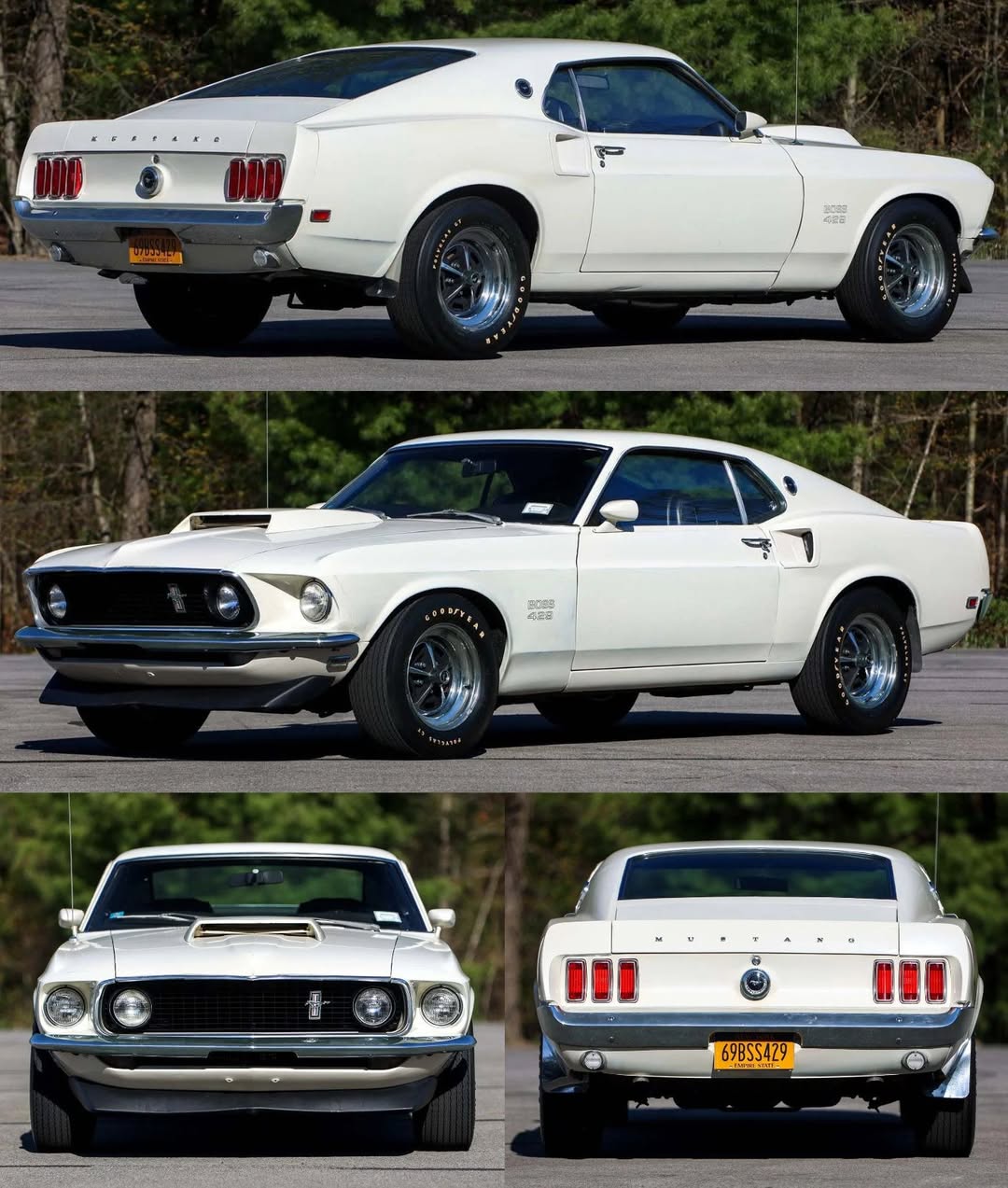
Source