1937 Lancia Aprilia
Revolutionary wind tunnel testing produced this aerodynamically advanced Italian sedan with a remarkably low drag coefficient often cited at around 0.47.
The streamlined design featured four pillarless doors (the front opening conventionally and the rear hinged at the back) that created completely unobstructed entry when opened. Its graceful fastback profile and narrow front end with a V-shaped grille represented cutting-edge automotive styling for 1937.
Power came from an innovative 1,352 cc (82 cubic inch) narrow-angle V4 engine producing 47 horsepower at 4,300 rpm. Advanced engineering included unitary monocoque construction, four-wheel independent suspension with transverse leaf springs, and hydraulic brakes (all highly unusual features for the mid-1930s).
Contemporary road tests confirmed a top speed of about 80 mph, making it one of the first small-displacement sedans to achieve such performance.
This was the final design overseen by company founder Vincenzo Lancia, who died in February 1937 just as production began. A total of 10,354 first-series cars were built through 1939, establishing this technically sophisticated automobile as a milestone in pre-war automotive development.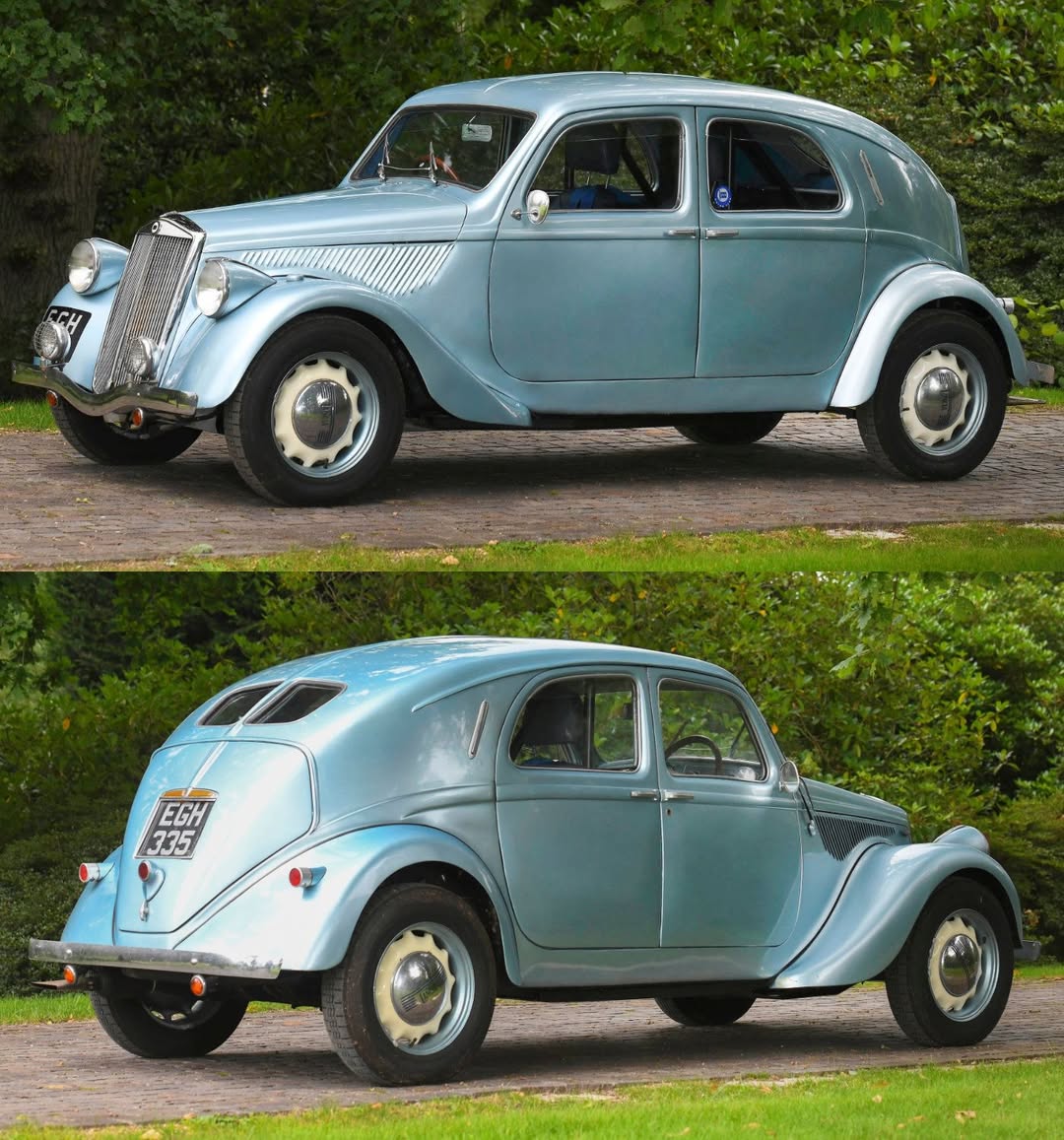
Source