1961 Vespa 400
Introduced at a September 1957 press event in Monaco with Juan Manuel Fangio, Jean Behra, and Louis Chiron in attendance, the Vespa 400 arrived with a motorsport backdrop its 14-horsepower engine could not quite live up to.
Designed by Italy’s Piaggio Company and manufactured by ACMA in Fourchambault, France, the car measures just nine feet five inches in length (shorter than the contemporary Fiat 500) and weighs roughly 840 pounds (381 kg).
Its steel unibody construction features rear-hinged doors with minimal interior door paneling (a deliberate choice to preserve cabin width) and a sliding canvas roof panel fitted as standard equipment.
Power comes from a rear-mounted 393 cc two-stroke air-cooled twin paired with a three-speed manual transmission. The two-stroke layout, carried over from scooter practice, initially required oil to be mixed into the fuel at every fill-up (a separate oil-injection system was introduced during 1958 production).
Fuel economy runs to approximately 45 to 50 miles per gallon with a top speed of about 55 mph. Approximately 12,000 examples were produced in the first year, with total production reaching roughly 30,000 units through 1961, a portion of which were exported to the United States during the model’s four-year run.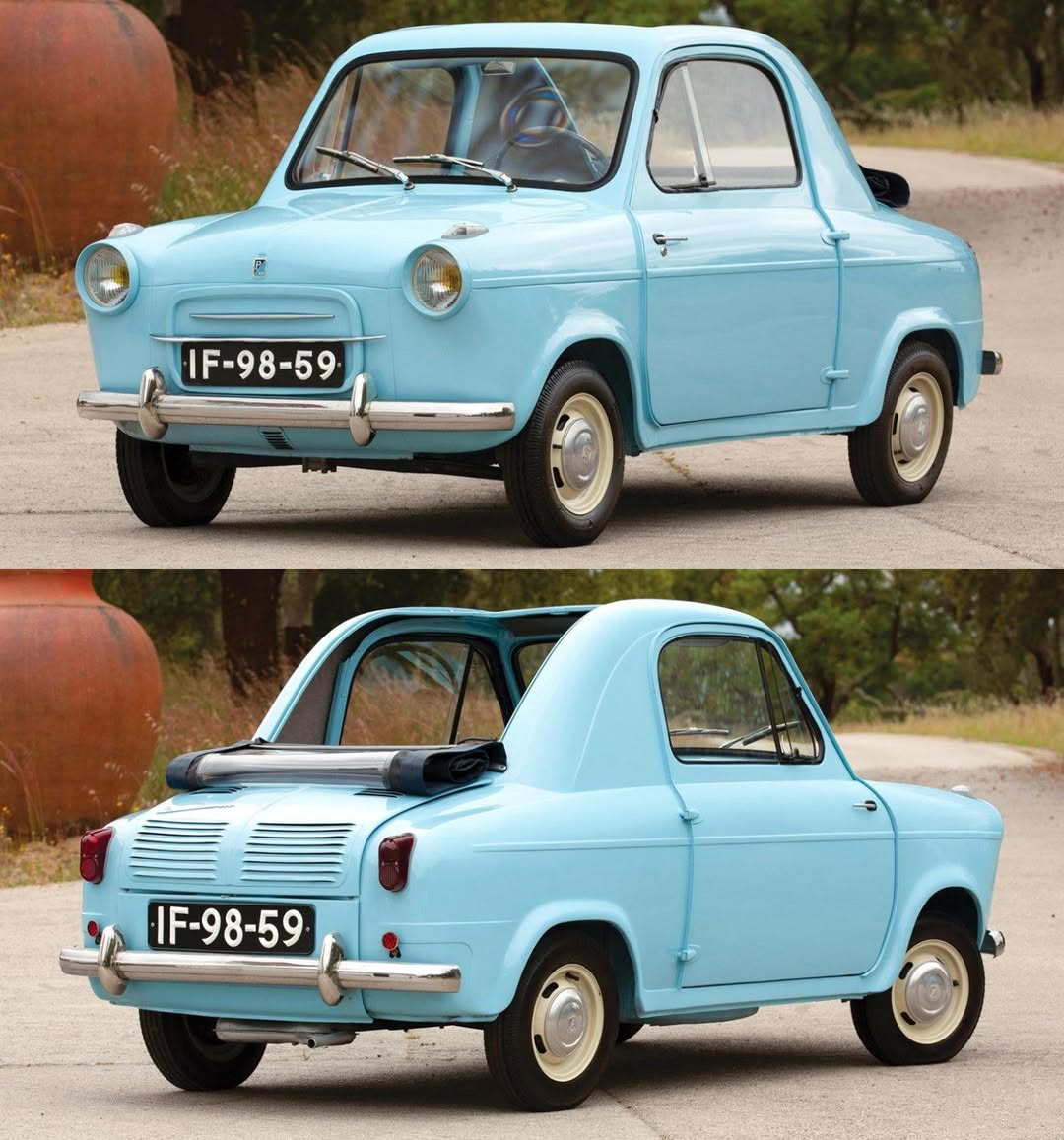
Source