1936 Riley 15/6 Kestrel Saloon
In the mid-1930s, Riley expanded its reputation for advanced engineering by introducing a refined six-cylinder line that built directly on the success of its innovative four-cylinder cars. The 15/6 represented a logical evolution, essentially adding two cylinders to Percy Riley’s outstanding 1,087cc twin-cam four that had powered the marque since 1926.
The 1.7-liter (1,726cc) inline-six retained Riley’s advanced high-mounted twin camshaft design operating short pushrods, a configuration that gave the brand’s engines their excellent breathing and sporting character. This powerplant delivered about 51 horsepower at 4,500 rpm, providing refined yet lively performance for a car of its class.
Chassis construction featured an X-braced box-section frame with distinctive over-axle tubular members at the rear, providing both structural rigidity and improved ride quality. The 112.5-inch wheelbase (extended to 116.5 inches from 1937) offered generous interior space while keeping overall dimensions manageable.
A Wilson pre-selector transmission came as standard equipment, allowing drivers to pre-select gears using a small lever on the steering column before engaging them with the clutch pedal. This system provided smoother and quicker gear changes compared to conventional manuals of the era.
The Kestrel saloon was one of five body styles available on the 15/6 chassis, alongside the Stelvio, Falcon, Adelphi, and Lynx tourer. With its elegant proportions and practical four-door layout, the Kestrel appealed to buyers seeking both performance and refinement in a moderately sized package.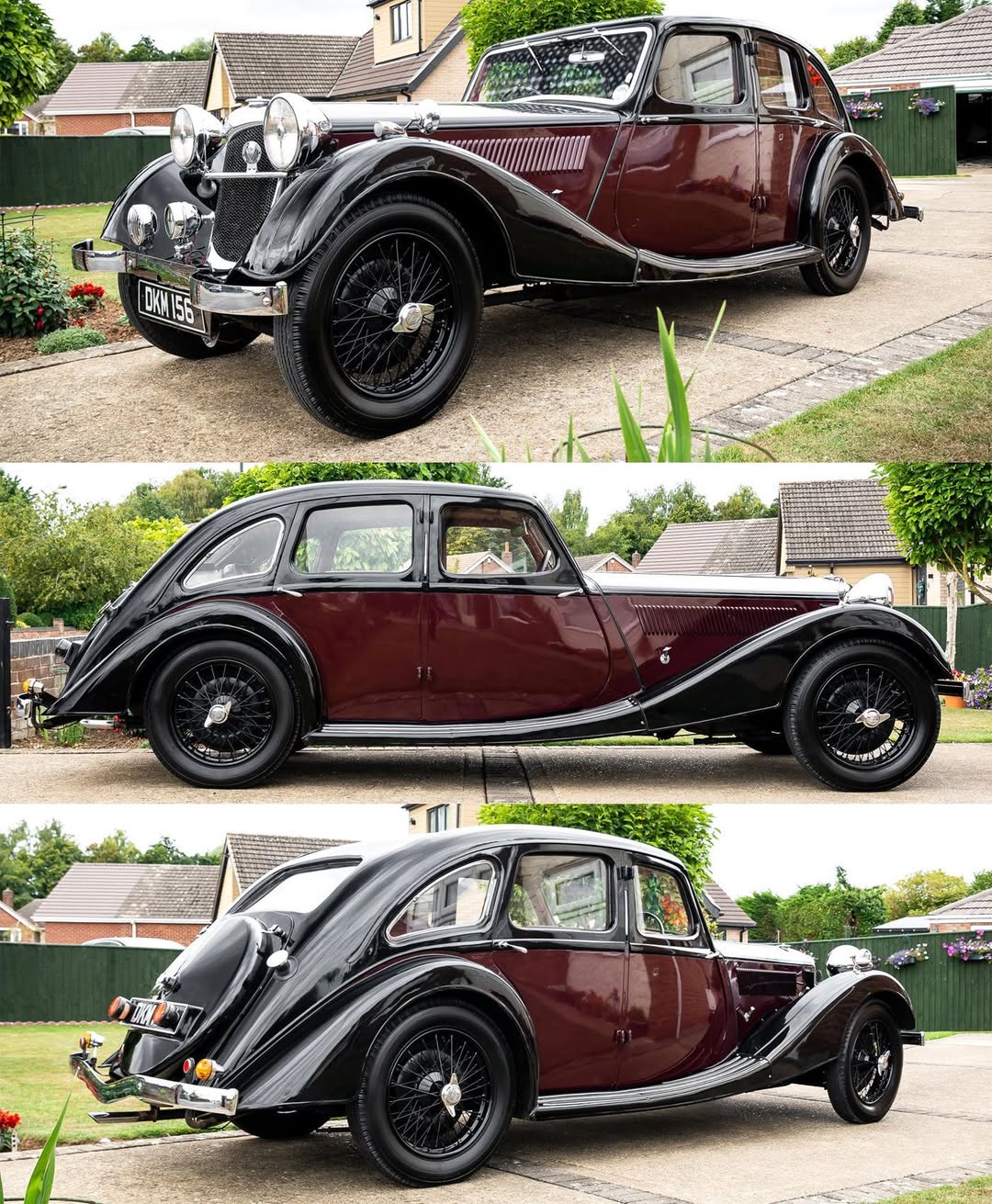
Source