1935 Mercedes-Benz 200 (W21)
Advanced hydraulic brakes and independent suspension at all four corners made this German luxury sedan a technological standout during the mid-1930s. The 200 represented Mercedes-Benz’s commitment to engineering innovation at a time when many manufacturers still relied on mechanical brakes and rigid axles.
Two wheelbase configurations were offered: a standard 106.3 in (2,700 mm) setup and an extended 120.1 in (3,050 mm) version for buyers requiring additional rear passenger space. The longer model was especially popular for chauffeur-driven applications.
Power came from a 2.0-liter side-valve inline-six producing 40 horsepower. Paired with a four-speed manual transmission, it provided adequate performance for the car’s luxury market role.
Combined with the advanced suspension design, this drivetrain delivered a refined driving experience that set the 200 apart from competitors still using leaf springs and cable-operated brakes.
Production ran from 1933 to 1936, with a total of about 15,622 units built. By the standards of the 1930s, the 200 was considered a mid-size luxury vehicle and became one of Mercedes-Benz’s most important pre-war models.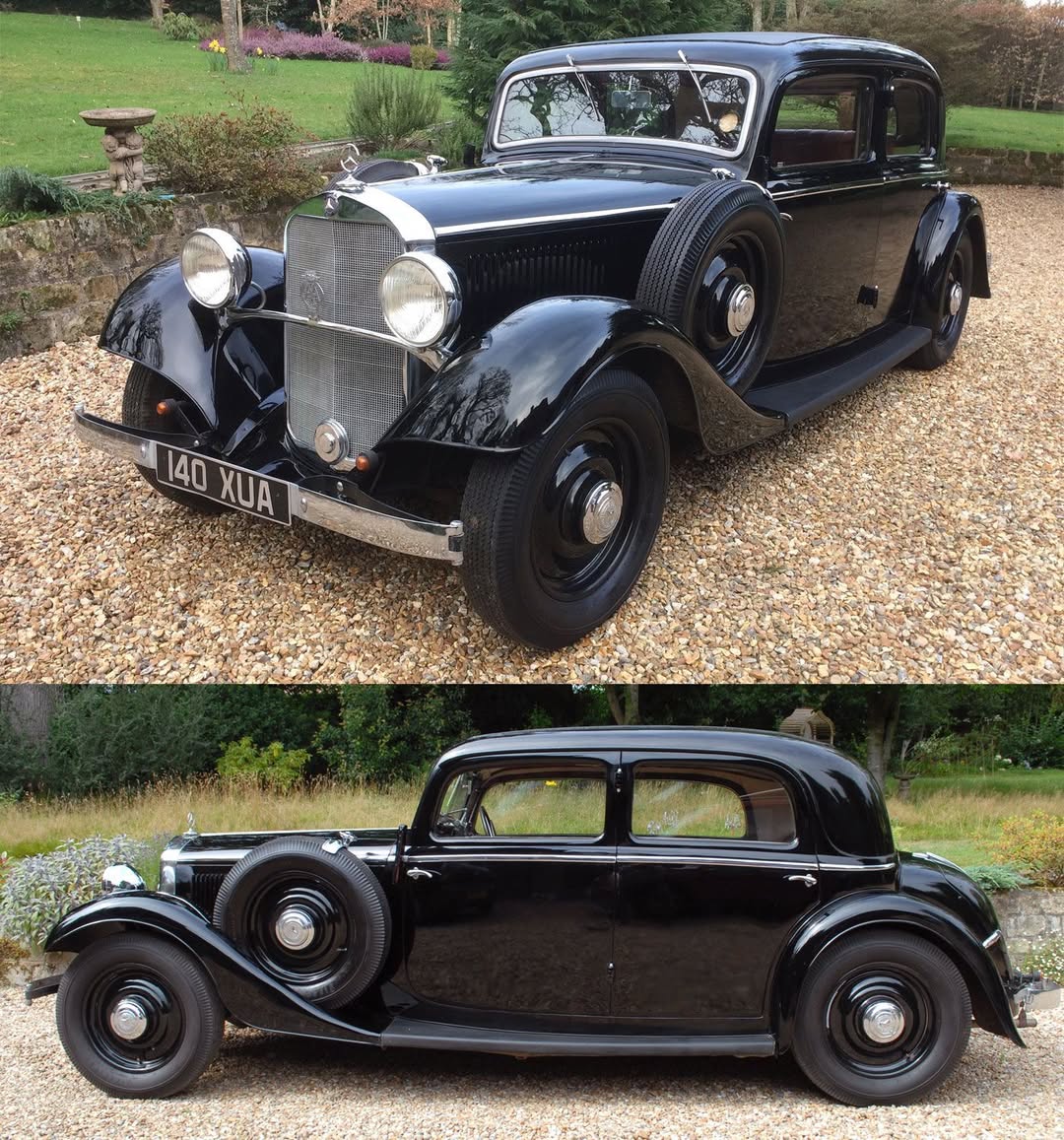
Source