1975 Triumph TR6
When Triumph introduced the TR6 for 1969, it took a chassis with roots tracing back to the 1953 TR2 and dressed it in a sharp new body styled by Karmann of Osnabrück, with a full-width nose, squared-off tail, and a considerably more purposeful stance than the preceding TR5.
The center section, doors, and windshield were carried over intact, though the restyled exterior reads as a largely different car.
Where earlier TRs had relied on four-cylinder engines, Triumph’s 2,498cc inline six gave the TR6 a meaningful step up in torque and flexibility. US-market cars received twin Zenith-Stromberg carburetors rather than the European-spec Lucas mechanical fuel injection, producing 104 bhp (a concession to emissions regulations, but in practice a more reliable arrangement).
A four-speed manual with optional Laycock de Normanville overdrive completed the drivetrain, paired with four-wheel independent suspension and front disc brakes. Top speed for the carbureted US version was approximately 105mph.
For 1975, US-spec TR6s rode higher to meet federal bumper regulations and featured energy-absorbing bumper overriders, along with revised emissions equipment that reduced output compared to earlier cars. Despite the changes, the Karmann-styled body and overall character remained intact.
Of the 94,619 TR6s built between 1969 and 1976, approximately 83,480 were exported, with the United States accounting for the clear majority. The 1975 model year falls near the close of the production run, the TR6 bowing out in mid-1976.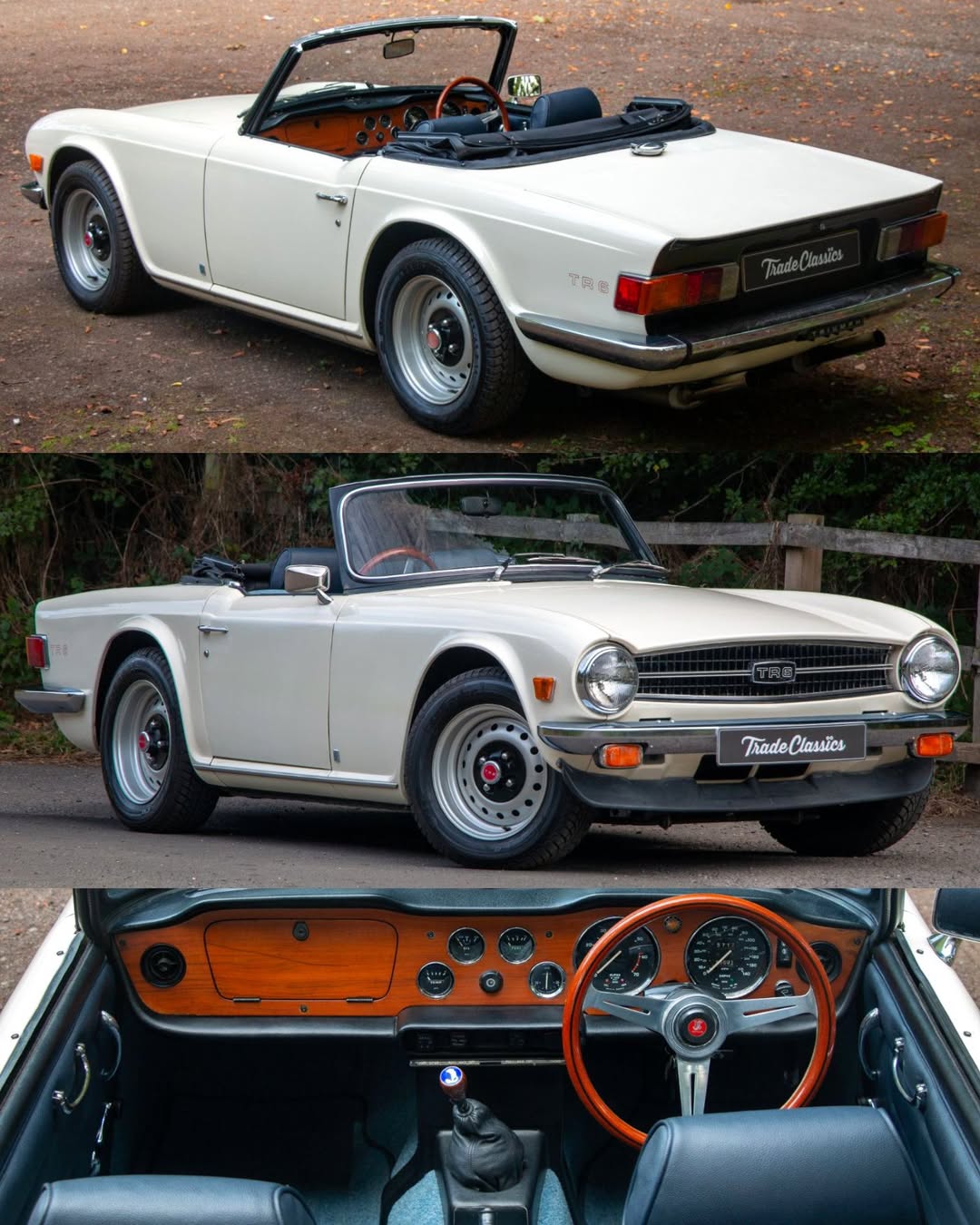
Source