1920 Stutz Series H Bearcat (more photos 👇)
The Bearcat’s origins trace directly to competition. Harry Stutz entered the prototype in the 1911 inaugural Indianapolis 500 before the car was even in production, and its respectable 11th-place finish on debut produced the slogan “The Car That Made Good In A Day.”
When the model reached the public in 1912 it came with just two bucket seats, a driver-only monocle windshield, no top, and an underslung chassis that put the car’s mass closer to the ground than almost anything else on the road.
The mid-1919 Series H bodies introduced cut-down sides to ease entry and exit, along with new color options including yellow, royal red, and elephant gray. At the rear, a short deck carries twin raked spare tires in the racing manner, giving the Bearcat its characteristic silhouette.
The 360ci sixteen-valve T-head inline four-cylinder was derived from Stutz’s racing engines and necessitated a new, stronger chassis to manage the additional power, though the 120-inch wheelbase was retained. With four valves per cylinder (two intake and two exhaust) at a time when two was standard, the engine reflected the factory’s racing priorities in hardware available to road customers.
Its only genuine peer on American roads was the Mercer Raceabout, and few prewar sports cars in any market offered a comparable combination of weight, power, and driver involvement.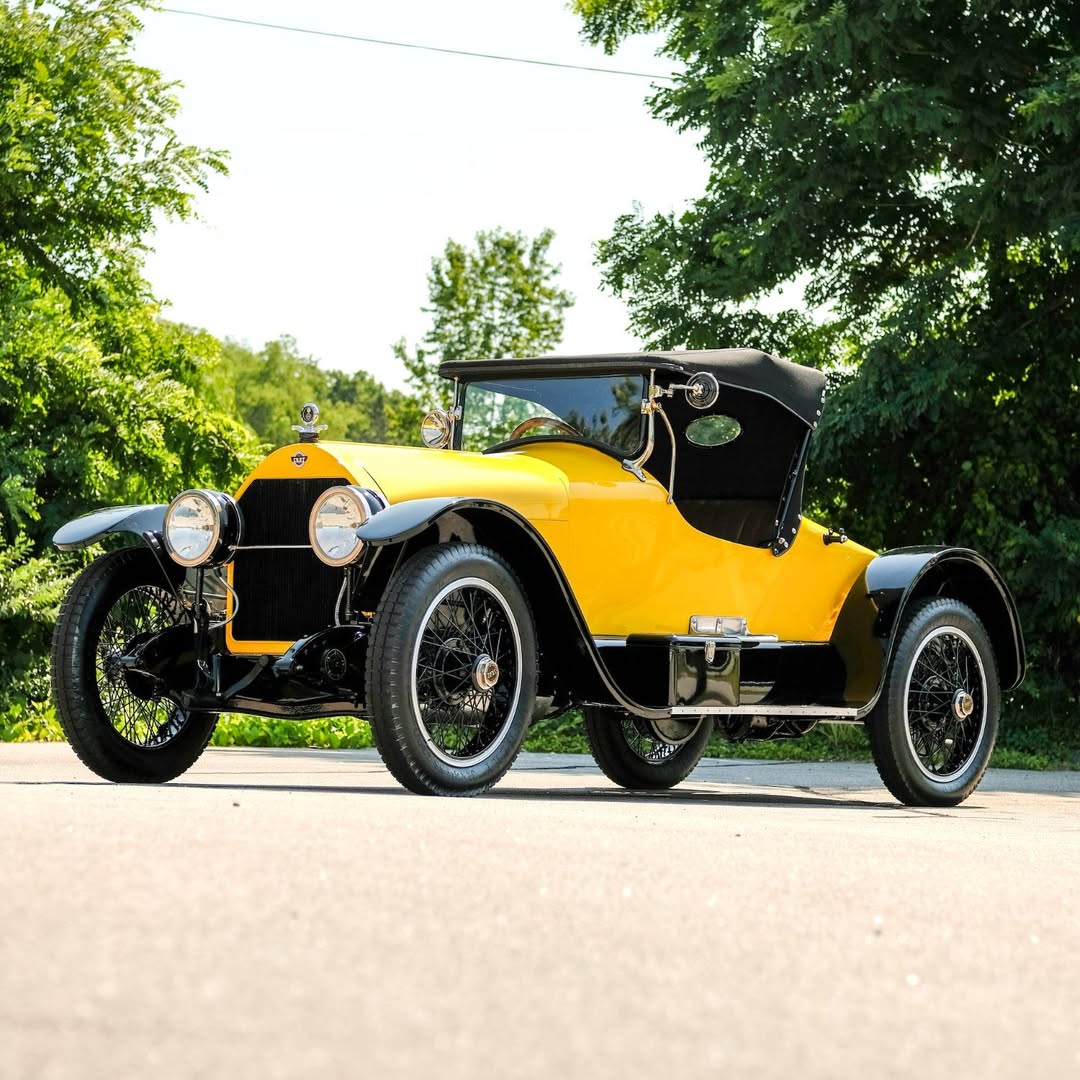
Source