1921 Rolls-Royce 40/50 HP Silver Ghost Touring Phaeton
The open touring phaeton was among the most favored configurations on the post-war Silver Ghost, the long-wheelbase chassis offering generous accommodation for four or five passengers on coachwork built to order by any number of houses worldwide.
Indian princes and maharajahs were among the most consistent Silver Ghost patrons throughout the model’s production, with Rolls-Royce maintaining agencies in Calcutta, Delhi, and Bombay to meet demand; open touring bodies, often built by British or local coachbuilders, were a frequent choice for the subcontinent’s climate.
By 1921, the 40/50 HP had been in continuous production for fifteen years, its fundamental engineering little altered from 1907 yet without serious rivals for refinement. The 7,428 cc L-head inline six (enlarged from the original 7,036 cc unit in 1910 by lengthening the stroke) was rated at approximately 80 hp at around 2,250 rpm, driving through a four-speed manual gearbox.
The chassis uses semi-elliptic leaf springs at the front and a platform cantilever arrangement at the rear (introduced in 1913 and a distinguishing feature of later Ghosts), with mechanical drum brakes acting on the rear wheels.
Of the 7,874 Silver Ghosts built between 1907 and 1926 (including British- and U.S.-built examples), open touring variants remain among the most evocative survivors of the model.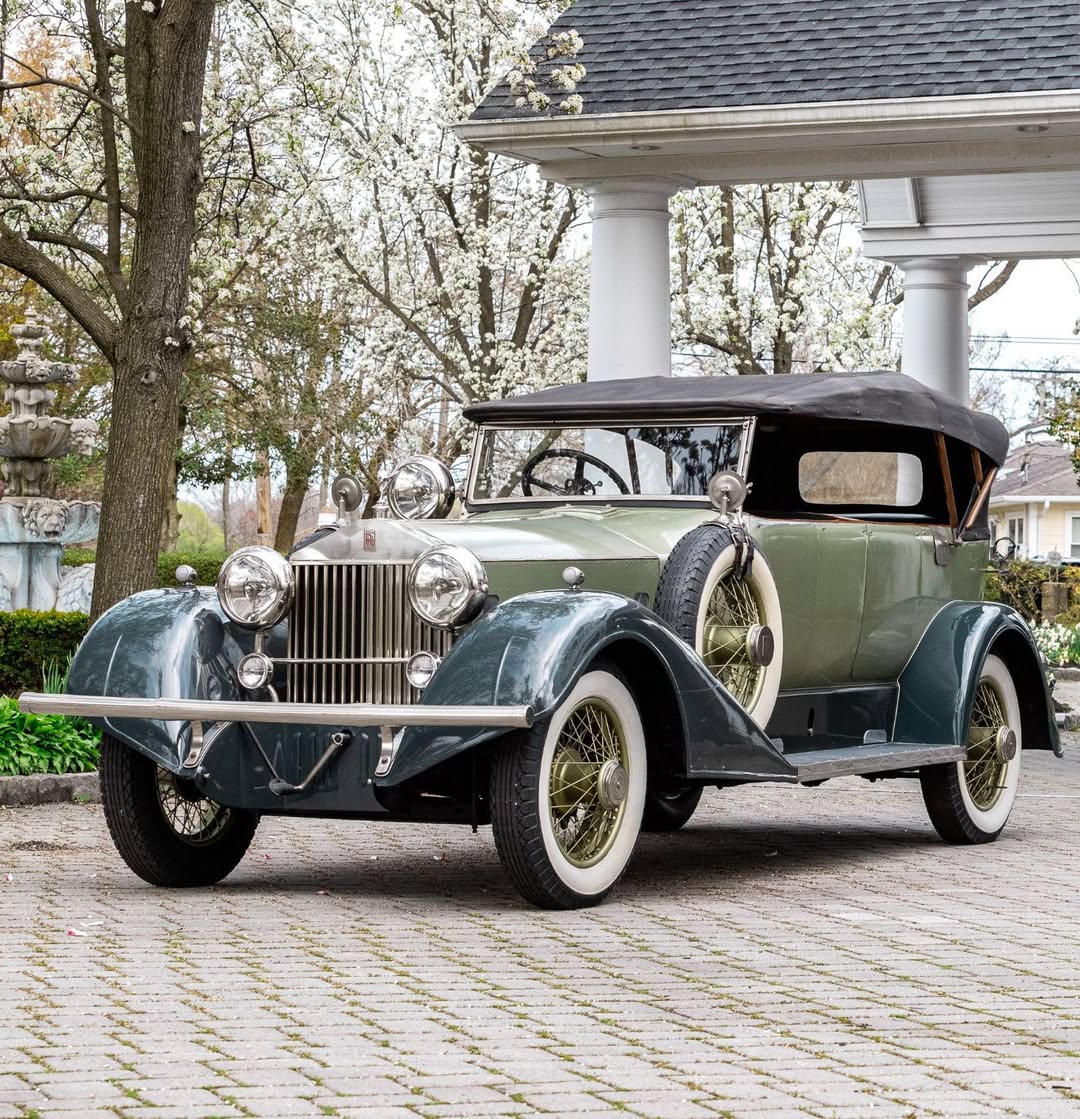
Source